


In Summary
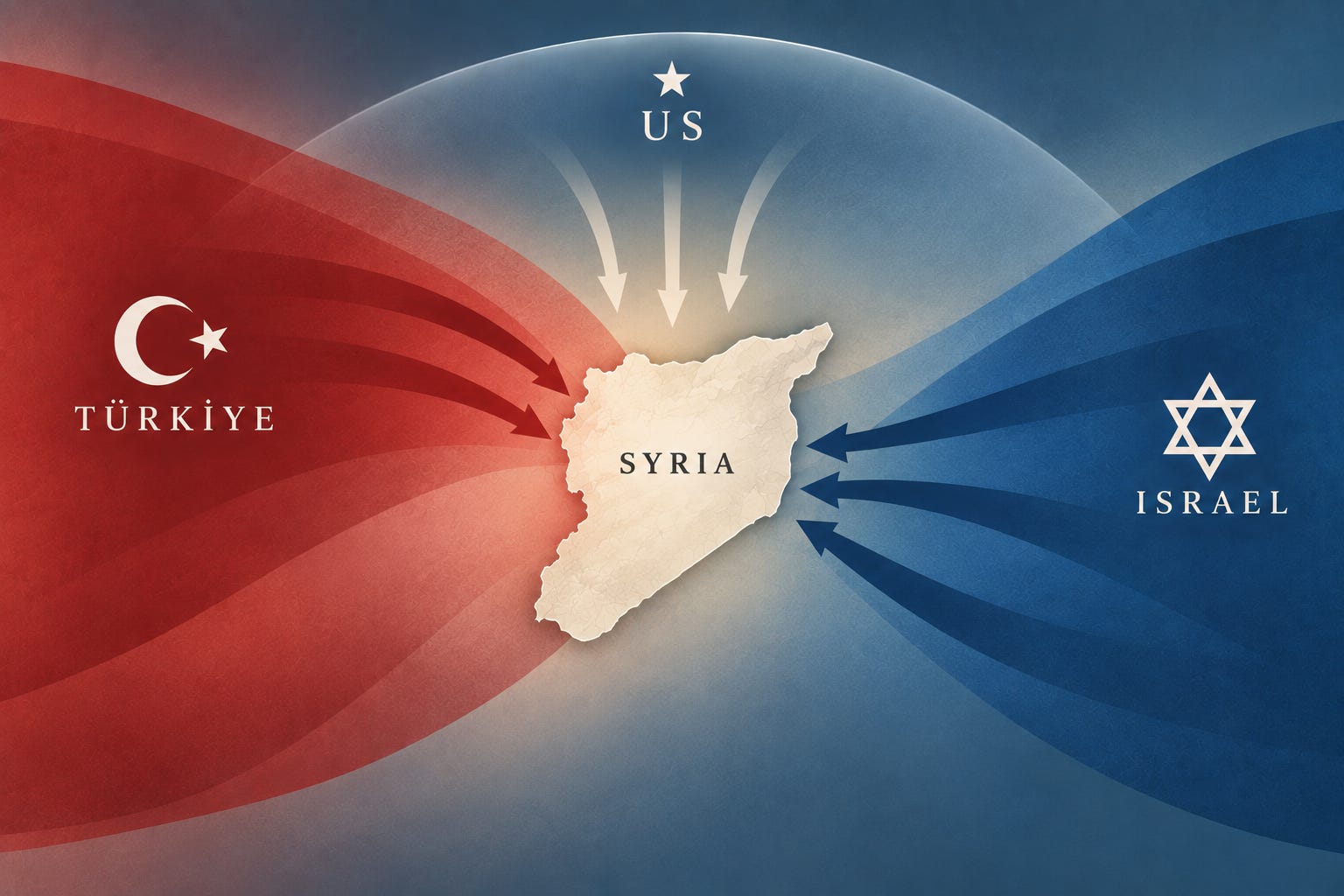
Warnings of a new ‘Cold War’ between Türkiye and Israel have emerged as the two compete to shape post-Assad Syria to their advantage in the regional security architecture.
Caught between regional heavyweights, interim president Al-Sharaa condemns Israeli infringements on Syrian territory while simultaneously deploying the transpired competition to diversify Syria’s partnerships and avoid becoming a Turkish client state.
Despite fears of military confrontation, the Türkiye-Israel competition is ultimately a contest for strategic primacy under the US security umbrella: both compete to become ‘America’s right hand’, while leveraging Washington to legitimize their spheres of influence in Syria.
While Ahmed Hussein Al-Sharaa took the reins and pledged to unify a deeply fragmented and war-exhausted Syria, the reality shows he might not be the architect of the post-Assad era after all. As the Russia-Iran bulwark dissolved nearly two years ago, Türkiye and Israel have been at the forefront shaping Syria’s future, keeping the country a theater for competing regional security interests.
The two have long been active players on Syrian territory - both US allies, but nowadays hardly more fond of each other than of their enemies. Tensions between them have surfaced, as Ankara increasingly consolidates its alliance with Syria’s interim government threatening Israel’s operational freedom. Their growing competition is apparent in instances such as Türkiye’s lobby against Israel’s call for the mobilization of the Kurdish Syrian Democratic Forces (SDF) to join the war against Iran, and Israel’s repeated strikes on Syrian airbases apparently linked to Türkiye.
While deconfliction talks aiming at implementing a mechanism to reduce tensions on Syrian territory were held in Baku, Azerbaijan, warnings of a new “Cold War” between Türkiye and Israel have nevertheless prevailed, begging the question: what is the true nature of the rivalry between Türkiye and Israel on Syrian territory?
Renewed visions for post-Assad Syria
Situated at the crossroads of the Mediterranean, Türkiye and Iraq, Syria has long functioned as a theater for regional security competition. Alongside the 2011 Arab Uprisings against former president Bashar Al-Assad and the emergence of Islamist parties such as Islamic State (ISIS), Syria entered a period of vast internal and external meddling. Combined with Syria’s sectarian nature, actors such as the US, Russia, Iran, Türkiye, and Israel have used the country to expand their spheres of influence through smaller factions embodying their ideological and strategic agendas. Co-Founder and CEO of Syrians for Truth and Justice, Bassam Alahmad, calls it “a double-edged sword” underscoring the country’s key geographic positioning, yet its subsequent lack of agency vis-à-vis foreign powers that wish to capitalize on its favorable location.
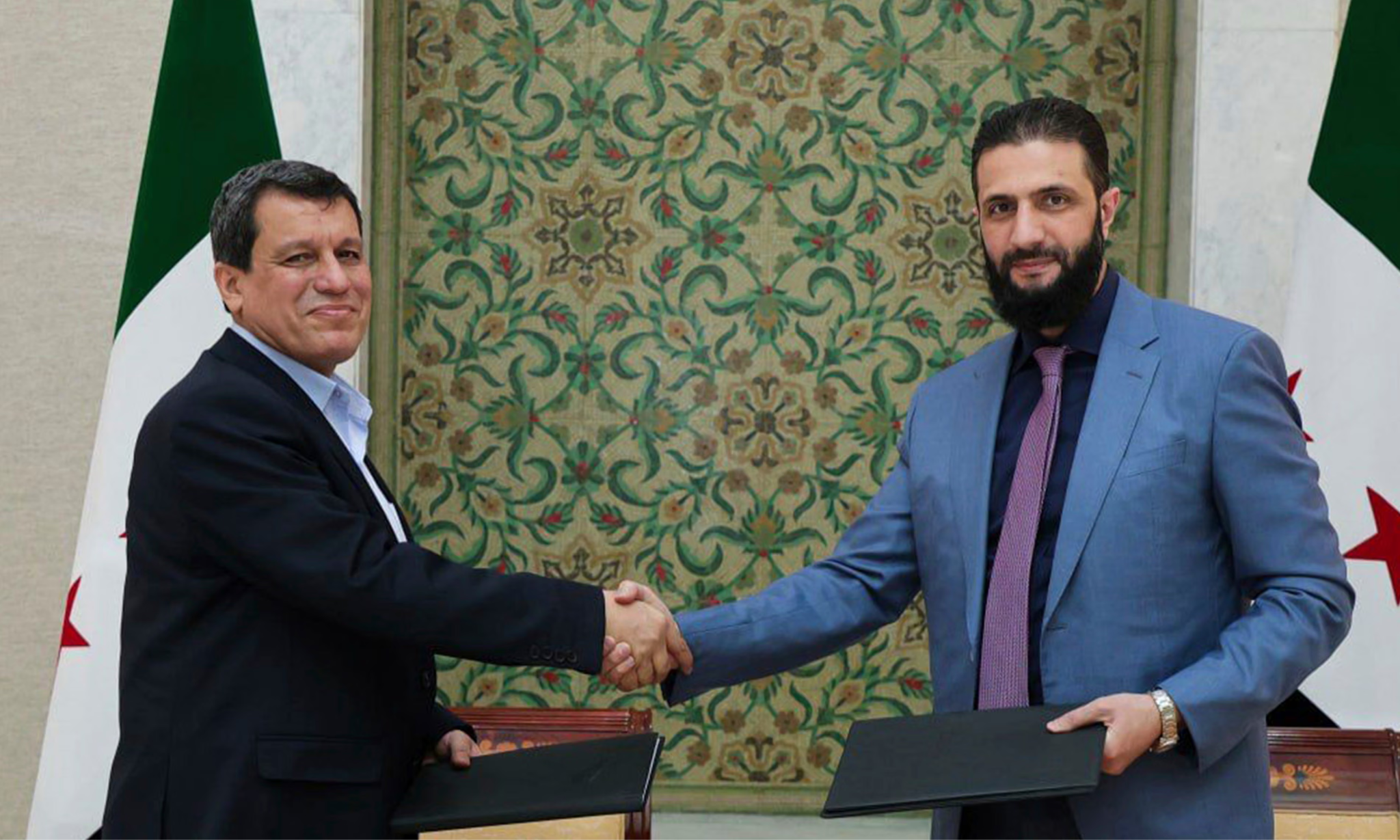
Whereas former president Assad was entangled with the Russians and the Iranians, Syria’s interim president and former head of Hay’at Tahrir al-Sham (HTS), Ahmed Al-Sharaa, has been “moving camps, from a Russia/Iran alliance, to a more or less Western oriented coalition, led by the Americans” Syria expert Mohammad Kanfash states. Al-Sharaa sees merit in a centralized government, aiming to unify formerly opposing military factions such as the Turkish-backed Syrian National Army (SNA) and the SDF with Mazloum Abdi - leader of the SDF formally announcing on August 25, 2026 that its military and civilian institutions will indeed be integrated into the Syrian state.
Al-Sharaa’s aim for an independent Syria has bolstered a regional transformation of security credo. The dissolution of Russian and Iranian influence over the country has made space for reshuffling Syria’s strategic purpose. Therefore, Türkiye and Israel have stepped out of their shadow competition to shape this process. While the two had long opposed the Assad regime, both fought for incompatible alternatives bringing the actors into contest.
Implications of a unified Syria for Israel-Türkiye competition
“The relationship between Türkiye and Israel has long alternated between alignment and competition and at present the latter has been amplified,” according to Dr. Noa Schonmann from Leiden University. Türkiye champions a Turkish-led belt of influence with Syria at its heart. Alahmad notes “Türkiye may not regard countries such as Jordan, Iraq, and Syria as distinct states, but rather as extensions of its sphere of influence.” Supporting a centralized government may go directly against other regional states’s aims to ensure Syria remains fragmented. “Israel is not looking to be an ally of Syria, but is preparing for the day after Iran” Schonmann argues. Its priority is a demilitarized buffer zone along its border, independent from Türkiye, in order to maintain security leverage deeper in Syria’s southwest.
Consequently, tensions are rising as Israel is watching its apparent foe and Syria’s longstanding ‘big brother’ Türkiye gain strategic depth. According to Alahmed, Türkiye already possessed substantial leverage, supporting Al-Sharaa in its battle against the Assad regime. He underscores the hierarchical relationship between the two states, reminding us how “any meeting between Syria and the Kurds was followed by a visit to Türkiye the next day.” Türkiye’s enhanced regional positioning has caused a pivot of Israeli attention toward Ankara’s strategic objectives in Syria, Kanfash notes. Israel’s strike on Abu al-Duhur Airbase is the latest in a sequence of pre-emptive strikes following attacks on strategically advantageous bases such as Hama and Palmyra Airbase.
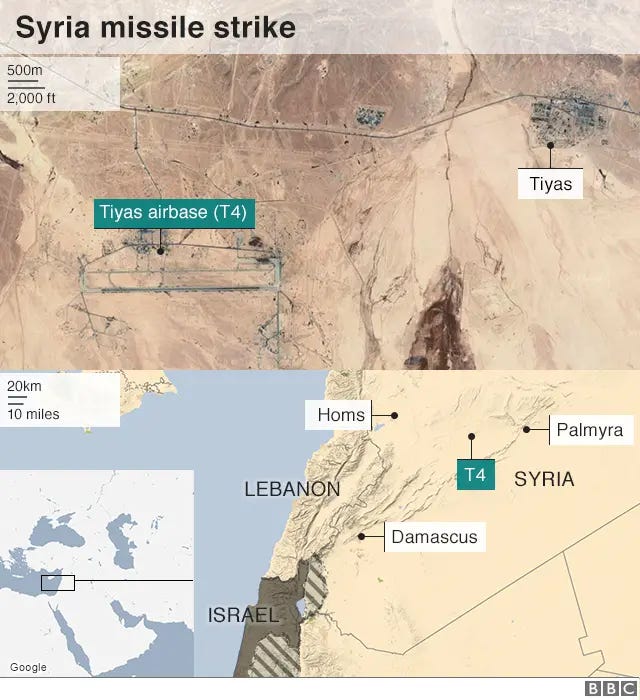
Schonmann describes the action as intended “to mark a clear line in the sand.” Given Türkiye’s increasing encroachment, “Israel is making clear what it won’t tolerate,” she argues. She goes on to state “Türkiye did not seem to get the memo before, so this was a conclusive message from Israel: ‘don’t.’” Kanfash underscores this by appraising the strikes as containment efforts, rather than a direct confrontation. Yet, he also adds that, since its inception, Israel has been looking for an enemy - any strong actor in the region. Now, that actor is Türkiye.
Colliding interests
Naturally, Michel Don Michaloliákos notes Al-Sharaa cannot countenance any erosion of territorial sovereignty as it would jeopardize his position internally, underscoring Israel does not have complete operational freedom. Yet, while Türkiye and Syria condemn Israeli strikes and reports are coming out warning that the rivalry could put the two on a collision course.
Syria and Israel are not as hostile towards one another as their language might suggest. After the attacks on Abu al-Duhur, Syrian foreign minister Shaibani met with the Mossad chief in an effort to resume negotiations over a security deal and reestablish diplomatic relations. The meeting shows a willingness to come to an understanding and mirrors Schonmann’s evaluation, noting that Al-Sharaa is aware that relying on Türkiye alone makes Syria a client state. “He owes a lot to Erdoğan and does not have the means to stand up to him. That is why he is diversifying. Israel is a part of this diversification from Türkiye.” Alahmad adds that “regional powers and most Arab countries don’t want to see Türkiye take everything in Syria.”
Therefore, the competition between Türkiye and Israel can even be regarded as desirable to the Syrian government as it is still finding its place amidst several regional heavyweights. Naturally Al-Sharaa recognizes that Syria lacks the capabilities to avoid becoming a client state. Therefore, harnessing powers that share his interests, such as Israel is a viable strategy.
Additionally, Schonmann dissects interests on the domestic and the international levels. “What appears to be a direct clash—with Israel casting Türkiye as ‘the new Iran’, and Türkiye discussing Israel as a burden to the international community—is primarily for domestic purposes,” she states. Yet, this stands in contrast with the interdependence going on below ground, as Israel’s leading crude-oil supplier is Azerbaijan, whose oil is transported via the BTC pipeline through Turkey’s Ceyhan port. Given that Turkish President Recep Tayyip Erdoğan has shown no interest in closing the port, it signals a structural interdependence rather than rivalry.
Where two are fighting over a bone, the US runs away with it
While a contest over security infrastructure is a reality, Schonmann underscores how neither actor has the means or the legitimacy to strive for regional hegemony; rather, both seek strategic dominance under the American security umbrella. Opposing Assad was a shared concern, yet dancing to Trump’s tune is another one. Türkiye is a NATO member therefore, the threshold for military escalation is extremely high, as it would go directly against US interests.
According to Schonmann, this competition is less about military confrontation and more about who is recognized as ‘America’s right hand’ in the region - about persuading Trump to invest and convincing him that one’s strategy is the best. Conversely, “Türkiye and Israel aim to show the US that they have the agency to delineate their own sphere of influence - knowing the US is increasingly withdrawing from the region,” Don Michaloliákos argues. Therefore, the zero-sum logic that is implied in an analogous analysis to the Cold War cannot simply be transferred to a region operating within a framework of strategic hedging, Kanfash states.
And while Syria seems to be merely a pawn in the game of bigger regional powers, Al-Sharaa’s pragmatic positioning as a Trump ally has opened the door to multiple strategic playing fields. Militarily he is indeed not able to shape the future, there is nevertheless an element of agency in befriending the puppet master of all: the United States.

Excellent analysis.
But while outside players are competing with each other for influence over Syria, events are unfolding inside the country that are no less important, and maybe even more important, for the future of the entire region.
The transitional government sharply raised gasoline and diesel prices. Economically, the decision makes sense. Politically, it is terrible. Large-scale protests have begun.
But while Assad would have simply shot everyone, al-Sharaa is acting strictly in line with the democratic path he has chosen — there are parliamentary hearings, discussions and negotiations with protesters, and police on the streets are maintaining order without using excessive force.
The new government is learning and developing its skills. If it manages to earn trust during this difficult period, that will become the strongest guarantee of the country’s successful development.
And then mutually beneficial cooperation with Turkey, Israel, and other countries in the region will become possible.
Although right now that sounds like fantasy.
Strong piece, and it lines up with something I keep coming back to in my own writing on this region: neither Ankara nor Tel Aviv is actually operating with a free hand here, no matter how loud the rivalry gets. Turkey's own defense pact with Saudi Arabia and Pakistan is a good example, it reads as regional assertiveness on the surface, but every member still depends on American platforms, intelligence, or security guarantees underneath it. Syria looks like the same pattern: both sides maneuvering hard for position, but the ceiling on what either can actually do without Washington's sign-off hasn't moved. Worth reading if that overlap interests you: https://ozymandiasdesk.substack.com/