


In summary:
Sudan’s resources and strategic location have led to the involvement of various external actors
The increasing rivalry between Saudi Arabia and the UAE is now also visible in Sudan
With many regional actors fueling the conflict, peace seems far away.
The war in Sudan has been raging for more than three years. Persistent fighting between the Sudanese Armed Forces (SAF) and the Rapid Support Forces (RSF) has brought catastrophe to the Sudanese people. Nineteen million people are facing acute hunger, and Amnesty International reports various accounts of citizens being targeted for reprisals, indiscriminate killings, or sexual violence. A director of an NGO focused on Sudan, who wishes to remain anonymous due to the sensitivity of his work, describes the experiences of survivors as “truly dystopian: the worst things you could imagine have happened in Sudan. Stories of sexual violence, murder, famine, and other atrocities”
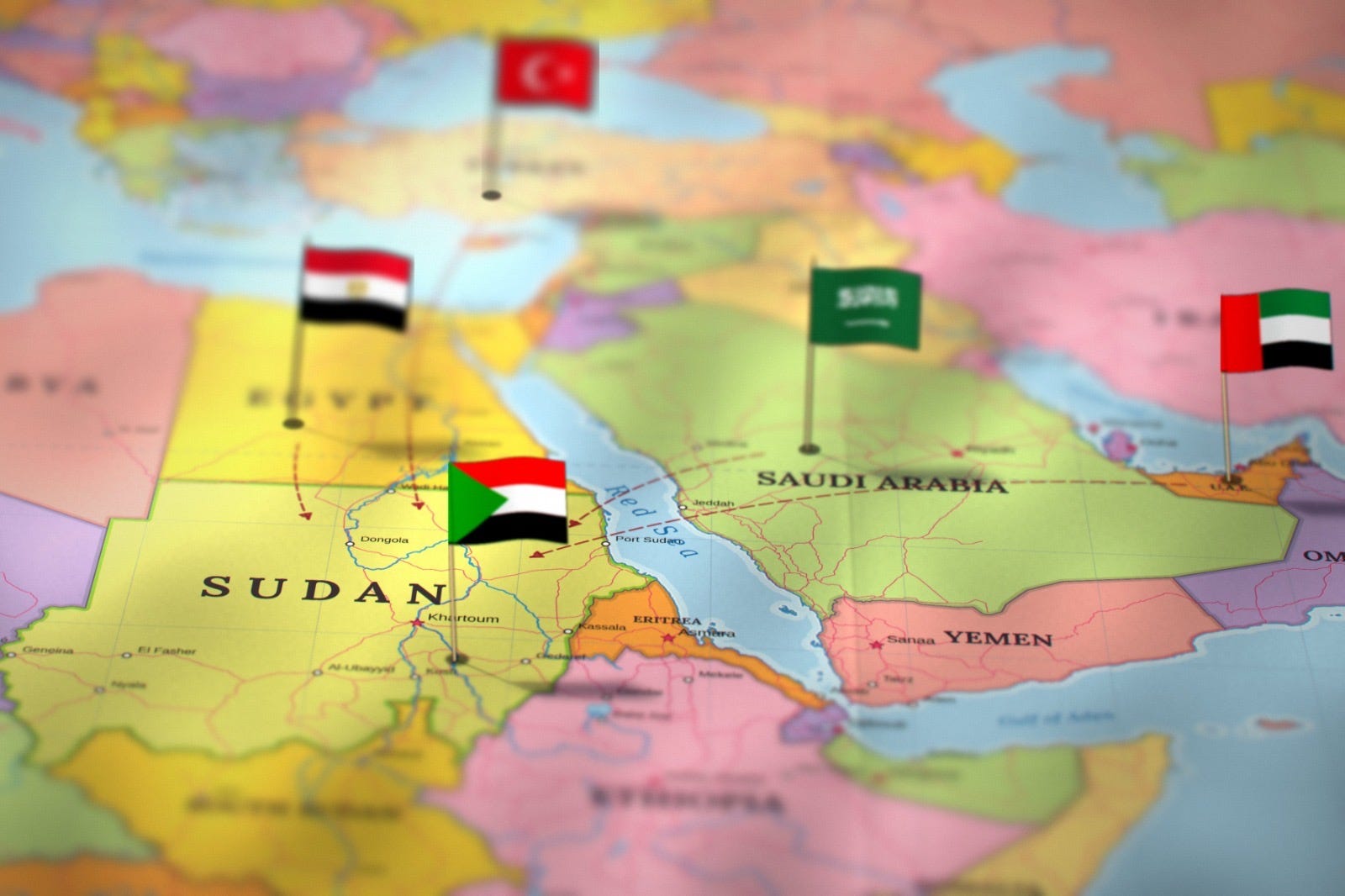
Importantly, this conflict is not isolated from outsiders. Outside powers have not done much to stop the fighting; instead, they fuel it. In their overview, the Wilson Center mentions outsiders like the UAE, Saudi Arabia, Türkiye, and Egypt all being involved. What brings these outsiders to Sudan?
Sudan’s resources
One of the main reasons outside powers are interested in Sudan and involved in its conflict is the presence of natural resources. Sudan is in the top 20 of the world’s gold producers. Warring parties fight over this gold to enrich themselves, fund their armies or make deals with their foreign backers.
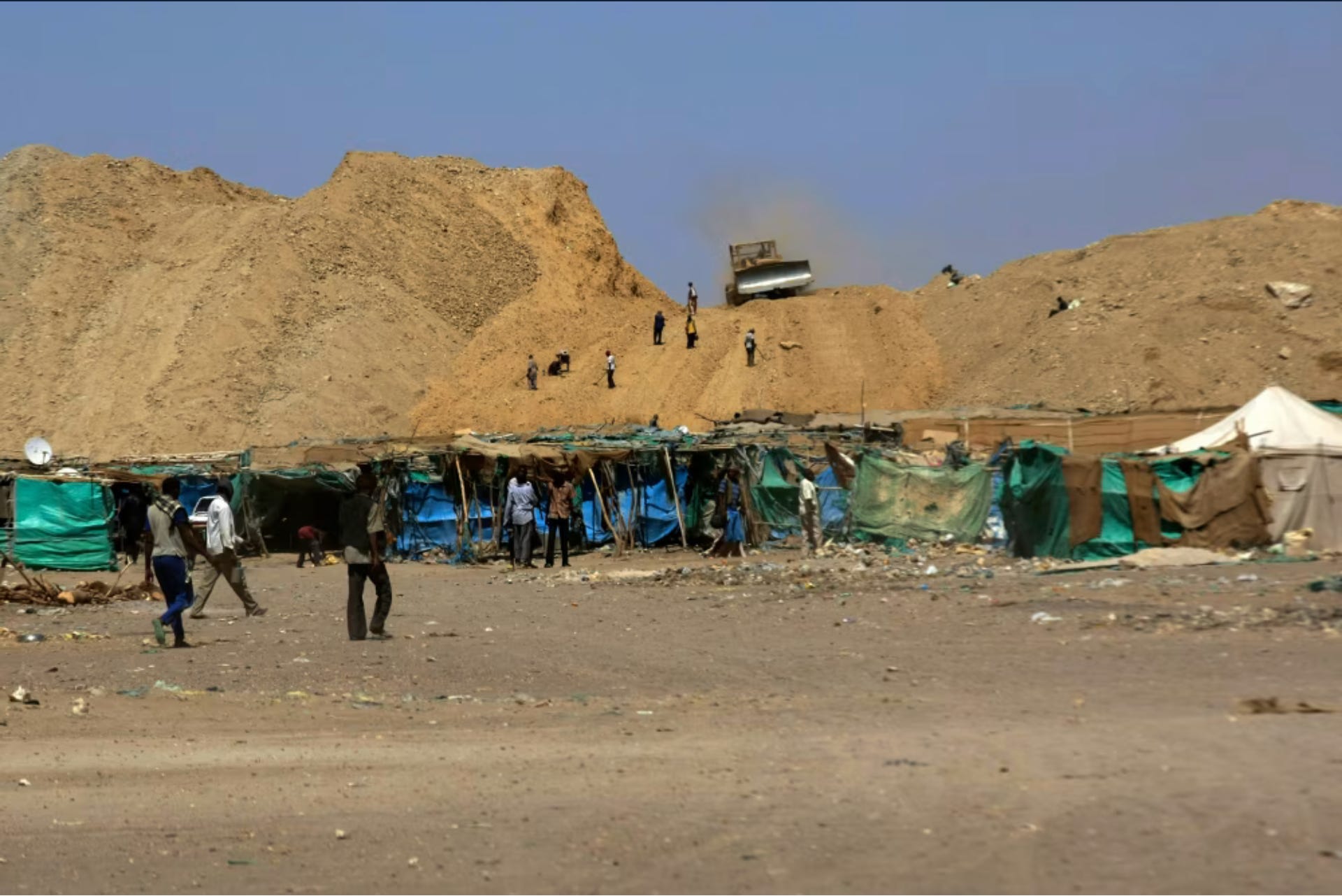
Whilst many states are connected to the smuggled Sudanese gold, the UAE, as a key backer of the RSF, plays a vital role here: over half of the gold smuggled out of Sudan is directly shipped to the UAE, as estimated in Swissaid’s African Gold report. Conversely, Egypt as a backer of the SAF has also profited from smuggled gold. Though extremely important, gold is not the only thing of strategic importance that foreign backers desire. The European Council on Foreign Relations notes that for the Gulf states, which import more than 80% of their food, Sudan’s agriculture and livestock are also highly important.
Speaking on these resources, Hossamaldeen Ibrahim, a Sudanese political analyst at the Bloomsbury Intelligence and Security Institute, notes how they have created a war economy, which in turn has implications for conflict resolution: “The conflict has shaped a war economy that lots of actors benefit from. Not just the UAE, but also groups in Libya, Chad and Sudan itself. They benefit from the current situation, so they do not want the war to stop.”
A Gulf rivalry fought out in the Horn of Africa
Besides resources, there is also a larger game at hand: a competition between Saudi Arabia and the UAE for strategic influence over the Red Sea. Especially for the UAE, which, unlike Saudi Arabia, has no coastline on the Red Sea, Sudan’s strategic location is vital. With its geography, the Emirates are heavily dependent on the Persian Gulf and the Strait of Hormuz. Consequently, the UAE has been acquiring infrastructure and port concessions around the Horn of Africa and the Red Sea, in Egypt, Somalia and Somaliland. In a bid for Red Sea influence, here represented by commercial and infrastructure investments, Port Sudan would be a key strategic location to add to what an analyst at the Horn Review dubbed the UAE’s “virtual coastline”.
Notably, “The UAE doesn’t just supply the RSF with weapons and foreign mercenaries, but also with political talking points. Online, there is also a noticeable wave of pro-Emirati influencers and bot networks working to shift the narrative around the war and polish the UAE’s reputation,” says the NGO director.
This current competition for influence is also the result of an increasing divergence between the two Gulf states in the last few years. Ibrahim explains that this divergence originates from the period after the Saudi-led intervention in Yemen in 2015. Though the UAE was part of this coalition, there was a difference in opinion between them and Saudi Arabia on how Yemen should be governed, producing a rift between the two states. Ibrahim sees this rift in the diplomatic relations: “With these weak relations, the last time that the Saudi crown prince met with Mohammed bin Zayed was in December 2021 - you can tell from that how their relation is going.”
The differences between the Gulf states have led to them employing different regional policies. The UAE has employed an active foreign policy, allegedly backing various separatist forces and non-state actors around the region, as part of what analysts see as a strategy to access resources and gain strategic locations. These actions have been met with great dismay in Riyadh. As it is focused on transforming its domestic economy through the Vision 2030 project, foreign policy adventurism is not its priority. Instead, Saudi Arabia aims to preserve regional stability and the status quo, backing states and institutions it sees as capable of delivering this. That is why Saudi Arabia backs the SAF, whilst the UAE backs the paramilitary RSF.
The involvement of Turkey and Egypt
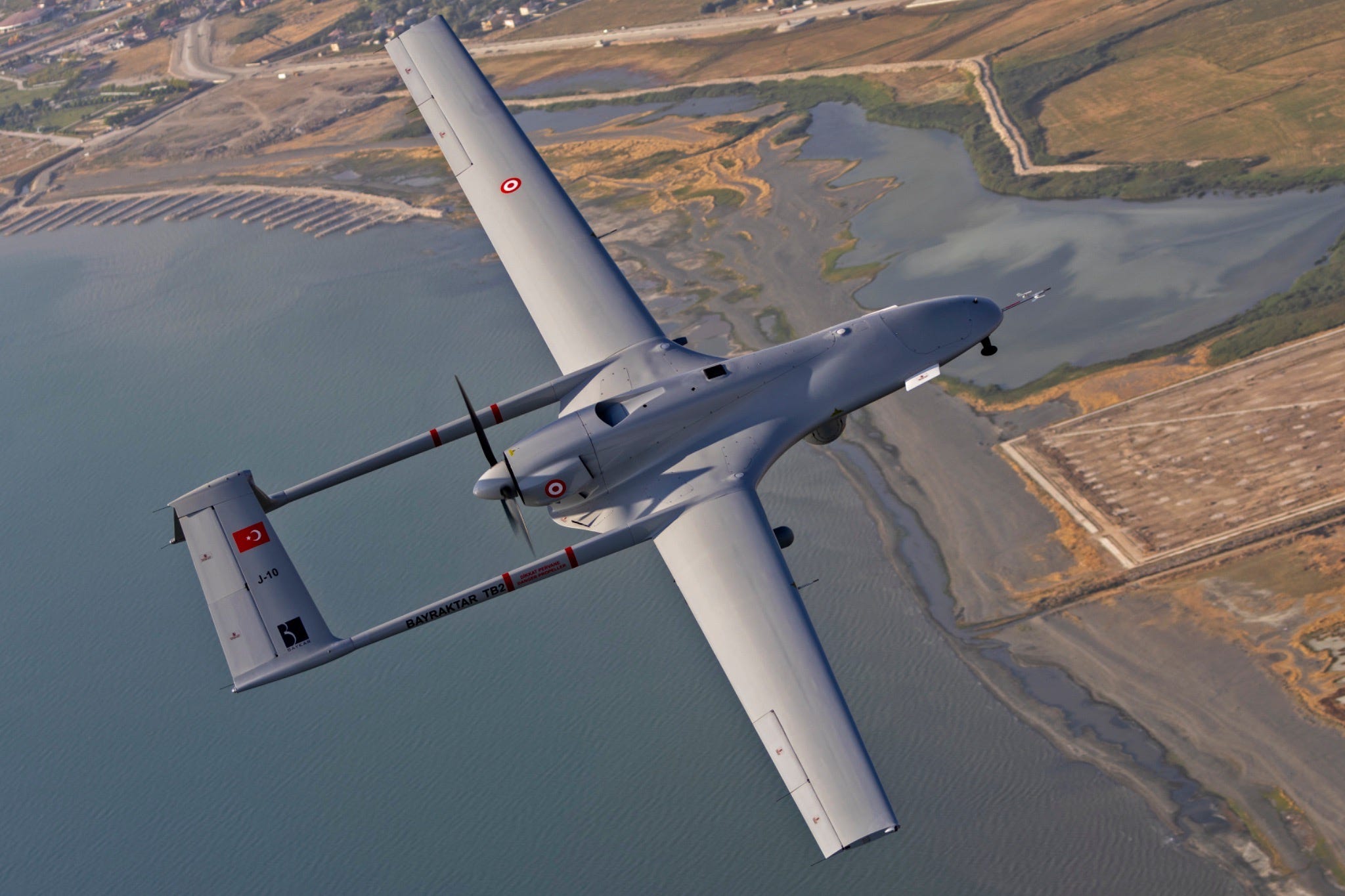
The competition for Red Sea access and influence is not limited to the two Gulf rivals. Turkey, though a more distant country, also plays an important role. Its main interest is not regional stability or the gold trade. Instead, similar to the UAE, it is also vying for influence on the Red Sea’s coastline. According to the European Council on Foreign Relations (ECFR), it cooperates on security with various states in the region. Its relationship with Somalia, where it has its largest overseas military base, is especially close. In 2017, it made a deal with the Sudanese government to restore the port of Suakin Island, allowing military and civilian vessels to also dock there. However, after the fall of Al Bashir, this project stalled, and Turkish influence decreased, with the Saudi-UAE rivalry initially shaping Sudan’s civil war. Yet, reports now increasingly allege Turkish military backing for the SAF. The Washington Post, for example, uncovered Turkey’s covert delivery of Bayraktar drones and hundreds of warheads. Ankara has seemingly decided that backing the SAF is its best bet to gain access to Sudan’s coastline and increase its foothold on the Red Sea’s coastline.
Egypt also plays an important part in the conflict: unlike the other states analysed, it also shares a border with Sudan, giving it a direct security stake and exposing it to conflict spillover. “For Egypt, cross-border stability is critical, especially since the war has further strained an already struggling Egyptian economy. On top of that, the Egyptian military has longstanding institutional ties with the Sudanese army, which explains Cairo’s clear backing of the SAF,” says the NGO director. Ibrahim notes how Egypt’s support for the SAF is also connected to a wider regional outlook: “When you look at Egypt, all their borders are on fire. They have Israel and Palestine, Libya, and now also Sudan. So they cannot risk having another country de facto controlled by a militia.”
A major example of Egypt’s military support is its base in East Oweinat. The New York Times revealed how, in 2024, this small airstrip was transformed into a large military base. Subsequently, cargo planes were spotted, and drones now depart from East Oweinat to carry out strikes on RSF targets in Sudan. Egypt has also allegedly carried out airstrikes on an RSF supply convoy passing through Libya. Recently, in evidence of intensifying cooperation, Egypt opened a joint operations center with the SAF and is rumoured to have increased its military support.
On a more strategic note, Egypt is, like Saudi Arabia, also wary of other states gaining access to the Red Sea. Thus, there is another reason for them to back the SAF, as Ethiopia - their longtime landlocked rival, which desires a Red Sea port - supports the RSF.
Final thoughts
The involvement of these various states in Sudan shows a clear pattern. External actors see the RSF or SAF as a way to secure gold or influence over the Red Sea. Sudan’s civil war is connected to broader regional rivalries and tensions.
The involvement of all these foreign powers also carries an important implication for conflict resolution: without dealing with them, the fighting is likely to carry on. That means that any mediation process must focus both on Sudan’s internal dynamics and the foreign powers sustaining the conflict” As the NGO director says: “External actors must be pressured to exercise their leverage over the warring parties to end the conflict. This needs to be real pressure, whether through restrictive measures or by halting enhanced engagement with the actors fueling the war, especially those financing and supporting genocide and ethnic cleansing”. Though that might be a complex political undertaking, it would clearly be worth it, in light of the conflict’s devastating consequences.
Finally, though foreign powers might see Sudan as a chessboard for influence in the region, it must be noted that the conflict has dire consequences for the lives of regular people in Sudan. They experience the everyday consequences of this conflict. To end with the words of Ibrahim:
“The people are tired, they are very tired. Though they know it will not be like what it used to be, they just want a sense of life. The social life, economic activities and education have completely stopped. Of course, we want to stop the war. But who can you tell? It seems like no one will listen.”