


In Summary:
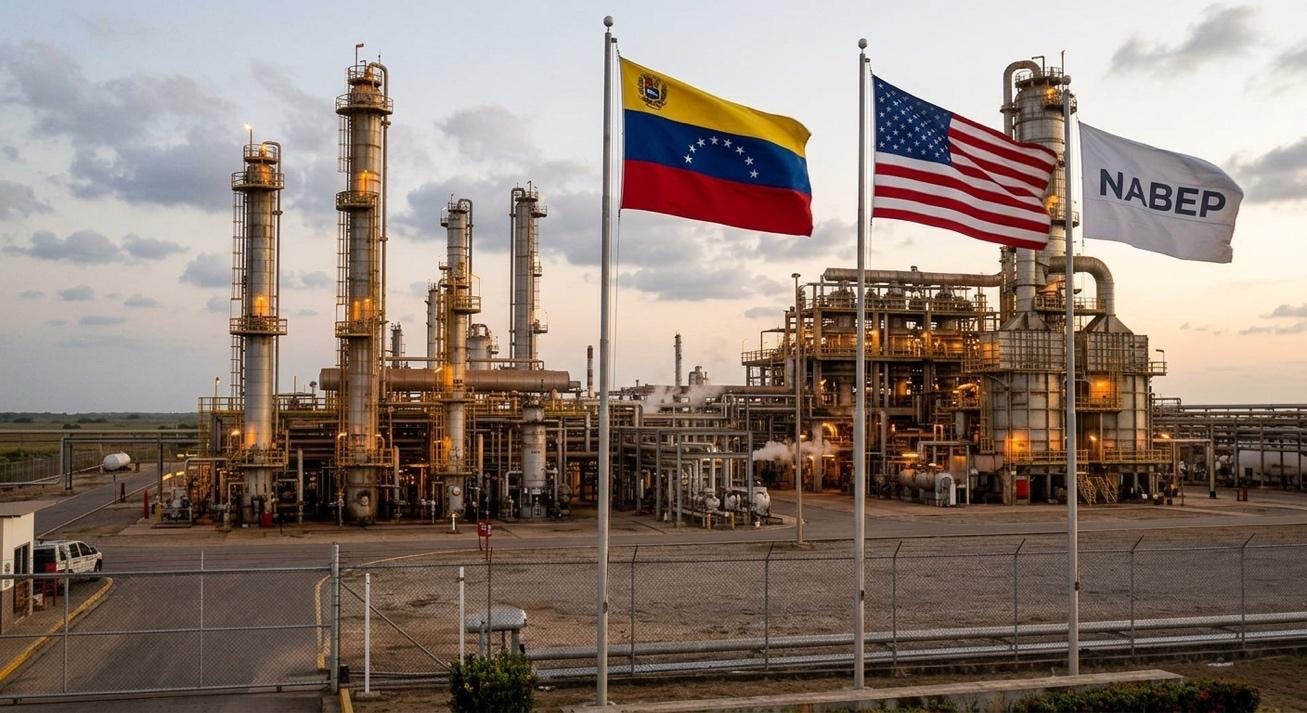
100-year oil concessions strengthen US access to Venezuela’s strategic resources and its influence in the hemisphere.
The country holds 17.2% of global oil reserves, but deteriorated infrastructure complicates their extraction and management.
The deal is signed between interim Venezuelan authorities under Delcy Rodriguez’s lead, US Secretary of State and US Secretary of War.
Context
The beginning of the year already showed the US administration’s line of politics, when by the 3rd of January the Nicolas Maduro’s abduction occurred under the Operation Absolute Resolve. With the country’s leadership shifting to his vice president, Delcy Rodríguez, the event and the consequences it could bring raised numerous questions about Venezuela’s future and the role the US would play in it. Some answers have become clearer along the course of this remarkable year and one is certain: the US is determined to enter the country for the management of strategic resources and the Venezuelan interim government has marked their shift willing to collaborate.
Eight months after the military operation, the interim Venezuelan authorities, Secretary of State Marco Rubio and Secretary of War Pete Hegseth have signed an agreement involving 100-year oil concessions. The aim of the extraordinary military operation in January was presented as the pursuit of justice in the fight against drug trafficking. Today, two months ahead of the elections, President Trump talks about oil prices in the country and assures that US “dominance in the hemisphere is never again questioned.” Behind its description as “the biggest oil deal in history” lies a broader strategy based on a continental vision. How does control over Venezuelan oil fit into this continental view?
Characteristics of the oil industry and dilemma
The oil found in Venezuela, mostly along the Orinoco Belt and the Maracaibo Basin, is a heavy crude oil representing the 17,2% of the global reserves. Despite the significant quantity, the nature of its kind makes its management highly complex, requiring specialized processes to extract, refine and transport it, that result in high production costs. It is in this difficulty where the dilemma around the resource lies.
The management of oil in the country had been previously affected in a severe way by a process of nationalization carried out during the Chavez presidency. The requirement of the country’s leader to limit the presence of international companies and the later internal disagreements from the regime with the state oil company PDVSA, caused the exit of a notorious amount of professionals and experts working in the industry. Moreover, the consequent judgement on ExxonMobil and ConocoPhillips cases, which were brought to international arbitration, resulted in a large-scale sovereign debt crisis.
The deterioration of the energy and electricity industry in the country has been progressive since the last decades, to the extent that it is affecting the daily life of every Venezuelan. According to Stefano Santarelli, Venezuelan researcher based in Italy; “Blackouts happen on a daily basis and can last up to six hours”. Two problems come along, he remarks: Not only the Venezuelan people have stopped trusting any possible improvement coming from a domestic solution, as it has not yet happened in the last fifteen years. But also, foreign investors are not willing to take risks in a country where the damaged infrastructure limits the oil’s industry capacity for recovery and development.
“US and US only”
The Chinese and Russian flags had previously been seen in the Venezuelan coasts too. Under the so-called “shadow fleet” they had been receiving and transporting oil until the U.S. seizure of the vessels. “China and Russia have been present in Venezuela to collect their debts, but there is no interest in investing in machinery or infrastructure in the country. NABEP is currently the only company willing to carry out those operations”.
The very first point of the published fact sheet from the United States refers to the North American Blue Energy Partners (NABEP) pointing to the 100-year concession the interim authorities granted to the private company. From the Venezuelan side, Rodriguez indicates 25 years of a bilateral project. Santarelli comments: “Although the 100 year concessions can be read as an unproportional amount, the decline of the infrastructure since the 80s-90s now requires such an investment of time to be recovered.” In the Official Gazette (no. 43.449) it is described as “an strategic instrument to continue the economic recovery of the nation”. In these circumstances, could the approach of the US be perceived as a prosperous solution?
Conversely, it is only the mirage of the short-term. Rajeev Lachmipersad, Geo-economic analyst at The Hague Institute of Geopolitics, clarifies: “under the umbrella of the US, Venezuela experiences an opening of the country. However, becoming a client-state implies the glass ceiling of the middle income trap”. Lachmipersad returns to the map of the Technate of America to further analyse the context.
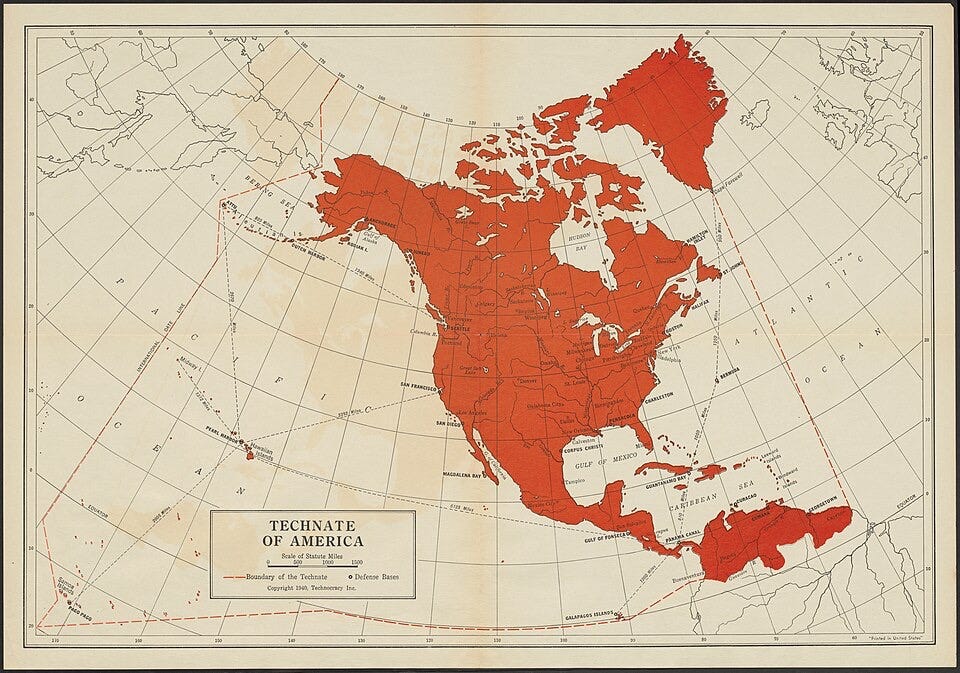
Devised after the great depression in the 30s and later introduced as a utopian vision of the post-World War II scenario, the Technate of America is a radical geopolitical proposal based on a continental defence. Since the new Trump administration arrived at the White House, similarities between the theory, discourses, and policies can be found in different aspects; The increase of a technical elite within government positions is the most direct relation to the term. Driving to the merge of politics and technological development, as big-tech companies become an actor with capability to intervene.
Extended to the dominance of other resources, “energy, critical raw materials and the access to markets” are a core part of the continental view, explains Lachmipersad. As evidenced with the request of Greenland and the conflict in Iran, January’s abduction and the present oil deal is framed under the same pretension.
Lastly, but most importantly, territory is not an asset in this form of “modern empire”. Control is practiced through exclusive access, but the overtake of territory would mean the management of a different society, something that would not be productive to the nationalist view. As criteria for the deal “a majority of NABEP’s board of directors must be U.S. citizens. NABEP will have reputable U.S. auditors, lawyers, and advisors and the U.S. government’s agreement with NABEP is governed by U.S. law and is subject to the jurisdiction of U.S. courts” is indicated. The MAGA movement coexists with the continental view, “it is all framed as a security matter and American wellbeing. There is an alignment of tech development and libertarianism with MAGA influence, together with the continental thinking”, asserts Lachmipersad.
Although the country’s sovereignty remains on Delcy Rodriguez’s leadership, the US intervention reinforces the unequal power relation in which Venezuela becomes a client state to the great power.
Repercussions
In the international realm, the continental security paradigm behind the control of oil points to the broader shift in the global geopolitical order: US influence is strengthened in the Western hemisphere, forcing other great powers to reconsider their position in the region while Latin American strategic autonomy is narrowed.
Furthermore, at the national level, the closeness of the interim authorities to the United States entails a distance between Delcy Rodríguez’s government from the Chavista rule and later Maduro’s regime. However, becoming highly dependent on the expansionist power, the consequences for the Venezuelan people are yet to be seen. “The deal is occurring under an interim government not chosen by citizens, which involves a hundred-year decision,” announces Santarelli. Some advocate for the rapprochement, if only to see changes, while others fiercely oppose US involvement, and a significant number consider migrating and “starting from scratch” as a solution to the country’s current situation.