


In Summary
Indian trade tariffs are in Trump’s sights: According to Trump, the US trade deficit with India must be rectified. The idea of reciprocal trade tariffs appears to be more ‘impactful’ than initially thought.
Luring India away from Russia and possibly China: Despite the start of talks between the US and Russia, it remains in America’s geopolitical interest to lure India away from Russia and possibly China, using both the carrot and the stick.
Migration and the US labour market: India is cooperating fully in the repatriation of illegal Indian migrants. It remains to be seen whether this will help to retain the H1B visa, which is highly sought after by India and Elon Musk.
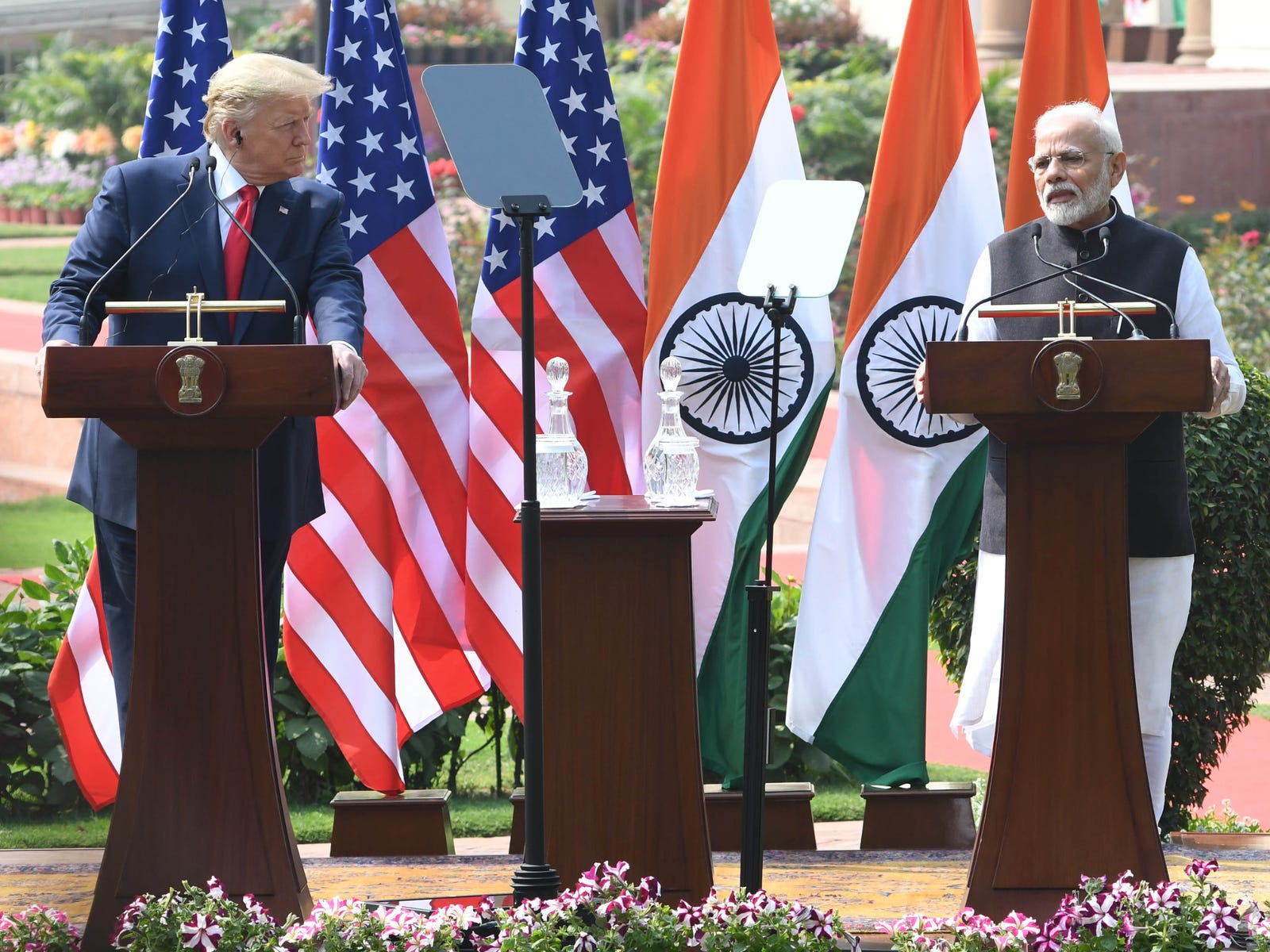
Update India | Prime Minister Narendra Modi wasted no time in making a fresh start in India-US relations. Trump is extremely popular in India. Although no specific opinion polls were conducted, research was carried out into how often people searched for Trump and Harris online. With the exception of one southern state (Tamil Nadu, where Harris’s mother was born), Trump stood head and shoulders above the rest across the whole of India. Expectations were therefore running high when, on 13 February 2025, Prime Minister Modi became the fourth world leader to visit Trump at the White House. Could this signal a revival of the apparent ‘bromance’ between Modi and Trump? Can we expect a second, megalomaniacal Howdy Modi and Namaste Trump event any time soon? And could India-US relations finally reach unprecedented new heights?
It is said that the first meeting is the most important of all and will set the tone for future encounters. And what a difference this first meeting with Trump made compared to that with Biden. Whilst in Europe Trump is still viewed with astonishment and a sense of betrayal, in India they are over the moon with their geopolitical fortunes. The meeting wasn’t exactly plain sailing, and there’s still no sign of a ‘bromance’, but the diplomatic hospitality was a welcome start for India.
At the previous first meeting with the Biden administration, Vice-President Harris gave Prime Minister Modi and the world’s press a lecture on human rights and inclusivity in India, running through a list of potential violations of the rule of law and human rights in the country. A number of Democratic MPs continued to harp on about this during Modi’s visit to America, and even after the visit, India continued to receive these unsolicited and unwelcome ‘lessons and moral guidelines’ from the Biden administration and the Democrats.
There was absolutely no mention of this whatsoever from Trump and the Republicans. India’s internal affairs were left to India; Marco Rubio (the US Secretary of State) had previously held his first official bilateral meeting with his Indian counterpart, S. Jaishanker, and as a welcome gift, Trump handed over a terrorist (who was partly responsible for the 2008 Mumbai terrorist attack) to India. On top of that, calling Modi a ‘great leader’ and a ‘much better negotiator’ made the whole thing feel like a lovely warm bath.
However, there is no ‘bromance’ as yet, and this became immediately apparent as soon as the discussion turned to bilateral trade relations. Trump believes that India treats American companies unfairly by imposing tariffs of up to 150 per cent on them. Examples of these high tariffs were therefore frequently cited in the presence of Modi and the press, with a view to restoring the balance of trade between the two countries. Total India-US trade stood at around 129 billion dollars in 2024; of this, Indian exports to the US amounted to 87 billion dollars and US exports to India to 42 billion dollars. According to Trump, India’s trade surplus of 45 billion dollars is the result of an artificially unfair playing field created for American companies.
Mutual trade tariffs have also become Trump’s catchphrase of late. ‘It doesn’t matter what they tax; we’ll do the same,’ said Trump standing alongside Modi. Incidentally, this is a proposal that Trump intends to apply to all countries, not just India. With this tit-for-tat approach to tariffs, Trump is initially seeking to impose reciprocal tariffs on Indian exports to the US. Interestingly, Modi did not utter a word about these reciprocal tariffs, whilst Trump, standing alongside Modi, complained about them to the press on several occasions.
In India, several analysts have indicated that reducing trade tariffs will not be a problem for India and will not stand in the way of a future free trade agreement. Trump may well cite examples of 70 per cent, 80 per cent and 150 per cent, but these are mere exceptions. Between 75 per cent and 80 per cent of US exports to India are subject to 5 per cent tariffs. The thinking is that reducing or completely abolishing tariffs (in certain sectors) should not be too great a step for India.
Although this line of thinking seems logical at first glance, there may well be a significant catch. A memo on the White House website suggests that, when calculating these reciprocal tariffs, consideration is given not only to the other country’s official trade tariffs, but also to factors such as VAT, indirect taxes, bureaucratic barriers, domestic subsidies for local companies, and access to and the awarding of domestic government contracts. In other words: to what extent do American companies gain completely unhindered access to domestic markets and public procurement contracts? If Trump sticks firmly to this line (in light of Modi’s ‘Make in India’ initiative), this snag could cause quite a stir.
Nevertheless, optimism remains high. To further reinforce this picture, Trump and Modi indicated their intention to grow bilateral trade to 500 billion dollars by 2030 (with each country exporting roughly the same amount to the other). The first phase of the trade agreement is due to begin by autumn 2025, covering tariffs, access to domestic markets and the integration of supply chains. Both world leaders emphasised that the India–US relationship must reach unprecedented new heights and that they will do their utmost to achieve this.
This cannot be viewed in isolation from the US strategy to gradually distance India from Russia and to prevent, as far as possible, any future rapprochement between India and China. The forthcoming talks between the United States and Russia should not be seen as the start of a new geopolitical partnership, even if these countries reach an agreement on Ukraine, NATO, the Middle East and sanctions. From an American strategic perspective, Russia will, at best, be ‘upgraded’ from ‘official enemy’ to ‘adversary’. Russia remains the second-strongest military and self-sufficient power in the world with foreign ambitions, and thus, according to the principles of American geopolitics, by definition an adversary with whom the Americans must ‘deal’ in the long term.
Russia is India’s most strategic partner. Nevertheless, we have seen that India, too, has begun in recent years to diversify its geopolitical options more effectively. Consider, for example, the decline in Russian arms exports to India from 62 per cent in 2017 (of India’s total arms imports) to 36 per cent in 2024. In reaching the 500 billion target, there is also plenty of low-hanging fruit. The additional sanctions on Russia’s shadow fleet may, in the short term, stimulate further US oil and natural gas purchases by India. Russia will also make its own counter-offer. Following Trump’s tentative commitment that India might also be able to purchase the F-35 (JSF) in the future, Russia immediately stated that India could purchase the Russian variant, the Sukhoi-57; with technology transfer, production in India and a price 3.5 to 4 times lower.
Elon Musk’s visit to Prime Minister Modi is a consequence of the heated debate within the MAGA camp regarding the H1B visa. This visa enables skilled workers, particularly in the IT sector, to work in the US. 75 per cent of H1B visa holders are Indian. Within the MAGA camp, led by Steve Bannon, a heated debate has flared up over whether all these Indians are stealing American jobs and why they absolutely must be in the US to provide digital services. Elon Musk, himself a former H1B migrant, is a strong advocate of the H1B visa and has indicated that he will defend it tooth and nail.
India does not wish to get directly involved in this MAGA ‘civil war’. In the meantime, Modi has indicated that India will cooperate fully in the repatriation of illegal Indian nationals in America, adding that these individuals should not have been in America in the first place. By quietly cooperating on Trump’s key election issue, Modi hopes to create a favourable impression on Trump. Time will tell whether Trump and his MAGA supporters are impressed by this and whether the H1B visa scheme for India will largely be maintained.
This article was translated, find the original article here.
