



The primary purpose behind global supply chains’ relocation to Southeast Asia is to stabilize and secure the industry, using the region as their “China plus one” diversification strategy.
Although the region can host the physical supply chains from both superpowers, its non-alignment policy is challenged by competing tech ecosystems.
The involvement of middle powers in regional tech development offers a “third pole” that counterbalances competing US and Chinese influence.
If in the past Southeast Asia was a battleground between capitalism and communism, in recent years the region has become a multi-layered geoeconomic arena for US and China’s competition. One of these dimensions is supply chain dominance and autonomy, which has placed regional countries under ever-increasing geopolitical pressure over whether to rely on Chinese or US suppliers. Indeed, the heated competition between the world’s two superpowers in East Asia has driven supply chains to transfer intermediate steps of production, such as manufacturing, assembly and packaging, to Southeast Asia. This shift has not only elevated the region’s global position, but also placed it at the center of power rivalry, challenging the future of ASEAN non-alignment as the region attempts to balance its economic interests against the geopolitical friction arising from global supply chains.
The Supply Chains’ Shift to SEA and the Backdoor Dilemma
While semiconductors have become a crucial asset in geopolitics, the extreme fragmentation of their production, which creates complex supply chain networks, has prevented countries from being self-reliant, requiring, instead, more than 500 steps crossing more than 70 different borders. Among this long process, the Indo-Pacific represents the geographical mainstay for global supply chains, with Southeast Asia hosting the final steps of manufacturing, namely, assembly, testing and packaging (ATP). Due to a combination of economic pull incentives and geopolitical push factors, the region has become a primary destination for global supply chain relocation.
While on one hand the region offers a rapidly growing semiconductor market, low costs and an abundant labor supply; on the other hand, the tightening US export restrictions on China have been forcing supply chains to find a neutral operational zone. Because specific companies hold monopolies on crucial components in the supply chain creating strategic chokepoints, such as ASML on lithography machines, world superpowers have been enforcing export controls as geopolitical weapons to cut out dangerous competition. Exacerbated by China aggression towards Taiwan, supply chains have been embracing the “China Plus One,” a diversification business strategy aimed at establishing secondary hubs of production and manufacturing in Southeast Asia to avoid being caught in the middle of the geopolitical clash.
This dual strategy aligns with the expansion of major semiconductor players in the region, such as ASML and NXP. ASML, the world’s pivotal company in producing the most advanced semiconductor lithography systems, is a prime example of how its suppliers are relocating to Southeast Asia to secure a secondary manufacturing and assembly line, as well as strategic partnerships, while keeping production costs low, as the new ASML supplier tech hub in Malaysia shows.
The involvement of ASML supply chain in Southeast Asia directly impacts the future of the region, acting as a catalyst to the expansion of the region’s semiconductor industry. This shift has also raised concerns over possible spillover of technological knowledge to China. When asked about the likelihood of this problem arising, Southeast Asian affairs analyst Mark Ysla warned that: “The risk is real. Southeast Asia has large ports, free trade zones, electronic distributors, assembly facilities, and deeply interconnected commercial relationships with China. These are legitimate economic strengths, but they can also make it difficult to distinguish normal trade from deliberate diversion. Restricted components may pass through multiple companies or countries before it reaches its final destination. (...) It may involve private intermediaries exploiting complex supply chains or gaps between different national control systems. (...) So for me, ASEAN should not be described as a collective backdoor for China, but it could become a collection of weak links if national rules and enforcement capacities remain uneven.”
The Future of ASEAN Non-Alignment Policy
Given the region’s heavy trade with both the US and China, the ASEAN non-alignment policy has become essential, yet fragile, in a time of global competition and polarization. As China and the US pursue decoupling, a targeted economic separation that strives for the independent development of technology and supply chain self-reliance, Southeast Asia becomes a “connector economy” between the two superpowers’ technological blocs. As Ysla clearly explained: “ASEAN countries are not quietly resisting Western technology footprint. They actively want it because it helps their economy, but they don’t want the political conditions attached to that investment to close off their relationship with China. So the message is essentially that investment is welcome, but geopolitical alignment should not be the price of entry.” While conceptually straightforward, this request may prove more complex to satisfy than anticipated.
The relocation of the supply chains to the region not only carries physical hardware, but also different tech ecosystems, which carry their own legal standards, cyber infrastructure, and export controls, thus expanding the semiconductor battleground to Southeast Asia. As the world becomes more polarized, the semiconductor industry inevitably divides into exclusive tech blocs. Although the region can host the physical supply chains from both superpowers, its non-alignment policy is fundamentally challenged by the competing tech ecosystems attached to them. When reflecting on the future of ASEAN non-alignment, Ysla argued: “ASEAN can maintain political non-alignment, but complete technological neutrality will become increasingly difficult. Because when you speak about advanced technology, this particular technology depends on standards, licences, cloud infrastructure, cyber security rules, equipment, software, and so on and so forth. These are becoming divided between competing American and Chinese-linked ecosystems. These two countries are tech giants and they are creating their own ecosystems respectively. Once a country adopts one system, it may become difficult or costly to switch to another (...) ASEAN’s geopolitical leverage will not come from choosing between China and the West. It will come from making itself indispensable to both. (...) ASEAN will remain a critical battleground, but it can also become an influential strategic connector.”
The Strategic Role of Middle Powers
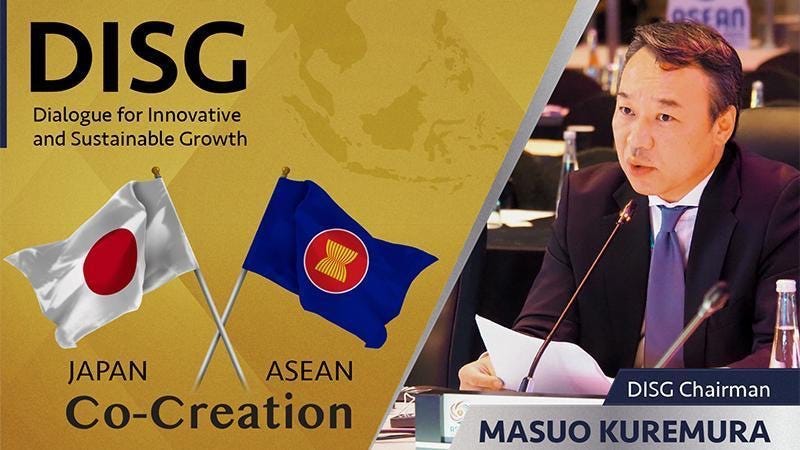
Dr. Jeroen Groenewegen-Lau, senior analyst of the science, technology and innovation program at MERICS, offered a sharp nuance, illustrating how, although the US represents “the second power bloc,” after moving away from the strategic categorization of “countries of concern and like-minded countries” under the Biden administration, towards “bilateral diplomacy and targeted alliances,” the US has created “a much more fragmented” regional landscape. “This means that, of course, other regional powers have become active in the region.” Indeed, Japan’s long-standing involvement in Southeast Asia has rapidly intensified. The 18th DISG Task Force Meeting held in Bangkok on July 8, 2026, highlighted the ASEAN-Japan cooperation in securing the semicon supply chains, as well as joint investments and innovation in the AI stack, establishing a third pole that balances the polarizing influence of the US and China. This growing relationship not only concerns semicon supply chains, but it also has concrete military implications, displaying the tight link between ASEAN’s economic and security interests. As China and East Asia analyst Casper Wits explained: “Japan is almost quietly becoming very much a competitor there. They really see Japan as a counterweight against the Chinese. So Japan has more and more military cooperation with them, like training the Coast Guard in the Philippines so they can handle the South China Sea better. So a lot is happening now.”
Despite the potential of the EU to be a strategic middle power in Southeast Asia, its impact in the region has waned over time due to its absence from crucial regional forums and its emphasis on human rights, leaving space for other players to fill. However, the EU remains a “trusted” and alternative power with the ability to make a difference in helping the region to balance China and the US. As international organizations, the EU and ASEAN are very different, and yet they share multiple values, such as sustainable development, the international legal order, and respect for the differences between their member states. The EU’s €10 billion Global Gateway fund for Southeast Asian infrastructure, as an alternative to China’s Belt and Road Initiative, can be seen as the spark of European involvement in the region, bringing the European Union back into play as a strategic middle power. However, HIG geopolitical analyst Michel Don Michaloliàkos warned, “Mobilising strategic capital and resources is rather difficult for the EU, limiting its ability to be a third pole for ASEAN. This needs to be addressed.” At the same time, the recent relocation of crucial European supply chains to Southeast Asia provides a further push for the EU to pay attention to this strategic region.
Conclusion
Market opportunities and export restrictions on China fueled by the US policy have led supply chains to shift their production to Southeast Asia, as seen in the case of ASML’s suppliers, which have established a new hub in Malaysia. However, the fear of knowledge spillover, that is, knowledge transported to China through neutral ASEAN countries, persists. This relocation has direct repercussions on the geopolitical relevance of the region, challenging the future of ASEAN non-alignment. Indeed, commercially driven supply chains consequently carry a polarized tech ecosystem, binding host countries to specific geopolitical blocs. Japan and the EU’s increased involvement in the region’s semicon industry can act as leverage in securing ASEAN interests while safeguarding its non-alignment, demonstrating how middle powers can counter the US and China polarization.
Supply chains are usually treated as an economic issue, but this really shows how quickly they can become a strategic one. The idea that dependence itself can become a source of leverage is fascinating — especially when the vulnerability is hidden in something as ordinary as a supply chain.