


In Summary
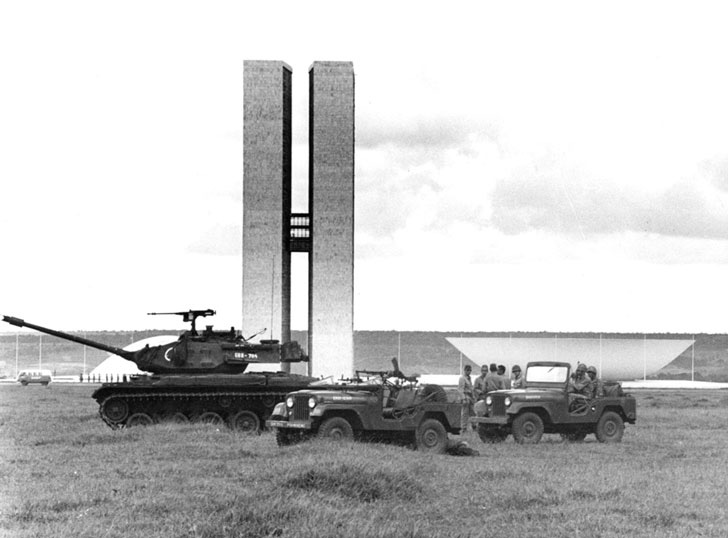
Civil-military relations in Brazil are still marked by the legacy of military rule and a seeming inability to distinguish fully between military and civilian realms
The 2022 attempt to prevent Lula from taking office highlighted divisions within the military and the continuing question of where the constitutional limits of military power lie
Civil-military relations are a two-way issue: the military must respect its constitutional role, while civilian politicians must avoid relying on the Armed Forces for responsibilities that belong to civilian institutions
In practice, this includes both the implementation of public policy and taking care not to confer on the military more political legitimacy than it should have by, for instance, acknowledging its political opinions regarding civilian matters
Sovereignty has become central to Brazil’s 2026 election, with fundamentally different understandings of how the country should protect its territory, resources, strategic industries, and political autonomy
Ultimately, the article argues that decisions about defence, military capabilities, funding, and the limits of military power must remain under civilian political authority and be taken after a maturing of the analysis of the civil-military relations guiding them
“War is a mere continuation of policy by other means.”
— Carl von Clausewitz
During his UN speech on September 22, the current Brazilian president Luiz Inácio Lula da Silva said, referring to the iconic Clausewitz quote, “War is not the continuation of politics by other means; it is the total failure of politics.” Both the original quote and Lula’s reference allude to the fact that the relationship between military force and political objectives contains nuances and power struggles between the institutions with the legitimate use of force and those responsible for setting its mandate and holding the leash that provides such legitimacy.
In Brazil, the upcoming presidential elections, around which there is the ever-present threat of U.S intervention, and the strategic priority of rare-earth minerals means that the issue of sovereignty has become a hot topic. And when speaking of safeguarding a nation’s sovereignty, the role of the military, as well as its limitations, is unescapable. However, from a Brazilian standpoint, this hasn’t ever been straightforward. In fact, Brazil has had a difficult relationship with its military from a democratic perspective.

