


Introduction
When Saudi forces struck Sanaa airport on 13 July to prevent an Iranian flight from landing in Yemen, few expected that within two months the pro-Iranian Ansarullah Movement (aka the Houthis) would sweep to the western coastline and the Bab al-Mandeb Strait, that the Saudi-backed, internationally recognized government coalition — or Presidential Leadership Council (hereafter PLC) — would collapse, and that Saudi oil exports would fully stop due to Houthi missile and UAV strikes.”
From Crisis to Full-Scale War: Timeline of the Escalation
3 July — An Iranian flight carries an Ansarullah delegation to Tehran for Ayatollah Khamenei’s funeral, the first direct Sanaa–Tehran flight since 2015. Riyadh faces two options: accept the Ansarullah demand for its delegation’s return flight to land in Sanaa and preserve the 2022 truce (a de facto capitulation) or reject it and risk renewed conflict. It chooses confrontation.
13 July — The Saudi air force bombs the air corridor over Sanaa airport to block the delegation’s return flight; the aircraft ultimately lands at Hudaydah instead. Ansarullah forces retaliate the same day, striking Saudi Arabia’s Abha International Airport.
20 July — Following strikes on the Jazan refinery, Ansarullah declares an air and naval blockade on Saudi Arabia, to remain until Riyadh lifts its own decade-long blockade of Ansarullah-controlled territory.
30 July — Abdelmalek al-Houthi declares that “the indicators show that Saudi Arabia is moving toward a full-scale escalation,” adding, “we will seek God’s help against them.” The Ansarullah Movement launches wide-scale mobilization and attacks on enemy concentrations, including around Mocha port.
14 August — Russia’s UN Security Council representative rejects calls for “maximum pressure” on the Houthis, instead urging the lifting of the Saudi blockade and political recognition of the Ansarullah Movement as a major party to any settlement — a development Ansarullah reads as a diplomatic win.
3 September — The offensive proper opens with a major push in Maqbanah, western Taiz, after weeks of mobilization.
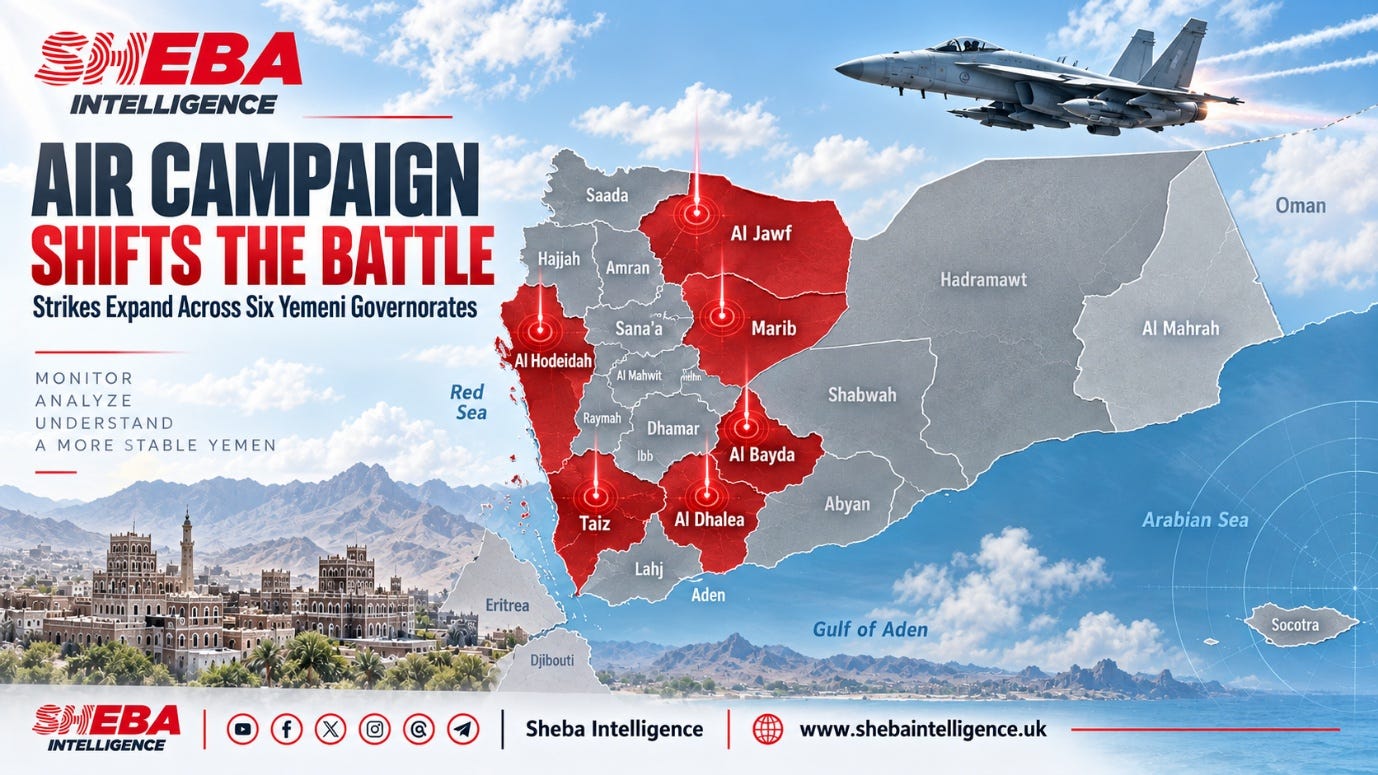
6–7 September — Yemeni government forces counterattack across al-Jawf, Marib, Taiz, al-Bayda, Hajjah, al-Dhalea, and al-Hodeidah, aiming to force an Ansarullah redeployment from the coast to the north. PLC units make temporary gains in al-Jawf, briefly suggesting a shifting balance, but this proves illusory.
9–11 September — Ansarullah forces launch their main offensive along the west coast, seizing Al-Mokha, Jabal Zuqar, the Greater and Lesser Hanish Islands, Dhubab city, and Mayun Island — setting foot on the shores of Bab al-Mandeb.
12 September — Allied Iraqi Shia militias strike the Saudi East–West “Yanbu” pipeline, forcing Riyadh to shut down a line carrying 4–5% of global oil supply.
Deconstructing the “Blitzkrieg” and Its Outcomes
As the dust settles, three questions dominate: why did Saudi-backed PLC forces collapse so quickly? Why did the Houthis escalate now? And what comes next?
Ansarullah Victory, or Structural Failure in the Saudi-Backed Government Camp?
Before the war, several indicators pointed to a stronger performance by PLC forces. The expulsion of Emirati forces from Yemen in January 2026, and Riyadh’s consequent political consolidation over non-Ansarullah-controlled territories, appeared to strengthen unity among the political factions within the fragmented government camp. Rising interception rates of arms shipments destined for Ansarullah forces suggested improved coordination among factions of the PLC coalition. Saudi money and equipment — drones especially— flowed to government forces, signaling firmer Saudi resolve. Diplomatically, the nascent Mecca Pact with Pakistan and Turkey boosted Riyadh’s regional standing and raised prospects of further military backing.
Yet the fall of Al-Mokha and Bab al-Mandeb within a single week proved these preparations were castles built on sand. Why did the PLC camp perform so poorly despite material abundance and numerical and air superiority?
Houthi Tactical and Operational Performance
Ansarullah forces opened shaping operations between 9 August and 3 September, targeting Hadramawt, Marib, Taiz, and Hodeida governorates, and systematically bombing Al-Mokha port, enemy command structures, arms depots, bases, unit commanders, and civilian facilities with over 100 missiles and 60 drones — forcing dispersal while masking their true objective: the advance on Al-Mokha and Bab al-Mandeb.
During this phase, Ansarullah forces concentrated at the coming offensive’s frontlines: regional troops, elite units, artillery, and drone and missile forces, totalling roughly 14 brigades and 10,000–12,000 troops. According to Yemen specialist Ibrahim Jalal, command was shared among Ansarullah, Iranian, and Hezbollah officers. In particular, IRGC-Quds Force commanders Abdul Reza Shahlai and Ali Mohammad Rezai played a vital role. Reports indicate that over 400 IRGC personnel were embedded in the expeditionary force in tactical and operational roles. The C2 structure was effective and the units operations well coordinated.
On 3 September, Ansarullah units, infiltrated on small groups along the al-Kadha–al-Barh–Maqbana axis, exploiting small gaps in enemy lines. Backed by drone, missile, and artillery fire, they severed the Taiz–Mokha supply road, while drone units targeted hostile artillery crews to strip pro-PLC infantry of fire support. Fierce, close quarter battles in extremely treacherous terrain were among the main features of the conflict.
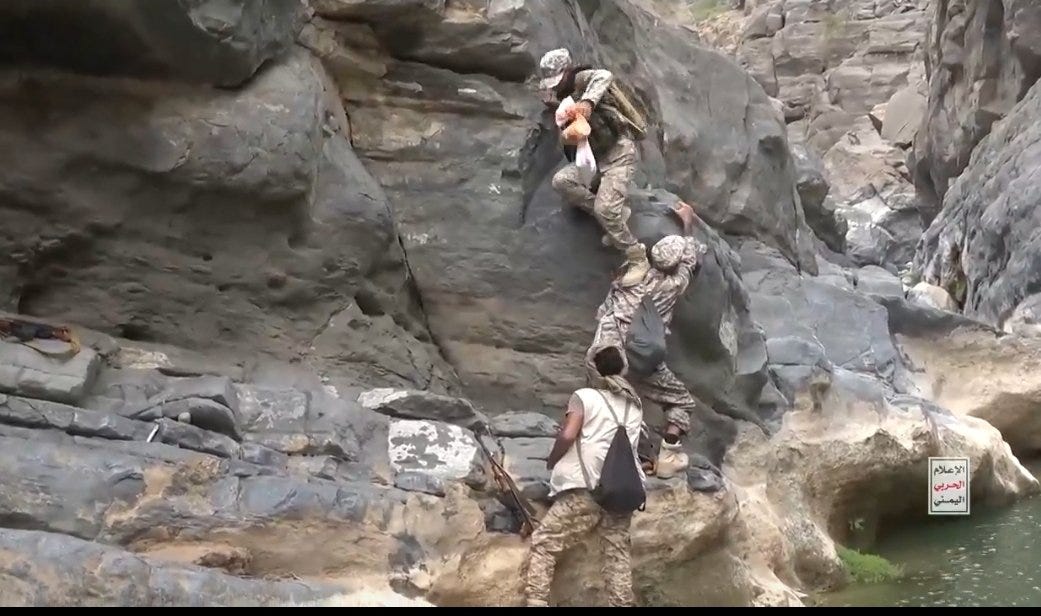
Another decisive factor was the proximity of PLC command infrastructure to the front: the Joint Operations Center in Jabal al-Nar, just 18 km from the front line, had no alternative post or withdrawal plan — a fatal mistake. Its capture by Ansarullah infiltrating forces collapsed C2 across the fighting brigades, triggering panic and a disorganized, if not chaotic, retreat that let Ansarullah troops seize intact vehicles, arms stockpiles, and various equipment at Al-Mokha on 10 September, and at the Bab al-Mandeb Strait the following day.
Furthermore, another decisive factor was Ansarullah’s successful information-war campaign. Using AI, Ansarullah forces fabricated a convincing false retreat order from Al-Mokha, dated 9 September and attributed to Tareq Saleh, commander of the National Resistance Forces (NRF), the main PLC military formation on the western coastline front. Spread via radio, WhatsApp, and SMS, it sowed panic: NRF units withdrew without informing neighboring Southern Giant Brigades units or local resistance forces, which were left exposed and forced to retreat as well. It was a major communications-security failure with devastating results.
Yemeni Government coalition cohesion was itself weak. The PLC military coalition consisted of different military formations, such as the National Resistance Forces (NRF), the Giants Brigades, National Shield Forces, Tihama formations, Taiz Axis units, and the formal military regional commands. These formations had been operating separately for years and were far from constituting a unified, functional military force. Moreover, they had different political backgrounds, including southern separatists, supporters of former president Ali Abdullah Saleh, Islah (Muslim Brotherhood), and Salafis. The divisions and the differing, if not contradicting, political aims among them were strong. For example, the southern separatists harbored strong grievances against Tareq Saleh — nephew of the former president and commander of the NRF forces. Memories of the 1994 civil war and the marginalization of the South by the North were still fresh.
Moreover, units like the NRF remained under Emirati C2 and intelligence structures until January 2026; the transition to a Saudi-led command structure was incomplete, leaving overlapping loyalties among field commanders and reports of commanders being abroad when the attack began. Saudi air support also lapsed during the critical 3–10 September window, suspended after Ansarullah strikes on Saudi oil facilities — effectively neutralizing Saudi air power at the decisive moment. The lack of air support can also be explained as a Saudi attempt to avoid repeating the mistake of the direct intervention of 2015, which provided Ansarullah with the effective narrative of national resistance and defenders of sovereignty. In addition, the PLC forces multi-front counteroffensives of 6–7 September were repelled without diverting enemy forces north. This failure was mainly the result of a lack of coordination among the different PLC military formations. It also reflected lessons the Houthis drew from the 2025 US airstrikes, after which Ansarullah’s regional military commands adopted a more decentralized, autonomous battle order.
Why Now?
Three factors explain the timing.
Socioeconomic Hardship
The gravest threat to the Ansarullah Movement’s political survival was never military but economic. The Saudi-imposed air and naval blockade since 2015, compounded by war damage, has devastated the economy across Ansarullah-controlled territory — home to roughly two-thirds of Yemen’s population — producing a food crisis and fueling corruption and social unrest. Ansarullah’s leadership recognized this. On 20 September 2023, Abdelmalik al-Houthi publicly acknowledged state failures in addressing socioeconomic hardship and corruption within the movement, pledging reform. A collapsing economy also strains the budget needed to sustain a large military, security, and bureaucratic apparatus — the same combination of hardship and overreach that brought down Yemen’s republican regime in 2011.
Ansarullah’s leadership moved beyond rhetoric. Since February 2026, they have demanded salary payments from Saudi Arabia totalling $13.08 billion. The de facto Ansarullah government’s PM, Mohammed Ahmed Muftah, called for “fulfilling the commitments of the truce, ending the aggression, lifting the blockade, and releasing salaries as a basic right,“ while warning that Ansarullah’s forces were “fully prepared to confront any escalation.” In March 2026, marking the 11th anniversary of the Saudi-led intervention, Abdelmalek al-Houthi catalogued the war’s economic damage and demanded $57 billion in reparations — an issue Ansarullah resolved to press once the Gaza ceasefire took hold.
Saudi Power Consolidation
Following the Saudi-Emirati military standoff in Yemen in December 2025 and the Emirati expulsion in January 2026, Riyadh gained firmer political control over Yemen’s non-Ansarullah territory and — being more determined than Abu Dhabi had been to deter Ansarullah — moved to unify the fragmented PLC coalition militarily and politically. This alarmed Ansarullah’s leadership, which sought to prevent the effective consolidation of a more capable, unified opponent backed by abundant Saudi resources. The erosion of Ansarullah’s drone monopoly and the increase in interceptions of Iranian arms shipments signaled a power balance tilting toward the newly unified Saudi-led PLC coalition — a shift that would have strengthened Saudi legitimacy in Yemen. Ansarullah moved to deny Riyadh the time needed to consolidate. According to Yemen expert Elisabeth Kendall, the Houthi territorial gains are shifting the balance of power in their favour, while weakening the position and legitimacy of both Saudi Arabia and the PLC coalition in Yemen.
The Iranian Factor
The third, perhaps catalytic, factor is the ongoing Iran-US regional war. Ansarullah largely stood by during its opening months, but this shifted after the June truce. In his first public appearance on Iranian television on 15 June, Qaani declared: “From the Strait of Hormuz to Bab al-Mandab and from the Persian Gulf to the Red Sea, there will be a new security belt of resistance.“ The message was unmistakable — Tehran was prepared to weaponize two of the world’s most critical chokepoints for hydrocarbon trade.
Ansarullah, who see themselves as strategic partners rather than proxies within the Axis of Resistance — especially since Hezbollah’s degradation — judged the benefits of military engagement to outweigh the costs. Beyond the weakening Saudi grip and Ansarullah’s strengthening negotiating position, the stakes were higher still: controlling the west-coast ports and the Bab al-Mandeb Strait would effectively break the naval blockade, restoring and potentially expanding the arms-supply line from Tehran, while dramatically boosting Ansarullah’s prestige and power projection at home, regionally, and globally.
What Next for the Houthis?
Having secured the west coast, Ansarullah forces appear set to target Marib and Taiz. Marib — the last government-coalition-held northern governorate and home to Yemen’s largest oil and gas fields — would hand Ansarullah significant economic resources and a stronger hand in any future settlement. Its loss would be a devastating political and psychological blow to the PLC camp on top of Al-Mokha and Bab al-Mandeb, while sharply boosting the Ansarullah Movement’s legitimacy among Yemenis.

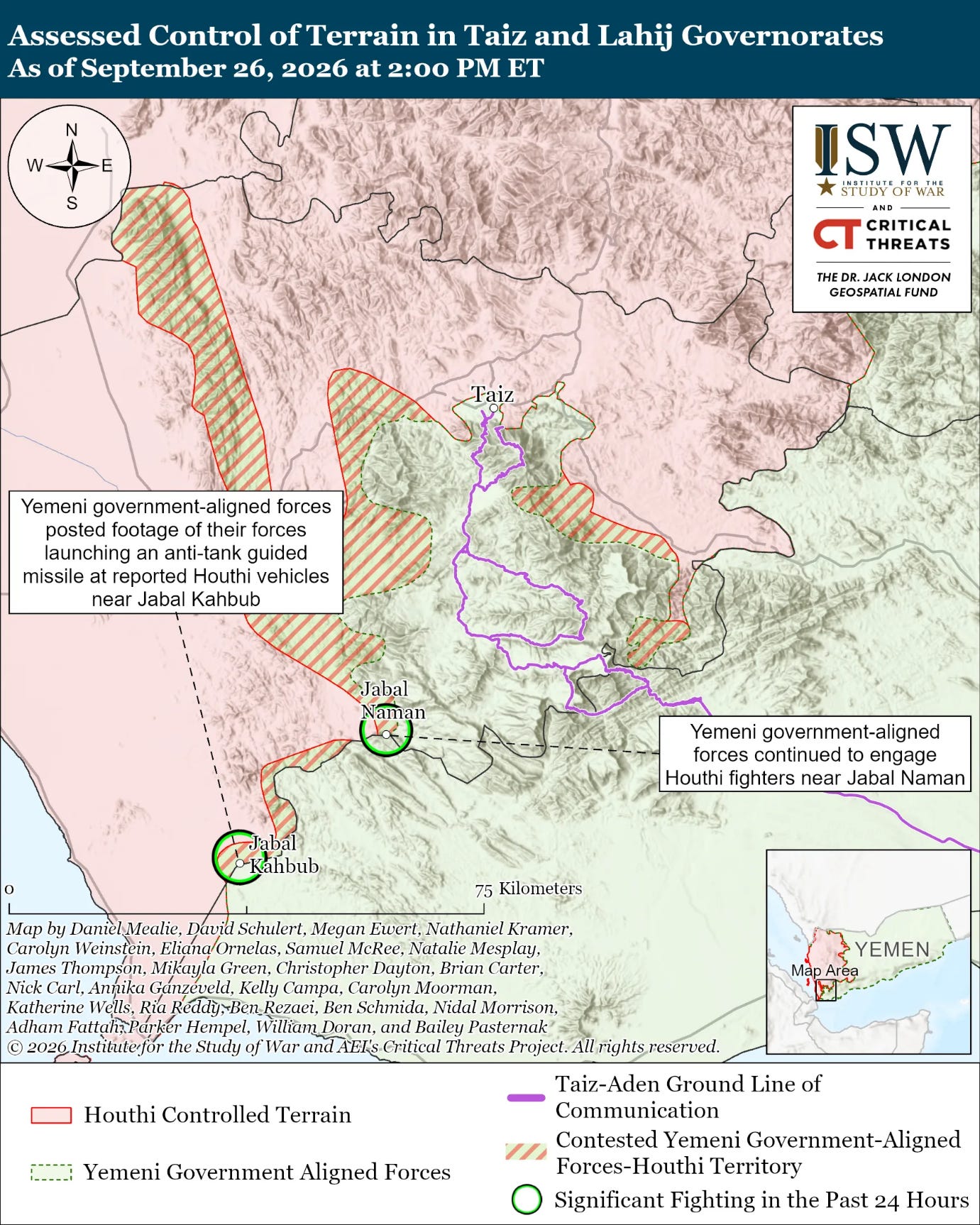
Taiz matters both geographically and politically. It bridges the northern governorates and the southern coastline, and its capture would sever the strategic road network linking Taiz and al-Turbah to Aden — the PLC capital — cutting supply routes between the interior and the port city. Taiz has also stood since 2014 as a symbolic center of resistance to Ansarullah; its fall would deal another severe blow to both the morale and the political survival of the Saudi-backed PLC coalition.
Conclusion
Yemen’s recent conflict is still ongoing and fluid, with its ebbs and flows, and the final outcome remains unclear. Yet some conclusions can be drawn. Ansarullah is no longer a ragtag militia or rebel force — perhaps it was until 2009 — but rather a formidable, battle-hardened movement with a cohesive C2 structure and an effective military at the tactical, operational, and strategic levels: a hybrid army capable of conducting both irregular warfare and large-scale conventional operations with great efficiency. Moreover, it is very adaptive and a fast learner of new technological developments, such as Anthropic AI for weapon design.
By contrast, its opponent-PLC coalition, despite abundant Saudi support, remain far from constituting a cohesive and effective military machine. Diverse political goals and backgrounds, as well as internal rivalries, undermine cohesion-building efforts.
Moreover, while Iranian support has been significant to Ansarullah’s success, the movement has shown it can survive politically and militarily without it. The pro-Saudi PLC coalition, by contrast, is struggling to survive even with Riyadh’s strong, multilevel support.
The main drivers of the current conflict were the socioeconomic hardships in the northern territories and the recent consolidation of Saudi power in Yemen. Ansarullah’s leadership regarded these two factors as vital threats that had to be decisively addressed. The US-Iran war served as the catalyst for the conflict’s eruption.
The Ansarullah Movement’s recent territorial gains on the western coast, if consolidated, will provide domestic, regional, and global power projection, legitimacy (including through unofficial US talks), and relief from Saudi pressure. Yet the conflict remains active and fluid, and realities of the ground can always shift again.
Saudi Arabia is in a very precarious position. It faces a choice between two different strategic defeats. Saudi Arabia is being forced to choose not between victory and defeat, but between empowering the Houthis — if it accepts their demands — and enduring an open-ended war of attrition.
The Ansarullah Movement cannot be coerced by military means alone. Any Western or international military intervention is likely to fail. Given the current deterioration of US regional political and military influence, such an intervention would only boost Ansarullah’s legitimacy and political power. A combination of existing coercive measures (blockade, economic sanctions, and the threat of military action) with incentives — such as political recognition, a key role in a political settlement, a gradual lifting of sanctions, and inclusion in the international system — could prove more effective. Moreover, Iran’s role is crucial and cannot be ignored, so Tehran must be included in any future political settlement.