

In Summary
Women and girls remain the overwhelming majority of documented CRSV survivors. However, male survivors are also affected and remain significantly underrepresented in available data.
Stigma related to the social consequences for survivors, expectations around masculinity, gaps in reporting, limited services, and the categorization of sexual violence as torture can all contribute to male survivors remaining invisible.
Recognizing male survivors does not require shifting attention away from women and girls. It means recognizing gaps in documentation, care and accountability that affect the overall response to CRSV.
“A man who admits he was raped may no longer be viewed as a man at all. He is taught this long before it ever happens to him. Taught that he cannot cry, cannot break, cannot be ‘weak.’ So, when it does happen, he says nothing. Not because violence is rare. Because almost nothing around him is built to hear it in the first place.”
Shimaa Samy, Independent Journalist and founder of the Madad initiative
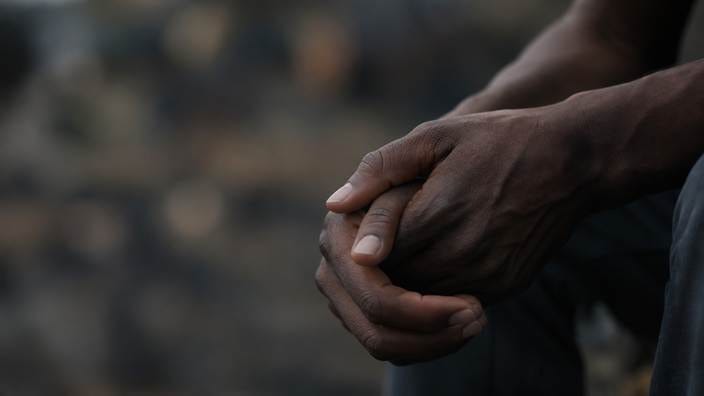
Trésor (name changed by the International Committee of the Red Cross), a 57-year-old man, stood outside a support center for survivors of sexual violence in eastern Democratic Republic of the Congo (DRC). He was too ashamed to enter and also believed that the center was only for women. Although Trésor eventually got help, his experience reveals a double burden faced which men and boys who survive conflict-related sexual violence (CRSV) may face. They are first overlooked as victims of sexual violence at all, and then, even once identified, struggle to have their experience acknowledged and taken seriously.
The United Nations defines CRSV as sexual violence that is directly or indirectly linked to conflict. Sexual violence is used, among others, to displace civilians from contested territory, punish and humiliate communities perceived as supporting an opponent, and weaken social ties within families and communities. It can also be linked to ideas of ethnic identity and family “honour.” Further, the ICC’s conviction of Bosco Ntaganda shows that such violence also occurred within conflict parties themselves. Commanders and soldiers hold power over their recruits, which then, in turn, make the abuse possible. These examples show that CRSV can be used deliberately to pursue wider political, military and economic objectives, including the control of territory and natural resources, as the United Nations emphasizes. Civilians are heavily affected, with consequences that can include long-term trauma and humiliation. Women and girls remain the majority of documented survivors.
The extent of CRSV is difficult to capture. In Eastern DRC alone, more than 90,000 cases of sexual violence were registered by service providers between January and September 2025 across North Kivu, South Kivu, Ituri, Maniema and Tanganyika. The UN mission MONUSCO separately verified 1,534 cases in 2025, although 32 of these cases occurred the years before. Only four men and four boys were among the UN’s verified survivors. That is eight of 1,534 verified cases, or about 0.5 percent. Cases included rape, gang rape, sexual slavery and forced marriage.
The ongoing war in Sudan further shows how little of this violence may become visible. Between April 2023 and April 2026, the United Nations Office of the High Commissioner for Human Rights (OHCHR) verified 546 incidents affecting at least 838 survivors: 539 women, 284 girls, eight men and seven boys. Another 320 incidents are still being verified. At the same time, the OHCHR emphasizes that these numbers represent only part of the reality and thus cannot be interpreted as illustrative for a complete picture.
Trésor’s hesitation outside the center, together with the very small number of men and boys in existing datasets illustrates the greater, structural issue of who is seen, recognized, and recorded as a survivor in the first place. This leads to the question:
Why do male survivors of CRSV in Sub-Saharan Africa remain underrepresented in the data, and what does this invisibility mean for how their experiences are understood and addressed?
The Global Context of CRSV
Importantly, CRSV is a global matter and framing it as uniquely “African” is both inaccurate and reductive. Treating it that way would reduce a general matter into an “African” one and reinforce the racist idea that violence, stigma, and underreporting are somehow characteristics of the African continent. According to recent UN reports, the same matter is present in Ukraine and Gaza.
CRSV is also historically documented, such as in Nazi Germany, during the Holocaust, where sexual violence against Jewish men and boys is only now being reconstructed by historians decades after the war.
A similar problem of late recognition can be seen in the wars that followed the break-up of Yugoslavia. Judson Ernandes, international law jurist, specialized in human rights and international criminal law, refers to Dubravka Žarkov’s concept of “homosexualization,” defined as sexual violence marking a male survivor as homosexual and thereby affecting his sense of identity. Ernandes applies this and explains that sexual violence against Croatian men was presented as part of the “homosexualization of Serbia,” while Serbian narratives used the same violence “in order to demasculate the identity and the state.” Male survivors, in other words, were used to support competing national narratives.
Gender, Targeting, and Forms of Violence
Ideas of Masculinity, Identity, and Disclosure
Yagi et al. (2022) found that male survivors, specifically in the DRC, described sexual violence as undermining their expected role as men who should provide, protect and procreate. Several described themselves as “destroyed” or “damaged.” The authors invoke the idea, drawn from earlier research, that male survivors are often seen as “dethroned princes.” The survivors included in Yagi et al.’s (2022) study, in fact, linked this loss of status and identity to serious consequences, such as marital breakdown, unemployment and symptoms consistent with post-traumatic stress disorder (PTSD). Although the study was small, with 14 participants around Bukavu, it describes the pattern, rather than prevalence, that male survivors experience sexual violence in ways that are also shaped by gender expectations. In other words, CRSV, perhaps, does not only cause harm through the act of violence, but, in fact, through challenging and affecting the gendered roles and social status attached to masculinity itself.
Such expectations can also make male survivors less likely to recognize or disclose what happened to them. As Hanna Weil, Sudan desk officer and coordinator at Amnesty International Germany explains, ideas around masculinity can make it harder for survivors “to even recognize themselves as survivors, let alone disclose what happened to others.” This helps explain why the comparatively lower number of documented male survivors should not simply be read as evidence that sexual violence against men does not occur.
Samy, who has reported extensively on Sudan, points to a specific mechanism behind this silence. She says “Men who are assaulted in Sudanese camps and detention sites are rarely alone. Often, ten or more men are assaulted at the same time, creating an unspoken agreement among survivors not to talk about what happened. Breaking that silence can mean admitting not only that they were sexually assaulted, but also that they experienced a form of violence that challenges deeply held expectations of masculinity.” In her account, the consequences of that violence may only become visible years later in changes in behavior that families struggle to name. “Some people start to say, ‘I think my brother, my husband, suffered from this,’ but he himself does not want to talk about it.”
Samy also points to a social distinction which, as she highlights, shapes disclosure differently for men and women. In her account, a woman’s assault is often treated, although wrongly, as something that socially impacts her wider family. “It may not only be my body, but also the body of my sister, my mother, my wife.” For men, she argues, there is no equivalent social frame. An individual survivor is left more isolated in deciding whether to speak at all.
Moreover, the low number of documented male survivors is difficult to understand through statistics alone. Individual verified cases show what these figures mean in practice. The UN fact-finding mission in the DRC documented, for example, the case of a 13-year-old boy who was raped alongside his mother, as well as a 14-year-old boy who was beaten and forced to engage in a sexual act with a female relative in front of his siblings. Importantly, the mission noted that such cases “remain largely unreported” even though some of them have been verified.
How Targeting Differs by Gender
Yet, the patterns of violence themselves differ from men and women, which makes disclosure only part of the picture. Weil points specifically to the war in Sudan and highlights that “we don’t have indications of systematic sexual violence against men in Sudan the way we see it with women and girls (...) Structurally, it hits women above all.” In Sudan, when men are affected, Weil says, it is “mostly executions and torture.” Where sexual violence against men is identified, “those affected are often people from, for example, the queer community.” This, however, should not make male survivors disappear from the analysis.
Gender further shapes how people are targeted and the forms of violence used against them. Weil points to reporting on El Fasher, Sudan, as an example. Amnesty International found that the Rapid Support Forces (RSF) targets people by origin and gender. Gender consequently “determines the type of violence a person suffers.” For men in Sudan, “it is not necessarily about preventing flight. It is more about targeted killing.” She describes a recurring pattern from eyewitness accounts: at checkpoints, “men are separated from women and children and then shot.” Thus, flight itself can be seen as the opening the RSF needed; as Weil argues, attempts to escape “made it possible to separate men from the rest of the population and kill them.”
For women, violence can take a different form. Sexual violence specifically happens “during and along the flight routes, at checkpoints, in the streets and sometimes even in front of family members.” Weil connects this to patterns seen across other conflicts. When a community is meant to be destroyed as a whole, armed groups go after not just “its armed members, the men,” but also “what secures a community’s continuity across generations.” She emphasizes that sexual violence does not kill a community physically in the way the killing of men does, but instead “attacks it through women’s social role as the ones who hold a community together and carry it forward.”
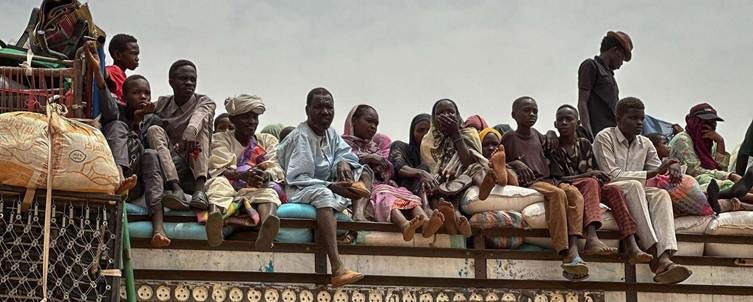
Thus, gender shapes both the targeting of individuals and the form that violence takes. Women and girls remain the overwhelming majority of documented CRSV survivors. At the same time, the experiences of male survivors are shaped by different forms of violence as well as by expectations around masculinity.
Recognition and Data Gaps
Visibility is shaped by how reports themselves are written. Aline Costa, legal researcher and project leader at the Centre for African Justice, Peace and Human Rights, says that even in 2026 “men and boys are a half sentence at the end of multiple paragraphs in some of the reports.” The problem is not only what gets reported, but also how male survivors are represented in the reports themselves. While she sees this as an improvement from earlier reporting that omitted them entirely, she argues that it still lacks the specificity given to female victims and survivors. That is crucial. As she puts it, “we need both the data and then the individual report, the individual experience.”
Furthermore, Costa sees the recognition problem as having two dimensions. “There are all the issues that apply to women and girls equally, and then there are issues that are specific to the gender of the survivor.” Costa points to more specific barriers for male survivors and highlights that “services are often designed for women and girls (...) legal frameworks, as well, often do not recognize male survivors adequately (...) and authorities are not trained to recognize that men and boys can be victimized as well.”
From an international criminal law perspective, Ernandes points to the case against Bosco Ntaganda, former Deputy Chief of Staff and commander of operations of the Forces Patriotiques pour la Libération du Congo (FPLC) in the DRC. The ICC convicted Ntaganda of rape and sexual slavery, including against child soldiers. The case provides an important example of sexual violence against male victims being recognized within international criminal proceedings.
Ernandes also emphasizes ways in which gender and, importantly, ethnicity shape who is targeted during a conflict. He refers to the ICC case against Abd-Al-Rahman, or “Ali Kushayb,” former leader of the Militia/Janjaweed, where Fur men, ethnic group primarily in Darfur in western Sudan, were targeted in part because they were perceived as fighters and community defenders. In 2025, the ICC convicted Abd-Al-Rahman of gender persecution against Fur men, making it the Court’s first conviction for gender persecution. Importantly, however, the underlying crimes in this finding were murder, torture and other forms of ill-treatment rather than sexual violence. Abd-Al-Rahman was also convicted of rape, but only against women, although there was evidence that acts of a sexual nature were performed against men.
This intersection of gender and ethnicity raises questions about how sexual violence against men is classified by courts. Ernandes refers to the ICC case of 2007-08 post-election violence in Kenya. Here, the survivors’ legal representatives argued that the forced circumcision of Luo men during the post-election violence constituted sexual violence. As Ernandes notes, “the acts were carried out against men who did not traditionally practice circumcision and were argued to have been intended not only to harm the individual victims, but also to assert power over their ethnic community and attack their identities as men.” The ICC’s Pre-Trial Chamber, however, was not convinced that the acts were sexual in nature and instead classified them as other inhumane acts. For Ernandes, this points to a wider problem in how sexual violence against men is understood in international criminal law. He questions, “why are international criminal courts more reluctant to label crimes as sexual violence when the victims concern men and boys? You and I might read the evidence and say, this is clearly sexual violence, the judges would say, no, it is not, because it is not sexual enough.” Where courts decline to name these acts as sexual violence, they are also less likely to be counted as such in reports and datasets.
Beyond Torture: Recognizing Sexual Violence in Detention
Detention settings provide a concrete example of why sexual violence against male survivors cannot be ignored. UN reporting identifies detention as a setting in which men and boys are significantly exposed to rape and other sexual violence, often used as torture, punishment, humiliation or a means of extracting information.
In Sudan, for instance, the OHCHR found that men made up around 20 percent of documented victims of sexual violence in detention. According to the OHCHR, this represents a significantly higher proportion of male survivors than in other patterns of CRSV. Many detainees had been imprisoned after being accused, without legal basis of affiliation with an opposing side, ethnic identity or other supposedly suspicious behavior. Sexual violence here is used to “extract confessions” and as part of broader discriminatory abuse.
Samy’s first-hand observations from working with survivors support this. In Sudan, both the RSF and Sudanese Army have operated detention sites. Samy argues that the collapse of oversight has made abuse more likely and harder to document, as “no one will notice, because there is a war.” Further, Samy foregrounds that rape occurs in detention and that survivors of all genders may struggle to put such experiences into words. In her conversations with former detainees she observed that men increasingly disclose “all kinds of torture, including sexual violence” when asked directly, but rarely elaborate.
A similar pattern was independently verified in the DRC. In November 2025, the UN fact-finding mission to the DRC published their report on North Kivu and South Kivu, documenting gang rapes of men and boys held in improvised M23 detention sites such as in shipping containers, underground cells and seized government buildings. This happened alongside so-called “corrective rapes” of LGBT detainees, carried out by guards or by co-detainees with the instigation or acquiescence of the de facto authorities.
Even these figures, however, likely undercount the real scale of the problem. The UN calls its own numbers a conservative estimate. Additionally, many cases specifically involving male survivors go unreported due to, for instance, stigma. The question, then, is what these figures actually capture. Costa is clear, going beyond the data within the dimension of detention: “the data is not reflective of reality,” a problem she sees across genders but considers potentially greater for male survivors because of the additional barriers they face. Samy similarly cautions against reading the small number of documented male survivors in Sudan as evidence that the violence itself is rare.
The same problem also affects how sexual violence is characterized when it is reported. Costa argues that similar to how survivors may describe their experiences as stated above without explicitly referring to them as sexual violence, CRSV against men and boys is often “recharacterized as torture, for example, or inhumane treatment.” In cases of detention, sexual violence may therefore be recorded more broadly as torture or ill-treatment. The UN Secretary-General’s 2026 report makes the same observation and notes that male survivors tend to refer to torture instead of sexual violence. The discussed above ICC Kenya case, provides an explicit example of how this is also reflected legally. The Court did not consider the forced circumcision of Luo men to be “sexual in nature” and instead classified the acts as “other inhumane acts.” This does not establish that CRSV against men is generally reclassified in this way, but it shows, following Ernandes, how the legal characterization of an act can determine whether it becomes recognized as sexual violence in the first place.
Barriers to Care
What happens when stigma, expectations around masculinity and the lack of appropriate services make it harder for male survivors to seek help and, consequently, to become visible in the first place? Research by the All Survivors Project in the Central African Republic found that stigma, shame, limited specialized services and weak healthcare capacity create barriers for male survivors at every level, from the design of health systems and even to how survivors see themselves. Many feared rejection by their families and communities. Others simply assumed services were meant for women and girls and never sought care at all. Healthcare workers, meanwhile, were often found to lack the training and resources to respond to male survivors appropriately. Similarly, research on male survivors in Eastern DRC notes that counseling services have historically been built around models developed for women and girls. Thus, resources for male survivors remain rather limited.
Trésor’s experience shows the possible consequences of the invisibility problem. He initially remained outside the support center because he thought it was only for women. Invisibility therefore points to a structural problem in which survivors do not see themselves in a system that is, at least in theory, designed to respond to them. Costa substantiates the problem. Such support systems too often remain “gendered themselves (...). In some cases, this is visible even in the name of the service itself, meaning that male survivors often really have nowhere to go.” This matters for more than care, as support services often function as places where data gets collected. If male survivors, like Trésor, do not feel able to access these services, their cases may never be recorded in the first place.
Weil describes a similar set of barriers facing male survivors in Sudan, but also across other regions. These include “stigma, rigid norms of masculinity and the fear of being seen as ‘weak’ or ‘unmanly.’” There’s real risk, she says, of exclusion from family or community if abuse becomes known. On the legal and institutional side, she points to “a culture of impunity” alongside a low likelihood of investigation or prosecution, the destruction of health infrastructure, and limited access to confidential services. At the same time, however, Weil is careful not to frame this as men-specific. “Most of these barriers are cultural or structural ones that women experience just as much (...) that applies to all survivors.”
The Accountability Gap
The consequences of this under recognition extend beyond reporting and access to care and directly affect whether cases reach accountability mechanisms in the first place. In some contexts, legislation does not adequately recognize male victims of sexual violence, whether because of how rape is legally defined or because other laws criminalize same-sex acts. This can create an additional hurdle for male survivors who seek help, especially in contexts where authorities are not trained to recognize them as victims. As a result, Costa emphasizes that “they are not going to end up being part of the statistics because their report is never taken.” Moreover, Costa emphasizes that in places where same-sex conduct is illegal, non-consensual sexual encounters, such as rape and assault, are often seen as being indistinguishable from it. For male survivors, this means that seeking help can mean risking prosecution rather than receiving protection.
“If he survives the stigma, he will not survive the legal process,” Samy says, and further emphasizes the evidentiary difficulty male survivors face. Witnesses or cameras are often missing. This leaves survivors with little more than their own account to go on.
Although there have been important prosecutions, such as in 2023 when Munyololo Mbao, also known as Ndarumanga, was sentenced to life imprisonment for crimes against humanity, including forced pregnancy, by the Military Tribunal of Uvira in the DRC or prosecutions in the Central African Republic where the court also investigates cases of male survivors, CRSV accountability mechanisms remain limited in comparison with the scale of documented violence. These prosecutions, still, do not represent the actual scale of CRSV. Male survivors, above all, remain underrepresented in accountability mechanisms and beyond.
Even when cases receive major international media coverage, Samy says they rarely translate into meaningful pressure or consequences. For survivors, she argues, this can send the discouraging message that speaking out publicly and facing the backlash does not necessarily lead to change. Thus, survivors may think: “Why should I go through all of this if, in the end, it will be nothing?”
Indeed, Ernandes points to retraumatization as an important concern when survivors decide to take up the legal process regardless. A survivor may first go through rehabilitation, then a legal process and then potentially an international tribunal. At each stage, they may be asked to tell their story again. However, “victims very often try to forget,” Ernandes explains, yet the legal process repeatedly asks them to remember. If a case at the ICC ends in an acquittal, reparations may also fall away. The survivor can then become, in his words, “a victim again, this time of the legal process itself.”
“You have been a victim once of sexual violence, and then you go through the legal process, which can potentially fail you as a victim, and now you are a victim to the legal process.”
Judson Ernandes on revictimization
Accountability, moreover, starts long before a case reaches a courtroom. Survivors need access to medical and psychosocial care, legal support and safe ways to report what happened to them. Funding cuts can directly affect these forms of support. Costa further points to the basis on which that funding is granted, which is “very frequently tied to an agenda, often predominantly representing female survivors and victims.” This can make it harder to sustain work that also addresses the needs of male survivors. At the same time, she stresses that expanding support for men and boys should not come at the expense of women and girls: “They deserve again all of the support and all of the services and absolutely everything they need. And men and boys deserve it too.”
The same issue is visible closer to home. For instance, in the Netherlands, Costa says it is often “more difficult to get funding for projects including the male perspective of CRSV compared to if the focus lies on the women’s.”
Samy is also critical of the international response once violations are raised. In her work with conflict parties and European governments, she repeatedly encounters the same issue of, “when confronted with human rights violations, regimes point to the West’s own inconsistent record, such as trade with governments accused of similar abuses, and dismiss the criticism as hypocritical. An Egyptian official, for example, pointed to journalists killed in other countries to argue that Europe was in no position to lecture others.”
Both points concern how credible outside actors are. Ernandes takes this criticism further and questions what international involvement should look like in the first place. When asked what Europe or the international community should do differently, he says he “loves and hates” the question as it already assumes that outside actors should be involved. “International actors can end up imposing Eurocentric ideals of human rights, of rule of law, onto communities where they have their own understanding of that, while assuming that these communities do not have their own mechanisms or understanding of accountability.” Instead, he argues for stronger support for locally led and grassroots mechanisms, warning against a “white savior complex” in international responses to CRSV in Sub-Saharan Africa.
Conclusion: Beyond the Numbers
Across Sub-Saharan Africa, CRSV continues to be used in connection with intimidation, punishment, displacement, territorial control and other forms of coercion. Yet the available data cannot simply be treated as a measure of the violence itself. What becomes visible depends on whether survivors report, whether institutions recognize their experiences as sexual violence, and whether services exist to receive them in the first place.
We should therefore not view men and boys as simply underreported. They are difficult to be recognized within the very systems meant to document and respond to CRSV. Expectations around masculinity and stigma can discourage disclosure. Reporting practices may classify sexual violence as torture or inhumane treatment rather than identify it as sexual violence. At the same time, support services and funding structures often remain centred on women survivors, leaving male survivors with fewer entry points into care, documentation and thereby justice. This, importantly, does not mean that women and girls should receive less attention. Quite the opposite is needed. They remain the overwhelming majority of documented survivors. Rather, it means that the absence of men and boys from the data cannot simply be interpreted as their absence from the violence.
Consequently, the issues which need to be addressed are who is missing from the numbers, why they remain missing, and what this means for the international response to sexual violence in conflict.
As Weil puts it: “There is now good documentation of sexual violence in Sudan for instance (...) but that has barely translated into broader public or political awareness that rape is being used here systematically as a tactic to destroy communities, not as a marginal occurrence of war.” Moreover, Samy frames support for male survivors as inseparable from protecting women, not competing with it. “Unaddressed trauma does not simply disappear, it is carried back into families and often resurfaces as harm to the women closest to the survivor (...) This is reason enough, to take the matter seriously, even from a feminist perspective.”