


In Summary
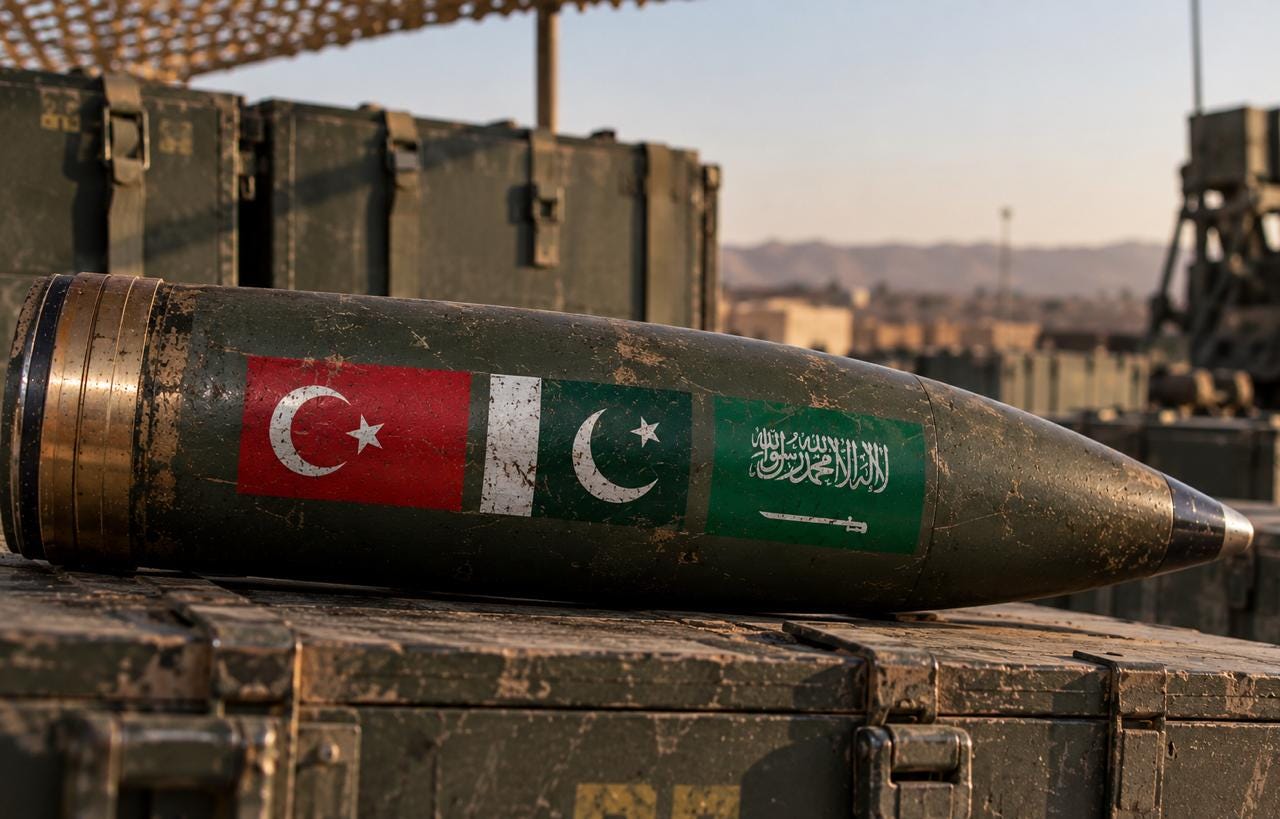
The Mecca Pact brings together Saudi Arabia, Türkiye and Pakistan in an agreement where an attack against one is considered an attack against all
Despite recent Houthis attacks on Saudi territory, Riyadh has decided not to invoke the Pact
Riyadh’s reluctance cannot be understood without considering the legacy of the Yemen war and how a confrontation with the Houthis could escalate tensions with Iran
The Mecca Pact Meets the Houthi
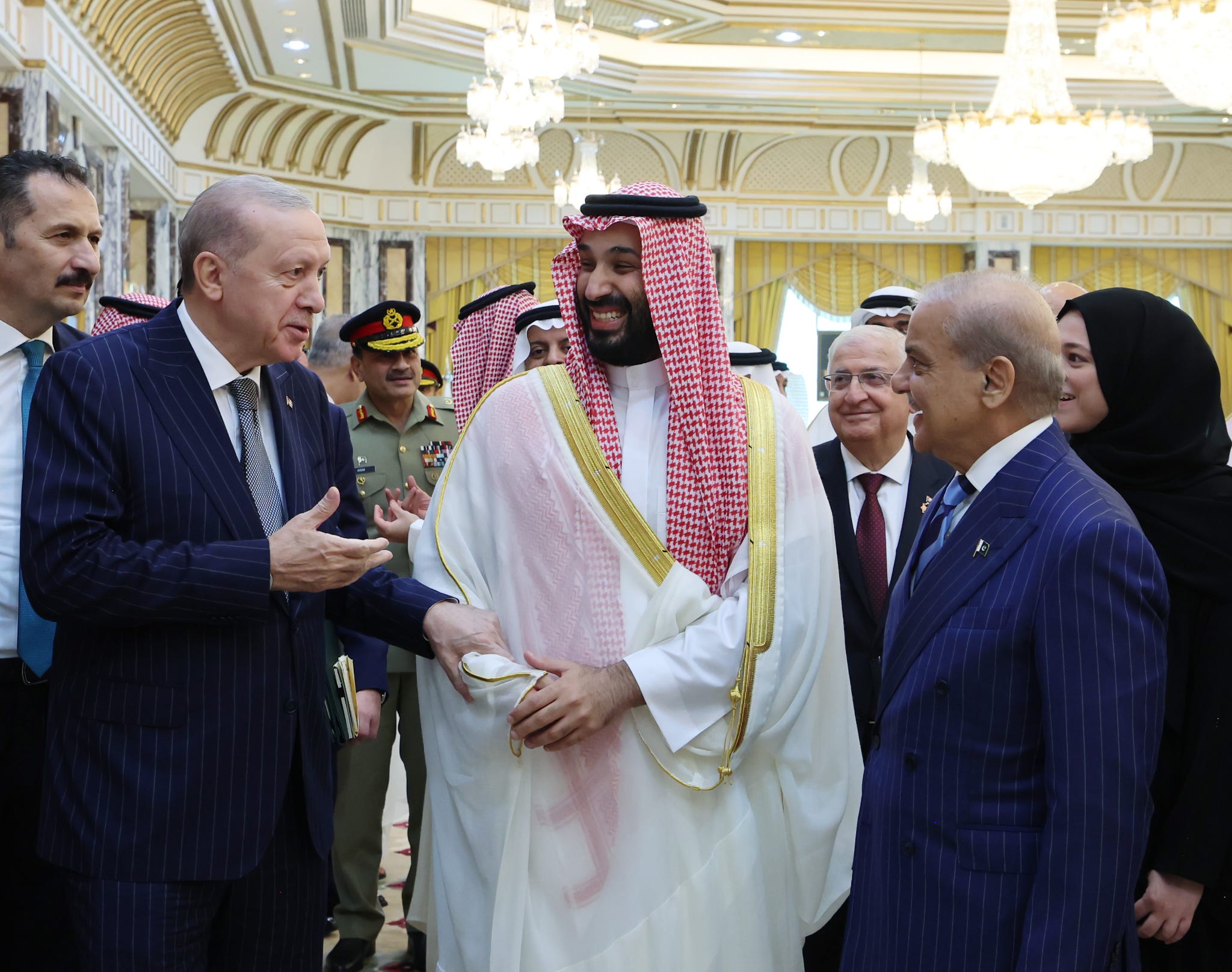
Six weeks after signing the Mecca Joint Defence Agreement where Saudi Arabia, Türkiye and Pakistan declared that an armed attack against one would be considered an attack against all, a Houthi ballistic missile was launched towards Riyadh. Saudi air defences intercepted it. However, the collective response that should derive from the pact did not follow. The agreement, signed on 7 August, represents an important defence framework which involves three countries with considerable military capabilities. Since the signing date, however, renewed Houthi attacks on Saudi territory have not resulted in a Turkish or Pakistani military intervention, as Riyadh has continued to deal with the threats on its territory without asking its new partners to enter the conflict. This makes us wonder: why has Saudi Arabia not sought to invoke the Mecca Pact after the attacks?
A possible answer could partly lie in Yemen. Saudi Arabia already spent seven years fighting the Houthis during the 2015–2022 Yemen war, only to discover the limits of its military force, which eventually pushed Riyadh towards direct negotiations with the movement. The conflict also exposed an asymmetric dynamic: while Saudi Arabia tried to defeat the Houthis, the movement kept imposing costs simply by retaining the ability to strike Saudi territory. A new collective military campaign could therefore bring Riyadh back into a conflict in which its military had failed to produce a desired outcome. Yet, Saudi Arabia’s reluctance to call upon a collective response also raises questions about the agreement itself.
On the one hand, both Türkiye and Pakistan might have their own strategic interests, which include relationships with Iran as well, while the Houthis represent a different type of challenge compared to a straightforward attack by another state. The fact that a collective response has not taken place yet does not necessarily disregard the utility of the Mecca Pact, but rather suggests that Saudi Arabia might see a deeper necessity for this agreement. In fact, the Pact might provide Riyadh with additional layers of deterrence, intelligence services and strategic support from its two partners.
What is behind the Mecca Pact?
But first, let’s dive into the rationales behind the signing of the Mecca Pact. First of all, the Mecca Pact does not simply give Riyadh two additional partners to turn to in case of conflict, but it also brings together three states with different resources at a time when Saudi Arabia is seeking to broaden its defence partnerships.
Dr. Umer Karim, Associate Fellow with the King Faisal Center for Research and Islamic Studies based in Riyadh, Saudi Arabia, argues that “Saudi Arabia understands that Pakistan and Turkiye are two major middle powers with considerable defensive capabilities and professional armed forces”. He explains that cooperation with the two countries could allow Riyadh to expand its military capabilities while becoming more involved in Turkish and Pakistani defence-industrial development.
The arrangement also gives Saudi Arabia another layer of security cooperation alongside its longstanding relationship with the United States. On the one hand, Türkiye brings a growing defence industry and NATO membership; on the other, Pakistan has been an ally of Saudi Arabia for eight decades in a row and its nuclear capabilities add another layer of deterrence.
This framework of alliances could be seen as a tool for building capabilities, coordinating security policy and strengthening deterrence. This means that what Saudi Arabia wants from Türkiye and Pakistan may not necessarily be about their direct participation in a war in Yemen.
The Shadow of the Yemen War
Saudi Arabia’s reluctance to intervene in Yemen with its two allies also reflects the legacy of its involvement in Yemen, which began long before the current attacks, namely in 2015, when the military intervention launched had failed to defeat the Houthis in northern Yemen.By 2022, Riyadh had increasingly shifted its strategy towards keeping the threat under control rather than achieving a victory at all costs, while negotiating with the Houthis.
As Dr. Ewa Strzelecka, Visiting Senior Fellow, London School of Economics and Political Science, Centre for Women, Peace and Security, UK argues, “The 2022 truceshifted the relationship towards direct bargaining”. She continues by saying that “Saudi Arabia sought assurances against attacks on its territory and border; the Houthis pressed for salary payments, access through ports and Sana’a airport, and a deal with Riyadh before negotiations among Yemeni parties.” Saudi-Arabia also imposed restrictions on Houthi-controlled ports and airports, which remain a major source of contention. In fact, the Houthis have cited what they describe as a blockade as one of the reasons for their escalation against Saudi Arabia. The 2022 truce therefore reduced hostilities without resolving the underlying sources of conflict.
As Dr. Strzelecka notes, “Riyadh also continued to finance and organise government-aligned forces, particularly as it assumed a larger role in managing the anti-Houthi camp in 2026. The Houthis therefore see a contradiction in Saudi policy: Riyadh seeks a negotiated exit while strengthening their opponents.” Riyadh, therefore, is confronted with a dilemma. On the one hand, a military response involving both Türkiye and Pakistan could show the pact’s strength in practice; on the other, it could also throw Saudi Arabia into exactly the same conflict it has spent years trying to control. What we could see as Riyadh’s strategy, then, is its attempt to defend the Saudi territory without turning past hostilities into another long-term war and direct involvement in Yemen.
But are the Houthis the Threat the Pact Was Built For?
The type of threat that the Houthi represent complicates the option of a collective intervention as a response to an armed attack against one member. This is because the Houthis present quite an unconventional situation as they are a non-state armed actor deeply embedded in Yemen’s unresolved conflict. The agreement itself might not provide a clear answer to a situation like this. To be more clear, as Dr. Karim explains, “for now the three sides are in the process of determining their respective critical threat thresholds, the sort of support they can provide to one another and also the practical issues with regard to command and control dynamics and trilateral force inter-operability and integration.”
This makes the current conflict particularly complicated in terms of deciding whether or not to trigger the Pact: Houthis attacks might fall within the broader meaning of the pact, but this does not necessarily mean that Riyadh knows which response needs to be followed. The question therefore becomes whether the scale and nature of the attack justify bringing Saudi Arabia’s two partners into the conflict.
Collective Defence Without Collective War?
Another aspect which we need to consider is the practical side of the Pact itself, as the agreement is still taking shape. As Dr. Karim explains, “I think this agreement and its modalities are in the development phase right now and therefore expectation of a swift entry by the other two pact members in defense of Saudi Arabia is unrealistic”. This means that the three partners still need to develop and determine the mechanisms through which this commitment becomes reality. Pakistan’s role also complicates the assumption that invoking the pact will mean that its forces enter the conflict. It is important to remember that Pakistan already has a separate Mutual Strategic Defence Agreement with Saudi Arabia, which provides a bilateral framework beyond the Mecca Pact.
As Ghulam Ali Murtaza, PhD researcher at the Institute of History, Leiden University, specializing on Pakistan’s foreign relations, argues, “if it was just the question of Pakistan’s military assistance to deal with the Iranian threat or Houthi attacks, they could have secured that without a formal agreement.” This shows that a collaboration between the two countries from a military point of view did not need to be formalized through the pact signed on August 7, meaning that there is a broader purpose being discussed among the two.
In fact, Murtaza also points to Pakistan’s relationship with Iran as a potentially more important asset: “so more than Pakistan’s military prowess, the Saudis would like Pakistan to leverage its relationship with Iran to help it arrive at some sort of peaceful settlement with the latter.” This is essential to our understanding of the Mecca Pact and Saudi Arabia’s interests: for Murtaza, the pact strengthens Riyadh in shaping regional security that includes Iran. If we see it this way, Saudi Arabia’s skepticism in invoking the Mecca Pact is less paradoxical: Riyadh can use the pact for military cooperation, deterrence and diplomacy without having necessarily to convert every attack into a war involving three countries.
What kind of Alliance is the Mecca Pact?
The Houthi attacks have confronted Saudi Arabia with an important distinction between defence on paper, as established in the Mecca Pact, and collective war in practice. Saudi Arabia has been attacked, but Riyadh has decided not to involve Türkiye and Pakistan yet. Riyadh’s choice reflects multiple considerations: the costly Yemen war of the past, the risks of a new escalation, and the still-developing mechanisms through which the members of the Pact would respond collectively. This does not necessarily make the Pact irrelevant. Instead, the current crisis suggests that its value may extend beyond a joint military intervention. Intelligence sharing, military technology and diplomatic leverage might result even more important in this type of war. The Houthi attacks therefore represent an early test of what collective defence means in practice. The more interesting test will occur when and if Riyadh will decide that defending Saudi Arabia can no longer be managed through its own capabilities, and will ask exactly what “an attack on one being an attack on all” will mean in practice.
Fascinating analysis written just days before everything accelerated. As the October 5 ministerial announcements in Riyadh proved, Saudi Arabia, Turkey, and Pakistan have now officially activated collective deterrence and agreed on rapid military deployments to counter Houthi escalation. This dramatic shift highlights that the Mecca Pact is rapidly evolving from a diplomatic framework into an active security architecture in real time, making your piece an essential baseline for understanding the stakes of this unfolding crisis.