


In Summary
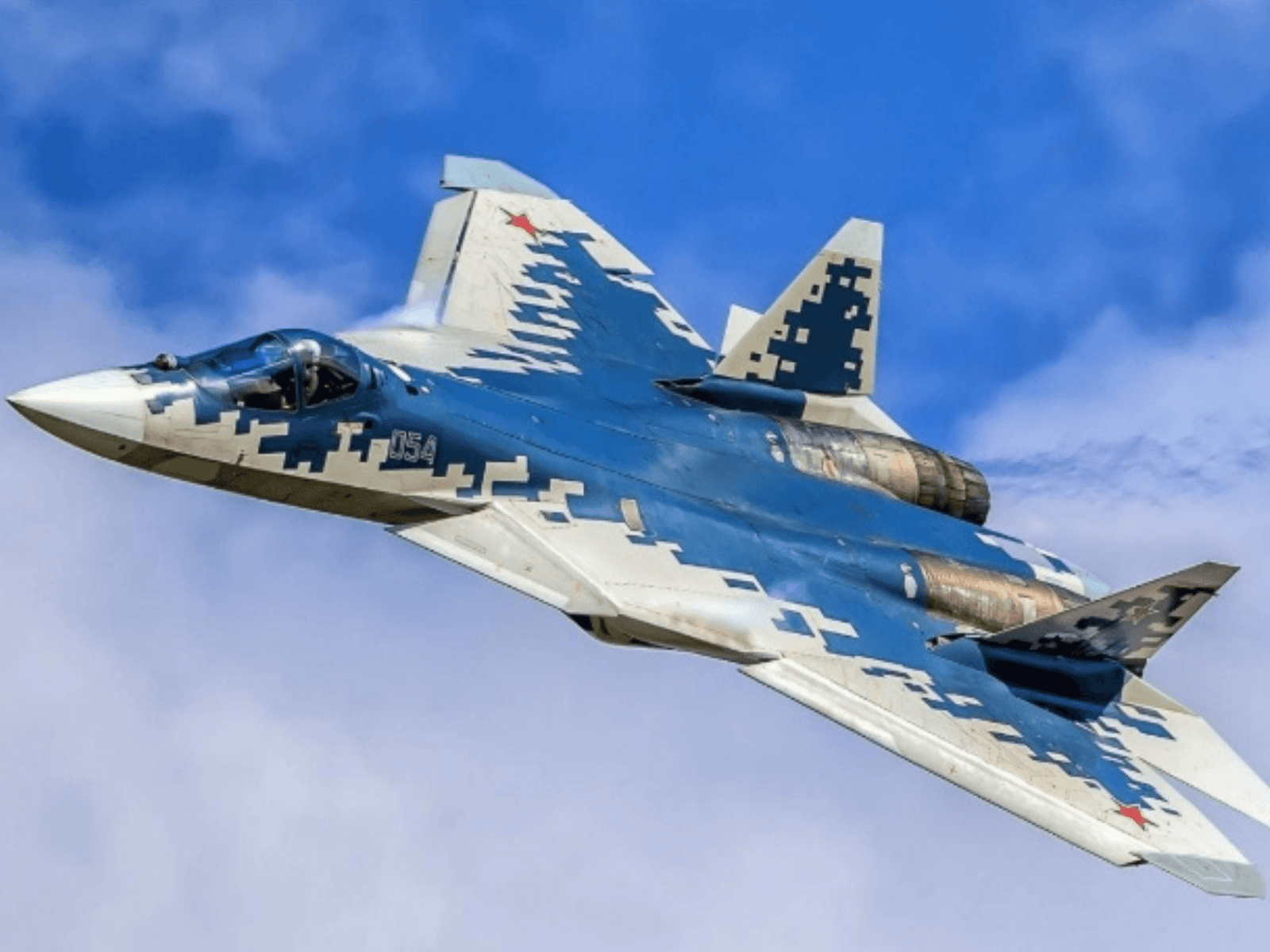
Russia is offering India the Su-57, which is seen as a strategic counter-offer to the slow-moving American F-35 proposal; India is considering this as a stopgap until its own AMCA is ready.
India wishes to maintain its air superiority, particularly now that Pakistan, with Chinese assistance (J-20/J-35), may gain access to fifth-generation fighter jets sooner than expected.
Operation Sindoor (May 2025) demonstrated India’s willingness to escalate militarily following terrorist attacks; air strikes involving Rafale, Su-30MKI and hypersonic missiles targeted Pakistani targets.
Pakistan is gaining financial leeway through a new IMF loan ($2.3 billion) and planned World Bank funding ($40 billion).
In a joint Sino-Pakistani three-front war (Kashmir, Himachal Pradesh/Uttarakhand and Arunachal Pradesh), India could suffer irreparable losses.
Regional Update: India | Russia has given India a very pleasant surprise over the past week. For days now, this has been front-page news within Indian geopolitical circles. Whereas on 13 February 2025 Trump told Modi at the White House that India might ‘eventually’ (which could take as long as 10 years) purchase the F-35, the Russians are now coming forward with a more appealing counter-offer. Indeed, it has emerged from several sources that Russia is offering India its prestigious 5th-generation fighter jet, the Sukhoi-57.
There are only five types of 5th-generation fighter jets in the world: the Russian Sukhoi-57, the American F-22 Raptor and F-35 Lightning II (Joint Strike Fighter), and the Chinese J-20 and J-35 fighter jets. With this offer, India could compete with these geopolitical superpowers in terms of air power projection. India has set itself the goal of developing its own 5th-generation fighter, known as the “AMCA”, but the full roll-out of this prototype could still take between 8 and 13 years. Purchased 5th-generation fighters could serve as a stopgap against the imminent Chinese-Pakistani threat.
5th generation fighter jets and India’s position
Fifth-generation fighter jets are the most modern combat aircraft, combining advanced technology to deliver superior performance. Compared with earlier generations, they are distinguished primarily by their stealth capabilities (making them difficult to detect on radar), supercruise (supersonic flight without afterburner), improved manoeuvrability, advanced sensors and network integration (real-time data exchange with other units).
Whereas earlier generations focused primarily on speed and firepower, the fifth generation is all about information superiority (and sharing it with other weapon systems) and stealth, combined with lethal (AI-driven) efficiency in the use of missiles.
India has an interesting history when it comes to building its own fighter jets.
Following independence in 1947, India found itself in the midst of the Cold War. Whilst the country wished to maintain a sovereign position between the US and the USSR, both for itself and for the other former Western colonies, India lacked the financial resources and internal political stability required for a robust domestic military build-up (particularly with regard to suitable engines).
For decades, the country therefore relied on the licensed production of foreign aircraft, primarily Soviet models. Together with Russia, India developed the 4.5th-generation Sukhoi-30MKI fighter jets in 2004 and, from 2020 onwards, also purchased the French 4.5th-generation Rafale fighter jets. India is currently developing the 5th generation Advanced Medium Combat Aircraft (AMCA), having withdrawn from the Sukhoi-57 project with Russia in 2018 due to issues regarding the sharing of technological know-how and production problems.
Years are now passing in weeks; the Chinese-Pakistani threat looms
Everyone can see that, in the current climate, geopolitical developments are unfolding within a matter of weeks rather than years. In early May 2025, there were serious escalations between India and Pakistan, after India launched Operation ‘Sindoor’ on 7 May 2025. In response to the terrorist attacks carried out by Pakistan-based terrorist groups in Kashmir on 22 April 2025, Indian fighter jets (Rafale and Sukhoi-30MKI) and hypersonic missiles (Brahmos and Rudram I missiles) struck several terrorist camps, military airfields, radar installations and anti-aircraft defences. On 10 May 2025, a (temporary) ceasefire was declared.
For India, the danger has not yet passed. China has offered to sell 5th-generation fighter jets (the J-20 and/or J-35) to Pakistan in the near future. There are currently Pakistani pilots in China who are most likely undergoing training to operate these aircraft. At the same time, Pakistan has secured an IMF loan of 2.3 billion dollars in recent weeks (its 25th loan, a record) and a 40 billion dollar loan from the World Bank is in the pipeline (neither loan has been blocked by the US or European countries, given their significant influence in the decision-making process).
This frees up budgetary scope for the purchase of these Chinese fighter jets. After all, civilian expenditure is partly covered by the loans. The wars of 1965, 1971 and 1999 have shown India that Pakistan will not simply let any military advantage slip by. India must, at all costs, prevent Pakistan from acquiring fifth-generation fighter jets before it does.
(Photo: the Chinese J-20 fighter jet)
For India, it does not stop there. Since 1962, it has been China, led by the CCP, that poses the greatest threat to India’s national security. From decades of supporting Pakistan (in addition to support from the US), to backing internal Maoist terrorist groups, actively invading Indian territory, ‘passively’ eroding borders, building semi-civilian military installations in India’s neighbouring countries, and so on. India regards China as a major source of geopolitical stress. India believes that the CCP wants to prevent India from becoming a serious Asian rival.
On top of that, China already has 300 fifth-generation fighter jets and around 1,000 4.5-generation fighter jets. Furthermore, China plans to produce 100 5th-generation fighter jets every year. To top it all off, China now also has its prototype for a sixth-generation fighter (the J-36) ready for further development. Neither the Americans nor the Russians have even begun work on this yet. India falls far short with its 100 4th-generation and 320 4.5th-generation fighter jets. In a joint Sino-Pakistani war on three fronts (Kashmir, Himachal Pradesh/Uttarakhand and Arunachal Pradesh), India could suffer irreparable losses.
(Photo: The three fronts of a potential Sino-Pakistani conflict from an Indian perspective)
This article was translated, find the original here.
