


In Summary
The election of Rodrigo Paz marks the end of the MAS monopoly led by Evo Morales.
Relations with the US, the EU and Brazil are being normalised; ties with Venezuela and Cuba have cooled. China will wish to remain an important and reliable partner.
Bolivia is setting a course for economic recovery, but must be wary of local social unrest.
Latin America Regional Update | On 12 October, Rodrigo Paz Zamora was sworn in as Bolivia’s new president – a political earthquake following more than two decades of dominance by the MAS (Movimiento al Socialismo). When I was in Bolivia in 2017, everyone I spoke to was still certain: Evo Morales would never step down.
At the time, he was serving his third term following a constitutional amendment. Yet a transition of power has now taken place, in which the left no longer played a significant role in the presidential elections. How can we interpret this, what lies ahead, and how can the Netherlands and the EU respond to this?
With his victory, Paz brings to a close an era in which Evo Morales and his successors shaped the country around a nationalist, extractivist and ethno-populist project. Whereas Morales positioned Bolivia as the figurehead of Andean socialism, Paz promises a pragmatic, technocratic administration, focused on institutional renewal, fiscal stability and renewed international cooperation.
It is not a complete swing of the pendulum from left to right, as Paz is regarded as a centre-right politician and has even promised to expand social programmes. This will be necessary to preserve social order in Bolivia, which remains a deeply unequal and divided nation.
Historical context
Since 2006, Evo Morales had been the face of a new Bolivia: the land of the cocaleros, indigenous pride and anti-imperialist rhetoric. He nationalised oil, gas and mining, and introduced a constitution under which Bolivia became a ‘plurinational state’. His socio-economic policies were initially associated with strong growth and falling poverty – as was the case virtually everywhere in Latin America during those years, driven primarily by the strong growth of the Chinese economy. However, this was accompanied by increasing centralisation of power, suppression of the opposition and growing dependence on commodity exports.
Evo Morales is of Aymara descent, a group to which around a quarter of the population is said to belong, whilst in the last census some 30 per cent identified as Quechua and a further 30 per cent were of mixed indigenous and (generally) European descent, the mestizos. Some 36 indigenous languages are spoken alongside Spanish. Historically, however, these indigenous groups were economically marginalised and politically excluded by a Spanish colonial elite and, later, by a mestizo bureaucracy.
The neoliberal policies of the 1980s and 1990s – dictated by the IMF and the World Bank – privatised strategic sectors (mining, oil, water), leading to mass unemployment and a wave of poverty. During the same decades, Bolivia suffered the consequences of the US ‘war on drugs’ policy targeting the coca plant. This plant has centuries-old cultural and medicinal value in Bolivia, particularly for the indigenous population.
Morales became active in the cocalero trade unions of the Chapare region in the 1980s. Coca cultivation, which has been interwoven with Andean culture for centuries, became, in this context, a symbol of resistance against foreign interference and the loss of sovereignty. This gave rise to a new kind of social movement: indigenous, trade union and cocalero movements that linked social justice to ethnic and cultural recognition. Morales embodied precisely that connection.
Towards the end of his rule, the charismatic trade union leader transformed into an authoritarian ruler who reinterpreted the constitution to remain in power for longer. The protests following his controversial re-election in 2019 for a fourth term – whilst the constitution stipulates a maximum of two terms – led to Morales stepping down and fleeing the country.
A temporary Añez government was formed, followed by the return of the MAS under Morales’s political rival, Luis Arce. Morales was also investigated by the courts in 2020 in connection with sexual abuse. According to him, the current president, Luis Arce – who is from the same party – is behind these allegations. All this left behind a deeply divided MAS and, indeed, a deeply divided country. The crisis of confidence in institutions and the waning influence of the coca lobby created scope for renewal.
With Morales barred from the elections and the left internally divided, the second round of voting was contested between the centre-right Rodrigo Paz and the more right-wing conservative Jorge Quiroga Ramírez. Both represent a major break with the MAS, not only politically but also culturally. For instance, Rodrigo Paz was born in Santiago de Compostela, Spain – albeit because his family had been exiled during the military dictatorship. This may cause fear and tension amongst the historically marginalised indigenous communities.
A new direction
Rodrigo Paz, son of former president Jaime Paz Zamora, presents himself as a bridge-builder between urban and rural areas, between the economic elite of Santa Cruz and the indigenous communities of El Alto. However, particularly in Cochabamba, El Alto and the rural Andes, Evo Morales and the MAS remain extremely popular.
Cochabamba, the country’s fourth-largest city, was the scene of the so-called Water War (Guerra del Agua) in 1999 and 2000. The privatisation and, in effect, monopolisation of the water utility by a largely foreign company led to massive increases in water prices and subsequent violent protests and confrontations. In 2003, violent protests erupted in various cities, including Cochabamba and El Alto, centred on the ‘Gas War’ (La Guerra del Gas), which had a similar root cause: the privatisation of the sector. These conflicts are directly linked to the rise of Morales, who capitalised on the momentum and has traditionally enjoyed great popularity in these communities.
There was also recent unrest, when Morales supported protests against his former party colleague, President Luis Arce, over fuel shortages and rising prices, as well as politically motivated protests against Morales’s exclusion. El Alto began as a (shanty) town on the hillside above the political capital, La Paz, where mainly poor indigenous farmers came in search of better opportunities. It has since grown into a city larger than La Paz itself. The city is known as a Morales stronghold and a hotbed of social unrest.
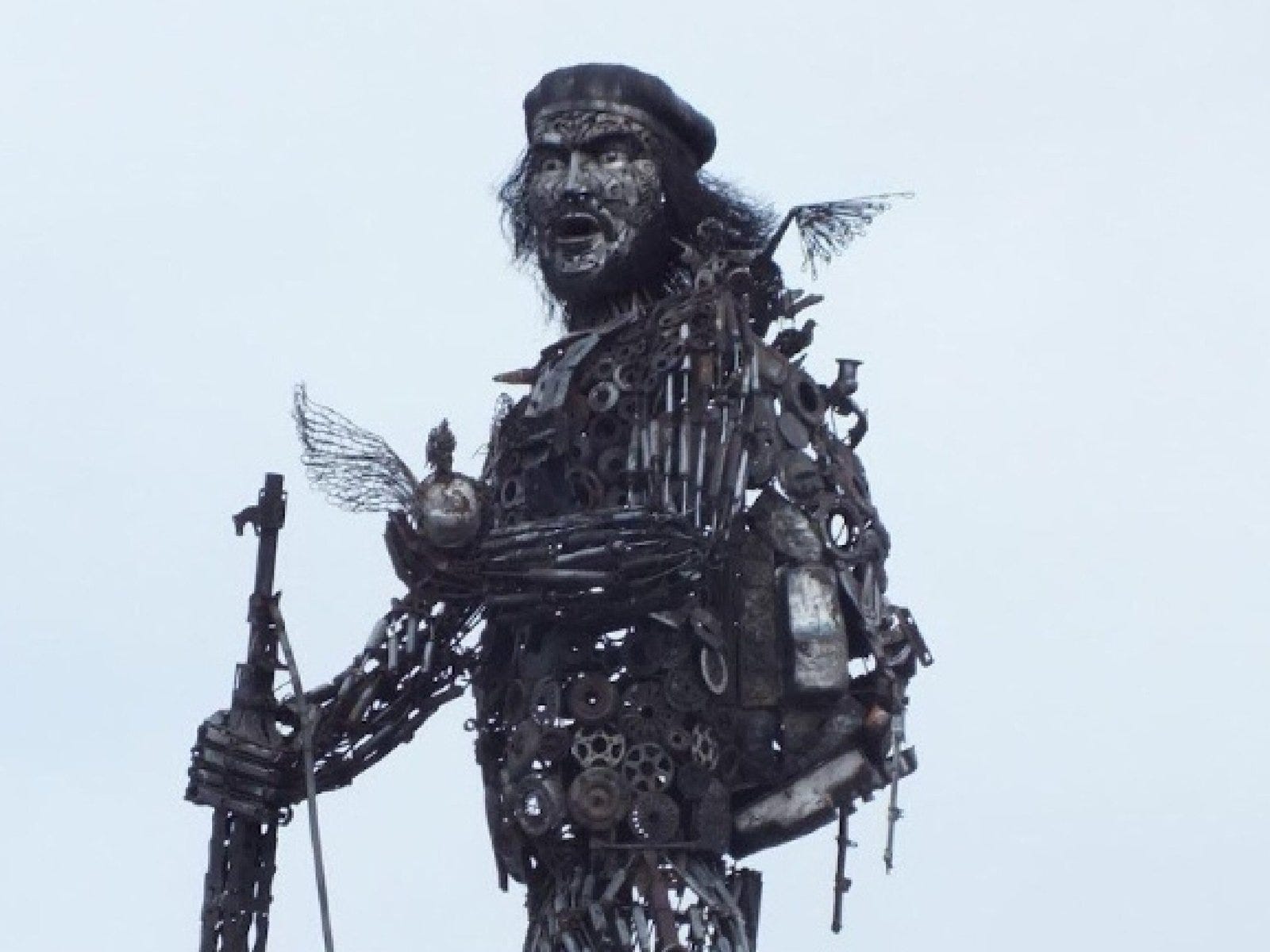
The photograph accompanying this article shows a statue of ‘Che’ Guevara in El Alto, the socialist guerrilla fighter who was executed in Bolivia by the Bolivian army with the support of the CIA. The statue was erected with the support of MAS. This demonstrates that the structural causes of inequality and racial hierarchy have still not disappeared.
Rodrigo Paz advocates a policy of less state intervention (“capitalism for all”) and more meritocracy, but also more social safety nets and transparency (in the justice system through AI). He also advocates decentralisation. The question is whether this will be enough to keep the flashpoints under control or whether it will, in fact, fuel new tensions. The new policy on coca, aimed at legal production for traditional purposes whilst cracking down hard on smuggling, marks a symbolic break with Morales’ legacy.
Nevertheless, Paz is also seeking to strike a balance here, by recognising that coca cultivation has traditional and cultural value. The reform of the judicial system and the dismantling of the civil service controlled by the MAS are seen as Paz’s greatest domestic challenge.
International implications
Internationally, Paz is seeking to align the landlocked country with a ‘new pragmatism’ in Latin America, comparable to that of Gabriel Boric in Chile and Daniel Noboa in Ecuador. He emphasises technological innovation in the lithium sector and aims to utilise Bolivia’s strategic reserves for the energy transition in collaboration with European and Asian partners, rather than forming ideological alliances with Caracas or Havana.
Plans are also already in place with Brazil for cooperation on binational hydroelectric projects and the production of gas, fertiliser and lithium. In short, no ideologically driven, anti-imperialist partnerships, but a greater focus on economic and geopolitical returns.
The shift in La Paz has direct consequences for the regional balance of power. The withdrawal of the country named after Simón Bolívar from the ALBA bloc (Bolivarian Alliance for the Peoples of Our America), itself named after Bolívar, and the suspension of military cooperation with Venezuela mark a break with the ‘pink tide’ of the left that characterised Latin America in the 2000s.
At the same time, Paz remains cautious and emphasises sovereignty and South-South cooperation, but without confrontation with Washington, Brasília or Beijing.
Under the MAS, China has become by far the most important trading partner and investor in Bolivia, particularly in the fields of raw materials and infrastructure. The question is therefore whether a diversification of international partners will be perceived by China as a cause for concern or as a sign of confrontation. A rift with China might perhaps be averted through new investment opportunities in a broader range of sectors.
Prospects for action by the Netherlands and the EU
For the Netherlands and the EU, Paz’s presidency opens up opportunities for partnership in the areas of sustainable mining, climate adaptation and trade in raw materials. Bolivia’s lithium reserves make the country essential to the European strategy for raw materials security.
Although Bolivia is set to become a member of Mercosur, the country is not currently an active party to the ongoing EU–Mercosur trade agreement. Only once Bolivia has fully implemented Mercosur regulations will it be able to join the agreement. This delay presents both scope for reform and risks to the pace of integration. Rodrigo Paz offers an opportunity to make Bolivia a fully formal member. For the EU, this presents opportunities to involve Bolivia in the ongoing agreement within the framework of the aforementioned raw materials security.
The EU can focus on supporting a sustainable democratic transition. It could play an important role in the energy transition through the sharing of expertise. A renewed partnership with Bolivia would also contribute to stability in the Andean region, where the erosion of democracy in recent years – particularly in Venezuela, Peru and Ecuador – remains a warning sign.
This article was translated, find the original here.