


In short
As Argentina confronts economic challenges and political pressure, the renewed focus of the Falkland Islands/Islas Malvinas dispute brings up the question whether the claim is a political distraction.
The development of the Sea Lion oil project has increased the economic stakes by linking sovereignty over the Falkland Islands to offshore resources, foreign investment, and control over the South Atlantic.
From the 1982 Falklands/Malvinas war to a World Cup banner and uncertainty in the US’s position, the dispute shows how national identity and geopolitics continue to determine relations between Argentina and the UK.
The Falklands/Malvinas Dispute Returns
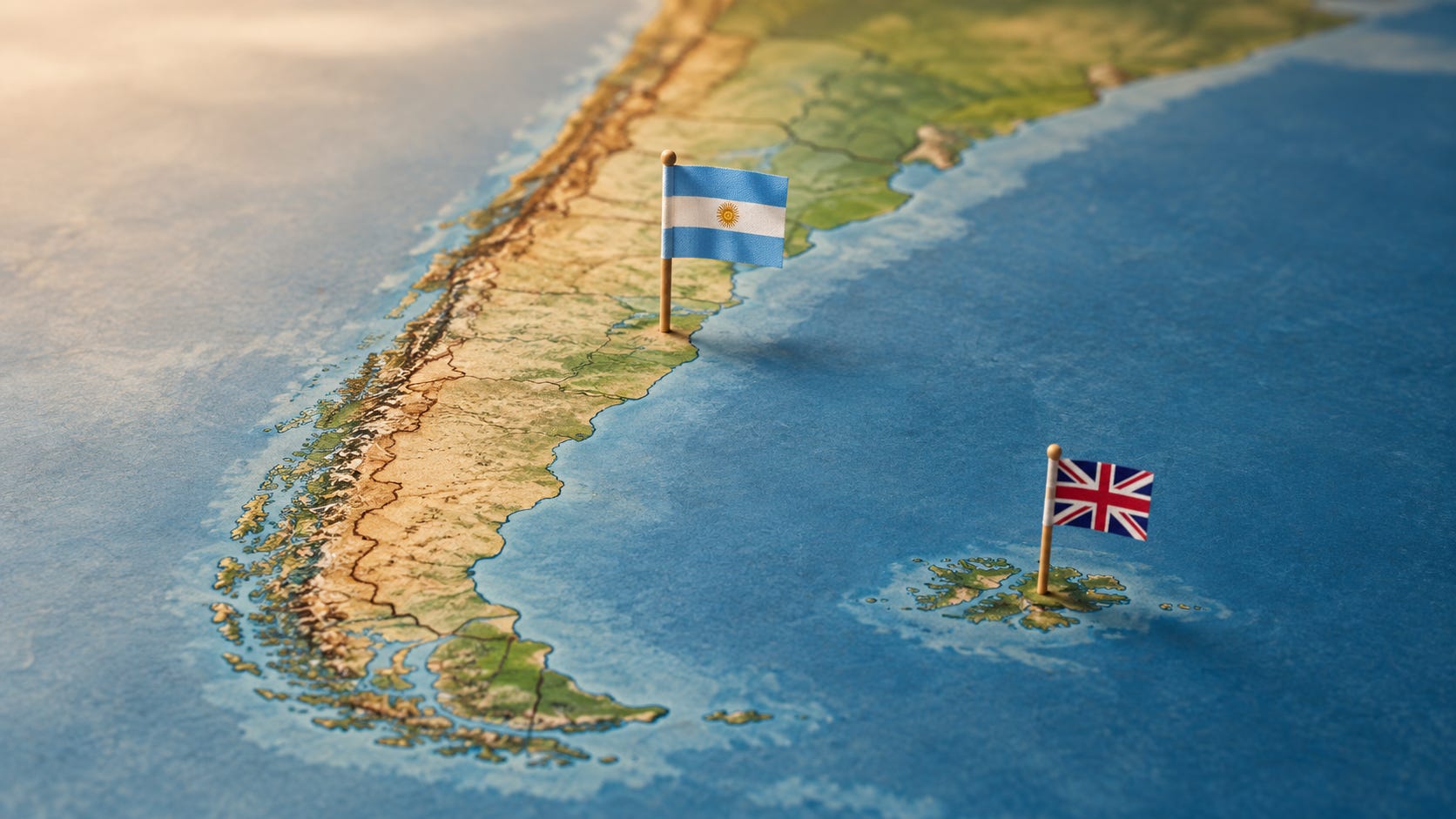
More than forty years after the 1982 war, the Falklands/Malvinas dispute between the United Kingdom and Argentina has reopened. While the United Kingdom has sovereignty over them as a British Overseas Territory, Argentina insists on claiming the archipelago. “For Argentina, Las Malvinas are integral to their national identity”, commented Falkland expert Dr. Louise Clare from the University of Manchester. Multiple developments have brought the conflict back in the headlines: planned oil drilling north of the islands, Argentina’s domestic economic downturn and political situation, Trump’s unclear position, and a “Las Malvinas son Argentinas” banner at the World Cup. The sovereignty of the islands is no longer just about ownership, but national identity, control over natural resources, influence in the South Atlantic, and the islanders’ self-determination are also at stake. This raises the question of how domestic politics, the Sea Lion oil project, and changing international positions are shaping the Falklands/Malvinas dispute?
The archipelago is referred to as the Falkland Islands by the United Kingdom and as Las Islas Malvinas by Argentina; both names will be used in this article to reflect different languages and perspectives.
Centuries of Contestation
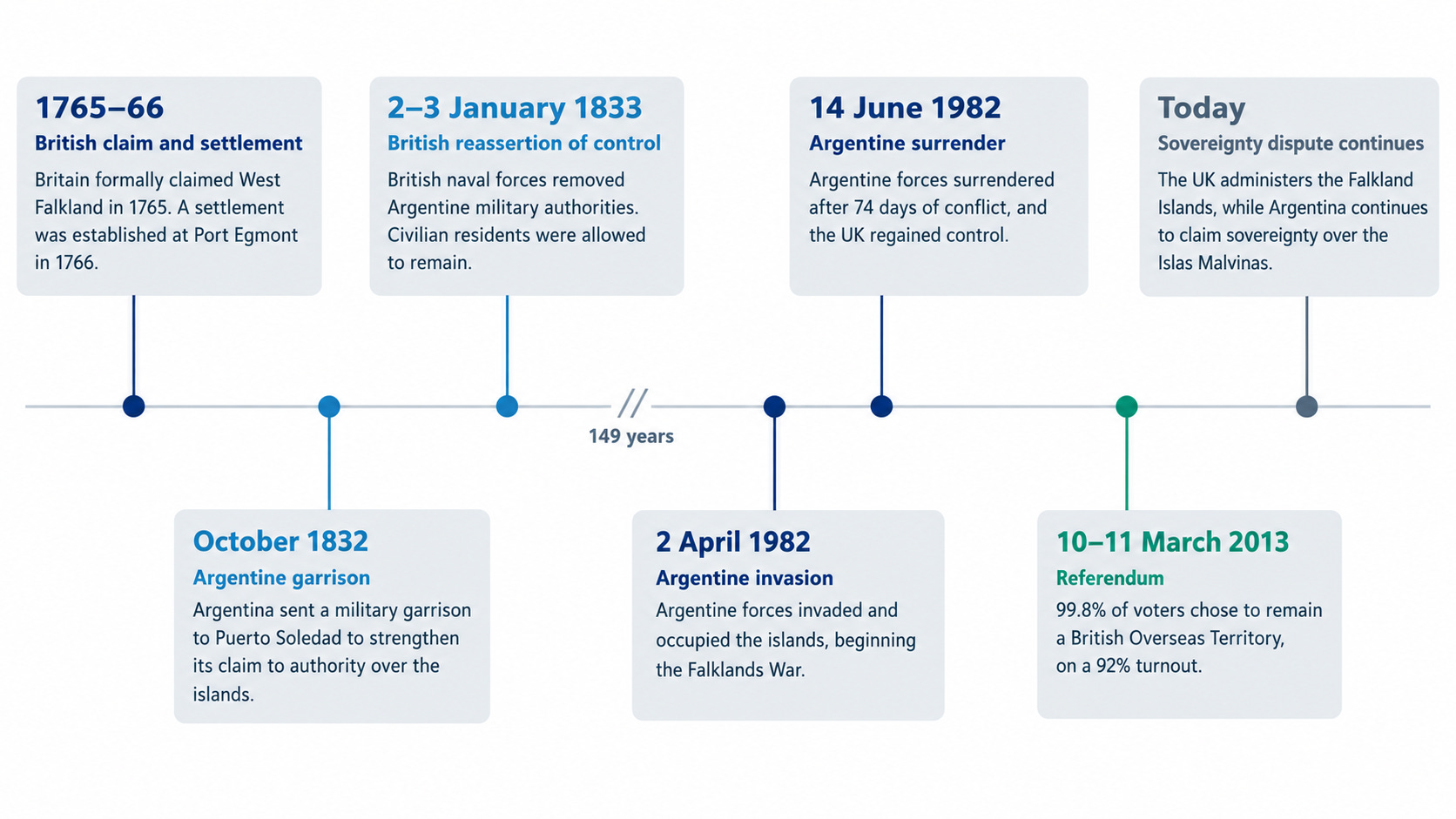
The history of the conflict goes back to 1765, when the archipelago was claimed by the British. In October 1832, the Argentine military established a base and attempted to claim sovereignty over the islands. Three months later, in January 1833, the British Royal Navy took back control and expelled the Argentine garrison, while most of the small civilian population was allowed to stay on the islands. On April 2 1982, the Argentine military once again invaded the islands, initiating the Falklands War. The war ended after 74 days, but the dispute did not. The islands are still claimed by Argentina as its territory, but the United Kingdom maintains the Falklands are British and that the wishes of the islanders must be respected. As a result, the two countries continue to disagree on the legal territorial status, as well as the islander’s right to self-determination.
Two Competing Perspectives
The Falkland Islands represent two different perspectives on opposite sides of the South Atlantic. In the United Kingdom, the islands are closely associated with the islanders’ right to decide their own future and the historical memory of the Falklands war, as 255 British personnel died defending the islands during the war, making it almost impossible to give up the islands. In Argentina, the importance of the dispute is rooted in the way the Islas Malvinas are presented, as the islands are integral to their national identity. From school age, Argentines are taught that “in 1833, ‘English pirates’ stole the Islands from Argentina”, Dr. Clare commented on the topic. Because of this narrative, la causa Malvinas, which is Argentina’s national campaign to regain control over the Malvinas, has turned the dispute from the legal and diplomatic argument between governments, to an emotional, national issue shared by almost all Argentines. Because of this, the Argentine government could not abandon its position.
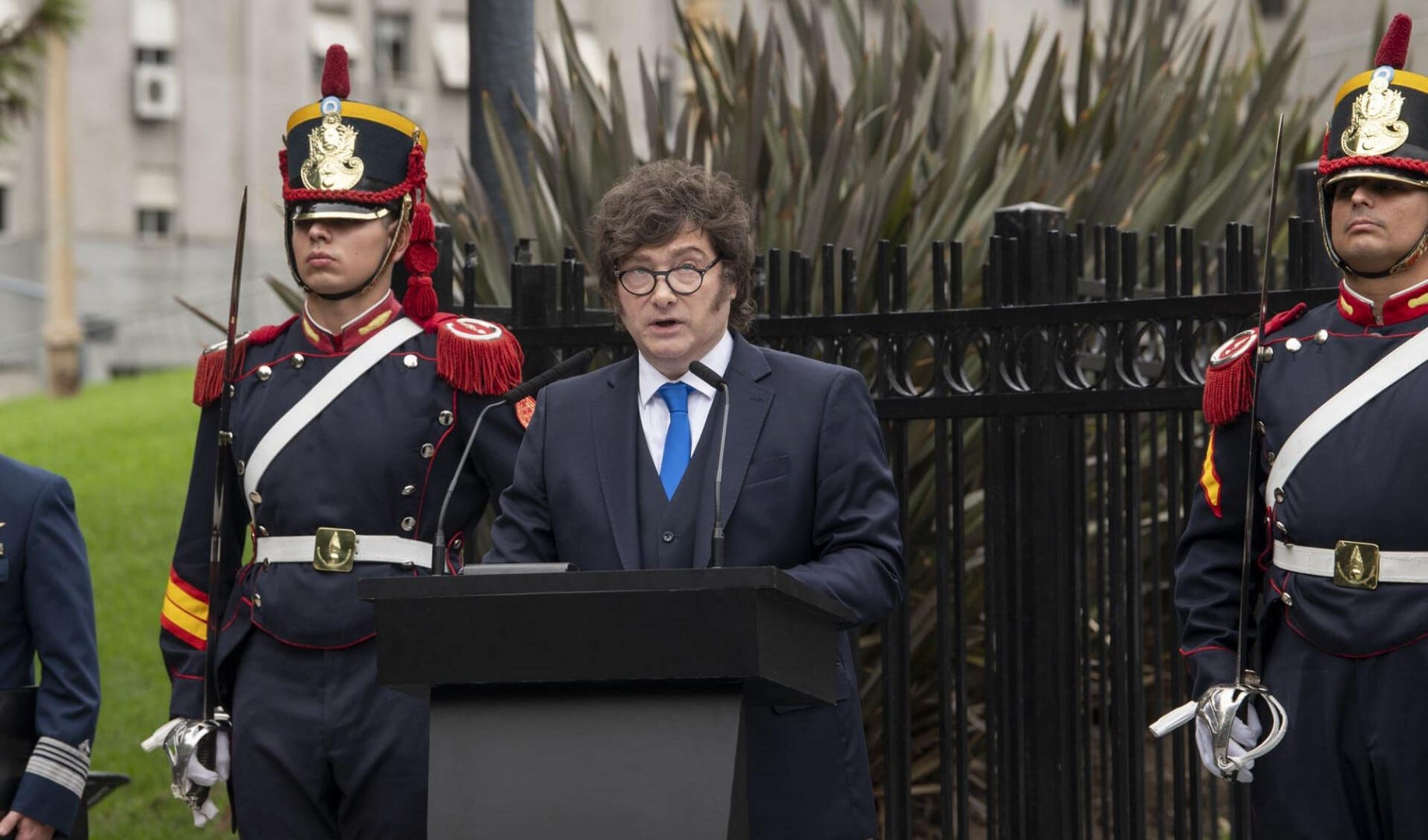
In an official statement on X about the islands, President Milei describes taking back sovereignty over the islands as “a permanent and inalienable objective of the Argentine people”. Furthermore, he called the Malvinas “a national cause” and that the islands “do not belong to a government” in his statement, as well as argue that Argentina has to use all available diplomatic and legal tools to “defend our sovereignty and our resources”.
On the other hand, Britain rejects this interpretation and argues that “the islanders’ wishes are paramount”, as stated by then-Prime Minister (PM) Margaret Thatcher, which current PM Andy Burnham backs, as he commented that “we will defend the right of the Falkland Islanders to self-determination”. This principle remains the current British position, arguing that the islanders have repeatedly expressed their wish to remain a British Overseas Territory. This can also be seen in the results of the 2013 referendum, in which 99.8 per cent of the votes favoured staying a British Overseas Territory, and only three people voted against. These results indicated a very strong preference from the islanders. However, Argentina does not accept the referendum and still claims the islands as its territory. In a recent speech, President Milei describes the islanders as an “implanted population”, arguing that they “do not have a legitimate right to self-determination”. By calling the inhabitants of the islands an “implanted population”, President Milei dismisses their personal political preference to stay a British Overseas Territory, as well as challenging the UK’s principle on the topic: the islanders’ right to determine their own future.
The two countries are not just disagreeing on the sovereignty of the islands; they have different understandings of the dispute from shifting perspectives based on history, legitimacy, and political rights. Argentina prioritizes territorial sovereignty and historical continuity, in contrast to the UK’s focus on self-determination and legal claims.
Argentina’s Economic Downturn and Political Distraction
Another factor in the dispute is Argentina’s current economic uncertainty. The government points to falling inflation and a budget surplus. However, Argentina correspondent Peter Schouten, who frequently writes for AD, one of the Netherlands’ largest newspapers, argues that “many Argentines have not felt economic improvements”. Argentina is currently one of the most expensive countries in Latin America, even though wages are among the lowest in the region and purchasing power is very low, with poverty rates remaining high.
The Malvinas issue allows President Milei to redirect attention from Argentina’s domestic economic problems. There is a need for this, as the polls indicate that in September 2026, the government’s approval rate was 42 per cent, while 52 per cent had a negative image of Milei. With the next presidential election set for October 2027, a tougher position on the islands could turn the political tide in favour of Milei. President Milei is seemingly using an existing international dispute to shift attention from Argentina’s domestic problems, while also turning it into a strategy to show political strength. By redirecting attention to this international dispute, both the country’s economic issues and the upcoming presidential election work in President Milei’s favour.
In addition, this is not the first time that Argentina’s domestic crises have been connected to a renewed focus on the Malvinas. The 1982 Argentine invasion is often linked to the diversionary-ploy theory, which implies that the military junta used the sovereign claim to distract the country from its economic and political problems. Although this theory does not explain the entire conflict, there may be a political parallel today, in which Milei uses the Malvinas situation to mobilise national support for domestic uncertainties, without a physical invasion.
How Oil Fuels the Dispute
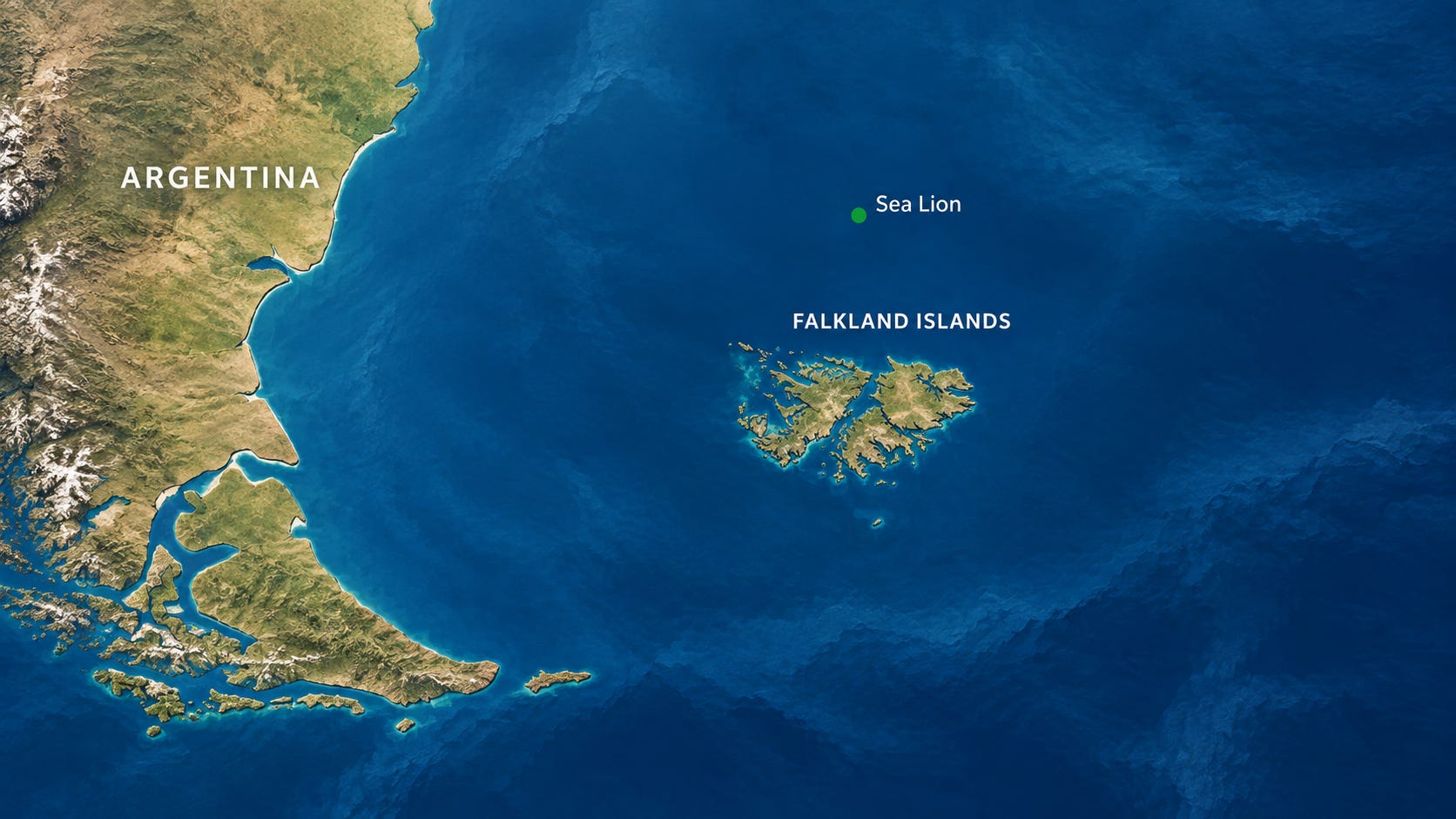
The Sea Lion project, developed by the British company Rockhopper Exploration and the Israeli company Navitas Petroleum, is located in waters 220 km north of the Falkland Islands. The project is already well advanced, as drilling is planned to start in early 2026, with the first oil expected in March 2028. The oil field falls within the area Argentina claims, causing the Sea Lion field to be considered part of the Argentine continental territory. Under Argentine law, extracting natural resources without authorisation is illegal. However, from the Falkland Islands and UK’s perspective, the project does not need authorisation from Argentina. The UK has administered the islands, and the Falkland Islands Government has granted petroleum licenses to the companies involved in the project. Both sides therefore claim the authority of the oil field.
President Milei’s response to the Sea Lion project shows how the Malvinas issue can be turned into visible political action. He recently declared in a speech to sanction the oil companies working on the Sea Lion project that are drilling in the waters above the Malvinas. By scrutinising the companies behind the oil-drilling project, Milei presents himself as defending both Argentina’s sovereignty of the islands, and the natural resources it provides.
The oil-drilling project could also represent a loss of economic opportunity for Argentina: if developed under British control, the project generates revenue for the Falkland Islands Government and the other companies involved, while Argentina would not reap any financial benefit. Given the economic conditions in Argentina, the situation is relevant to the country. As Mr. Schouten commented, “the golden mountains in Argentina are often behind us, rather than ahead of us”. The potential oil revenues may make the Malvinas issue more attractive from a political perspective, even though President Milei presents its position as a defence of sovereignty and national resources.
From Football to Washington
Moving on from official statements and oil licences, the dispute has now become visible far outside politics. During the 2026 World Cup, Argentine players displayed a banner reading “Las Malvinas son Argentinas”, which translates to “The Malvinas are Argentine”, after defeating England in the semi-final. According to Mr. Schouten, this banner is “a strong political statement”, explaining that the text is visible throughout Buenos Aires on t-shirts and paintings. The slogan already had a strong meaning in Argentine public life, but the match made it an international statement.
Additionally, the United States has added another source of uncertainty. President Trump has stated that Washington “always reviews every position”, which Argentina could interpret as a possible opening for its claim. Dr. Clare notes that “there is definitely potential for Argentina to see this statement as an indirect nod of US support for Argentina”. On the other hand, Mr. Schouten suggested that Trump’s comments were “meant to put pressure on Great Britain” over defence spending. For now, Washington’s position remains neutral and unclear: Trump has merely suggested that it is “under review”, but he has neither endorsed Argentina’s claims nor announced a formal change in the United States’ neutral position.
The European Dimension
The dispute also has consequences for Europe. Besides oil, the waters near the Falklands are rich in fish, making the dispute over natural resources relevant in Europe as well. Around 94 per cent of all Falklands fish exports, mainly squid, and almost 50 per cent of calamari in southern Europe are from the waters near the islands, enter the EU through the Spanish port of Vigo. In 2024, the EU imported 76,600 tonnes of fish from the islands, with a worth of around €250 million.
The trade relationship has changed after Brexit; the Falklands lost tariff-free access to the EU market, as well as EU development funding. Since 2021, the EU and the Falklands have re-negotiated a 75,000 tonnes tariff-free deal for industrial processing in the EU. The islands heavily rely on European trade, giving the EU “quite some leverage in this dispute due to its fish trade ties with the Falklands, but is reluctant to exercise this,” comments Senior Analyst, Michel Don Michaloliákos for The Hague Institute for Geopolitics on the topic.
The reluctance is an intentional choice, as “the EU keeps out of the dispute as much as possible, and tries to avoid choosing a side and escalating,” Michaloliákos explains. Brexit also changed the EU’s position, as it no longer has a solidarity-obligation, now that the UK is no longer an EU member state.
At the same time, the EU has economic interests on the other side of the dispute. Argentina is now an official trade partner of the European Union under the EU-Mercosur deal. In January 2026, this large trade agreement between the EU and the South American trading bloc, including Argentina, was finally signed after more than 25 years of negotiating. In May 2026, the deal was applied and is currently in use. This gives the EU a good reason to stay neutral in the dispute, as it has economic interests on both sides.
However, this neutrality has its limits: “In the very unlikely situation of a full escalation, it (the EU) would side with international law, and against illegitimate claims of Argentina,” Michaloliákos suggests.
The Stalemate Continues
The renewed attention to the Falkland Islands/Islas Malvinas demonstrates that the dispute is more than a legacy of the 1982 war. It remains an unsolved territorial conflict, shaped by domestic political pressures, national identity, international influence, and economic interests. For Argentina, the islands are widely experienced as territory taken from the country, and have an “implanted population”, placed under British control. For the United Kingdom, the central principle is the Falkland Islanders’ right to self-determination, reinforced by the historical memory of the war, as well as the wish to remain a British Overseas Territory.
Argentina’s current economic and political circumstances provide an important context for President Milei’s renewed focus on the dispute. Economic difficulties make the sovereignty issue politically useful, a pattern that can be compared with the invasion from more than 40 years ago. Yet, it would be too simple to describe the issue as just a political attention shift. The World Cup banner declaring “Las Malvinas son Argentinas” showed that the conflict moved beyond diplomacy and became internationally visible through football.
The Sea Lion oil project made the dispute concrete: it adds potential oil revenues and control over the South Atlantic resources. While Argentina threatens to target the companies involved, and the UK and Falkland Islands Government providing licenses, underline the confidence in their legal positions.
The most probable outcome is not a shift in sovereignty, but more of an internationalised and economically charged draw. While Argentina can intensify pressure, its leverage is restricted to the British control of the islands. Currently, their future depends on if the Sea Lion project will proceed as planned, how Argentina’s domestic situation develops, and whether the US will shift its position on the conflict. Meanwhile, Europe is likely to stay on the sidelines, only taking sides if the conflict fully escalated.
For now, the status quo will most likely be maintained, but if the dispute over the Sea Lion project escalates, the consequences would reach beyond the UK and Argentina to the islanders and European businesses.