


In Summary:
Tensions between Pakistan and Afghanistan are rising due to Islamabad’s accusations towards the Afghan Taliban of allowing the TTP to operate from Afghan territory
Pakistan’s historical support for the Afghan Taliban has not translated into the political influence Islamabad expected after the Taliban’s return to power in 2021
The Afghan Taliban’s ideological, cultural and familiar ties with the TTP complicate Pakistan’s efforts to reach cooperation with the militant group
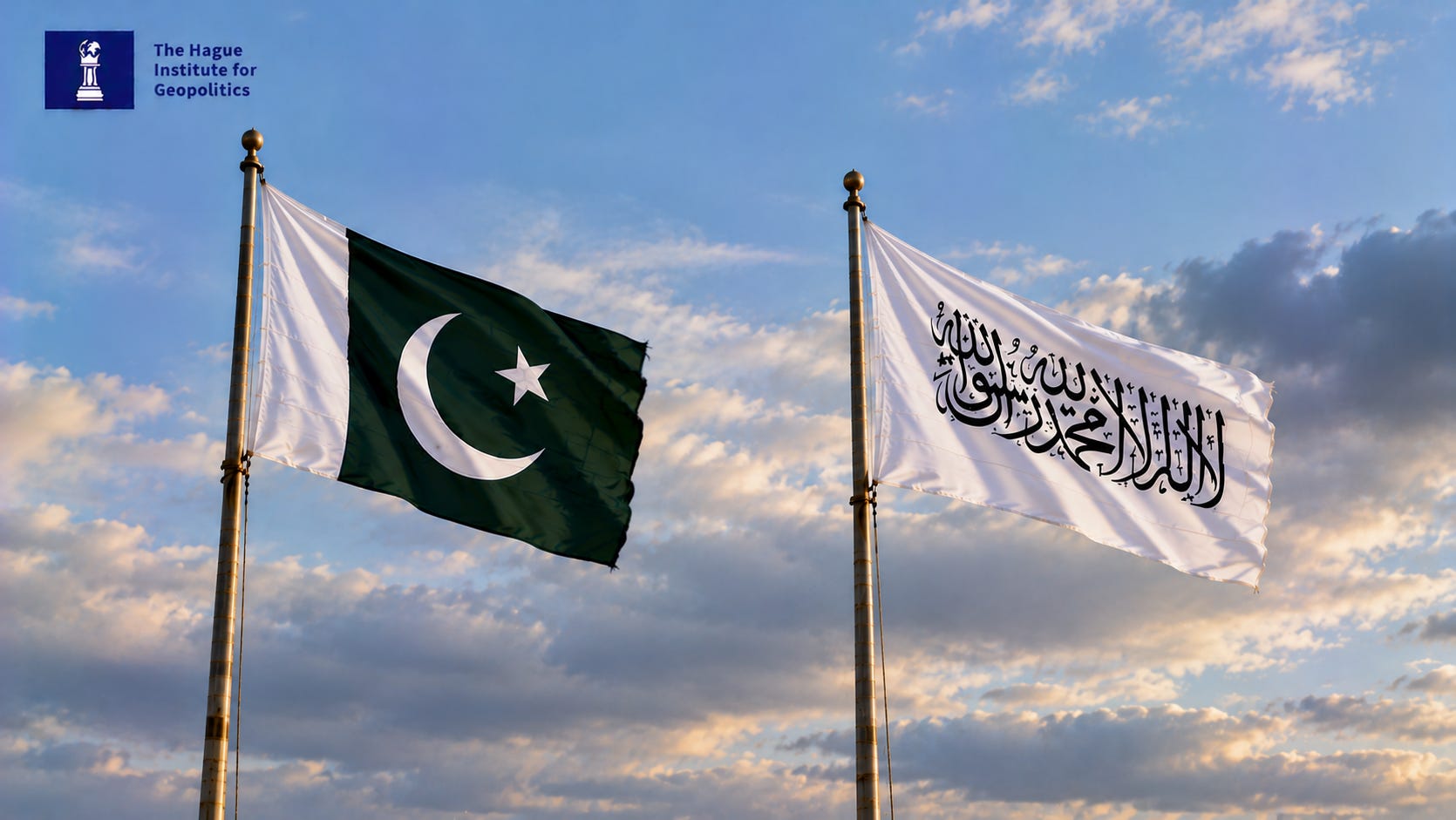
On 17 October, Pakistani forces and Afghan Taliban fighters exchanged fire along their shared border. Pakistan targeted Taliban positions, especially in the Kurram district in Pakistan. This confrontation is only one of the many between the two countries which have been taking place after the Taliban regained power. For decades, Pakistan’s military built close relationships with the Afghan Taliban, supporting the movement during its insurgency against the US-backed Afghan government. When the Taliban gained power again in August 2021, Islamabad seemed to be in a position to benefit from the political transformation going on. Five years later, however, Pakistan finds itself confronting the government it once helped to regain power. At the centre of the dispute is Tehrik-i-Taliban Pakistan (TTP), a militant group fighting the Pakistani state, also known as the Taliban of Pakistan. Islamabad accuses Kabul of allowing TTP militants to operate from Afghan territory, while the Taliban authorities have been denying responsibility for the attacks. The question behind these dynamics is therefore: how did the Afghan Taliban, once a strategic partner of Pakistan, now pose a security challenge for Islamabad? And what does this reveal about the limits of Pakistan’s influence over Afghanistan?
The Ally Pakistan Thought It Had
Pakistan’s relationship with the Afghan Taliban is at the centre of the discussion. For Islamabad, Afghanistan has been central to its regional security plans, implying that friendly relationships with Kabul could have helped maintain Pakistan’s influence in the region and limit India’s influence in Afghanistan. Therefore, supporting the Taliban was for Pakistan a possibility to influence the political balance beyond its borders. During the first period of the Taliban’s power, from 1996 to 2001, Pakistan was one of only three countries to formally recognise their government. After the US-led intervention, Pakistan continued to provide support to the Taliban, even if Islamabad formally cooperated with the US counterterrorism campaign. This relationship lasted throughout the years that followed. The Taliban’s return to Kabul in August 2021 seemed to be convenient to Pakistan; the removal of the Western-backed Afghan government, which Islamabad had frequently viewed with suspicion, seemed to be a positive event for Pakistan. However, the Taliban’s return to power did not match its expectations.
As an anonymous source familiar with the history between the two countries explains, “Pakistan’s fundamental miscalculation was to assume that supporting the Afghan Taliban would allow it to control Afghanistan and advance its regional interests.” The distinction between influence and control is crucial. Pakistan’s historical ties gave it channels of communication with the Taliban leadership, but they did not necessarily provide the means to control the decisions taken. Once in power, the Taliban did not need to accommodate Islamabad’s requests.
Dr. Najib Amin, Postdoctoral Researcher at the Centre for International Conflict Analysis and Management at Radboud University, explains this shift in the relationship: “consequently, Pakistan was no longer dealing with a movement dependent on external support, but with a de facto actor seeking greater autonomy and control over its own affairs.” Dr. Amer Raza, Professor at the University of Peshawar and Head of the Afghanistan Research Cell, adds an important element to this assessment. He argues that, while Islamabad had unrealistic expectations, Pakistan’s influence over parts of the Taliban movement has been important, saying that “Pakistan’s expectation that this patron and client relationship would continue was therefore not unrealistic in itself.”
More importantly, Pakistan’s expectations clashed with relationships the Afghan Taliban had developed during the insurgency with the TTP. What Islamabad had regarded as a source of influence was becoming entangled with one of its most pressing domestic security concerns.

The TTP
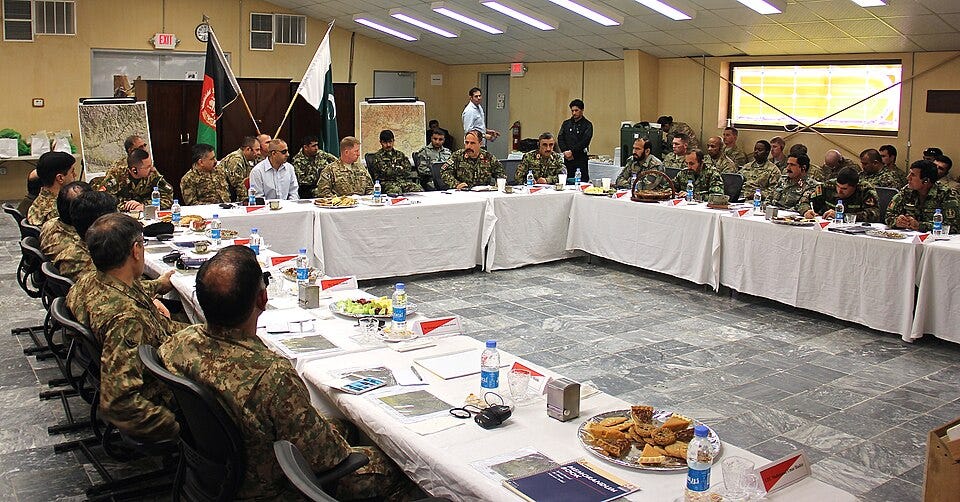
It is essential to consider that at the centre of the confrontation lies a distinction between two groups: the Afghan Taliban and Tehrik-i-Taliban Pakistan (TTP). Despite their shared history, they are separate movements. Established in 2007, the TTP brought together mainly Pashtun militants from Pakistan’s tribal areas along the Afghan border. The creation of the group emerged as a response to Pakistan’s military operations in the region and the collaboration with the US after 2001. The TTP opposed Pakistan’s government in these areas, aiming to impose its own interpretation of Islamic law. Therefore, while the Afghan Taliban fought with the aim of removing foreign forces from their country and overthrowing the government in Kabul, the TTP conducted its own insurgency against Islamabad. Their objectives differed, but fighters from both sides shared ideological commitments, personal relationships and years of cooperation.
The Taliban’s victory in Afghanistan did not bring an end to this relationship, but it created a new dilemma. After the removal of the Afghan government, the Afghan Taliban achieved their principal objective, while the TTP’s armed struggle against the Pakistani state continued. After 2021, the TTP remained active, intensifying its attacks in Pakistan. On the other hand, Pakistan expected the authorities in Kabul to help contain the militants threatening its security, but the Afghan Taliban did not see any resolution in turning against ‘former comrades’ whose struggle continued on the other side of the border.
Pakistan increasingly accused Afghanistan of allowing for a permissive environment for the TTP, accusations that the Taliban have repeatedly rejected. As the anonymous source explains, “the Afghan Taliban cannot easily abandon a longstanding ally, let alone hand its members over to the Pakistani army.” What binds together the TTP and the Afghan Taliban are decades of cooperation which have produced ideological, personal and familial bonds, including intermarriage. Dr. Raza points to another dimension of this relationship. During the US-led war in Afghanistan, militants associated with what became the TTP often provided help and shelter to Afghan Taliban fighters. As he explains, “they regard the TTP as a strategic ally that they cannot and should not lose.”
This does not mean that Kabul has been entirely unwilling to negotiate with Islamabad. In late 2021 and in 2022, the Afghan Taliban helped facilitate negotiations between Pakistan and the TTP; however, the talks ultimately failed. A central obstacle was the disagreement about the TTP’s demands. One of the main points of disagreement was the TTP’s demand to restore the formal tribal areas’ separate administrative status, instead of accepting them being part of Khyber Pakhtunkhwa province, demand which Pakistan refused to accept. The collapse of the ceasefire in November 2022 also exposed the limits of these negotiations. As a result, Kabul saw itself in an increasingly complicated position. Restricting the TTP could help stabilise relations with Pakistan, but turning against the group risks alienating militants with whom the Afghan Taliban have maintained longstanding ties. What Pakistan regards primarily as a security threat is therefore also a question of political relationships and internal cohesion.
Dr. Amin identifies another complication: the Taliban’s reluctance to confront the TTP may not be only a matter of political choice, but also of limited territorial control. As he explains, “at times it is important to distinguish between political unwillingness and operational inability that are not necessarily the same thing”. As the disagreement continued, Pakistan increasingly tried to pressure Kabul through measures extending beyond diplomacy.
When Negotiations Fail…
Following the failure of negotiations, Pakistan turned to coercive measures to pressure the Taliban. As a consequence, cross-border military operations, restrictions on trade and movement, and the deportation of Afghan nationals became part of Pakistan’s response. These measures also expose a deeper problem for Afghanistan: as a reaction, Pakistan can impose considerable costs on Afghanistan.
The shift towards military pressure became particularly visible in March 2024, when Pakistani airstrikes inside Afghanistan targeted what Islamabad described as “militant hideouts”. The Taliban authorities defined the strikes as violations of Afghan sovereignty. But this was only the beginning as more strikes followed; Dr. Raza interprets Pakistan’s resort to military force as a sign of frustration: “the fact that Pakistan has resorted to them shows a level of desperation in its policy.”
But military action was only one dimension of this tension. In 2023, Pakistan launched a large-scale campaign to deport undocumented foreign nationals, mainly Afghans. At the same time, closures of borders disrupted trade between the two countries. These measures carried consequences for Afghans already facing economic difficulties. However, their effectiveness remained questionable. Pressuring the Taliban government through economic restrictions and military attacks did not weaken the relationships between the Taliban and the TTP.
The confrontation intensified further in October 2025, when Pakistani strikes and exchanges of fire along the border led to some of the most serious hostilities. Although diplomatic efforts produced a fragile ceasefire, the underlying disagreement over the TTP remained unresolved. Fighting resumed in February 2026, with Pakistan launching strikes on Afghan territory and both sides reporting plenty of losses. By September and October 2026, the dispute escalated again. Pakistan carried out airstrikes, claiming that its operations only targeted militants, while Afghan authorities accused Islamabad of killing civilians and violating the country’s sovereignty. The United Nations confirmed civilian casualties in some of the September and October strikes. Dr. Amin suggests that Pakistani strikes may reinforce the Taliban leadership’s determination to resist Islamabad without improving its standing among Afghans. As he explains, “While military pressure seems to be strengthening the Taliban’s political determination to resist Pakistan, it does not necessarily strengthen their domestic and/or regional legitimacy.” For Islamabad, the situation is still critical: the TTP continues to threaten Pakistani security forces and civilians, while the Taliban authorities have resisted Pakistan’s demands for more decisive action. However, coercion cannot be the only tool. As the anonymous source argues, “Pakistan cannot realistically expect the Afghan Taliban to meet its demands through coercion alone.” The problem is that the same measures used to force cooperation might also make it more difficult for Kabul to achieve it. Pakistani attacks will strengthen the Taliban’s idea that Afghan sovereignty is under threat, while economic restrictions would deepen hostility without solving any issue.
Therefore, if negotiations have failed and military pressure has not been effective either, what is the most realistic path towards de-escalation between Pakistan and Afghanistan?
Can Pakistan and the Taliban Find a Solution?
Despite the deterioration of their relations, neither Pakistan nor Afghanistan can afford a total rupture of their relationship. For the Taliban, the challenge is not necessarily about distancing Afghanistan from Pakistan, but redefining their relationship. As Dr. Amin explains, “We always hear from the Taliban that they want diplomatic and economic relations with Pakistan without political dependence.” This ambition is also reflected by Kabul’s engagement with other foreign powers as, for instance, China appointed an ambassador to Afghanistan in 2023; Russia formally recognised the Taliban government in 2025; and the Taliban’s foreign minister visited India later that year.
The central obstacle to reconciliation remains the TTP. Islamabad wants Kabul to prevent them from using Afghan territory to threaten Pakistan, while the Taliban face political and ideological constraints that make any action against the group complicated. For Pakistan, accepting the activities of the TTP implies taking security risks, while for the Taliban, confronting the TTP who are longstanding allies could generate tensions as well. Choices and restrictions such as border coordination, information-sharing and restrictions on cross-border militant activity, might offer a more realistic point of departure. But even these arrangements would require the Taliban to make commitments that Pakistan could trust.
Dr. Raza sees diplomacy as the only alternative: “a diplomatic solution is still possible, and I think it is the only solution that is possible”. He points particularly to China, which has already facilitated discussions involving the two countries in Urumqi, as a possible mediator. Having participated himself in initiatives bringing together Afghan and Pakistani traders, religious scholars and tribal leaders, Dr. Raza argues that such exchanges should continue. These channels cannot replace a formal agreement between the two countries, but they could help maintain relationships.
Rebuilding confidence may also require addressing the consequences of Pakistan’s policies towards Afghan civilians. Dr. Raza proposes steps that Islamabad could take independently of a broader security agreement. “What Pakistan can do more immediately is allow Afghans to come to Pakistan on medical visas to receive treatment, and allow certain refugees, especially girls and women who are receiving education in Pakistan, to stay in the country.” Such measures would not resolve the TTP dispute, but they could show that Pakistan is willing to separate its security concerns from its treatment of Afghan civilians.
For Pakistan, the challenge now is to address the TTP threat without further damaging its relationship with Afghanistan. Military pressure has failed to secure cooperation Pakistan, while the Taliban have shown little willingness to turn against the TTP with whom they share decades of history. A return to a pre-2021 relationship is unlikely. Pakistan once believed that supporting the Taliban would help secure its interests in Afghanistan, but their return to power has exposed how limited that influence was. The question now is whether Pakistan can adjust its approach to a Taliban government that is determined to act independently.