


In Summary
After nearly three years of war, the production of critical systems is still lagging dramatically behind.
However, there are plenty of examples of how it can be done!
It is high time for smart and scalable production capacity.
Defence Update | If the war in Ukraine has shown one thing, it is that armed forces ‘burn through’ their equipment at lightning speed in a modern conflict. Ukraine has now lost nearly 1,000 tanks, Russia more than 3,500 (compare this with the 18 Leopards currently in service with the Dutch Army and the 46 that have recently been ordered). In addition, both sides have lost thousands of other armoured vehicles and hundreds of artillery pieces. On average, Russia loses roughly as many Infantry Fighting Vehicles per month as the Dutch Army possesses. Do take a look at Oryx’s open-source overview of visually confirmed Ukrainian and Russian equipment losses.
But what about the production of defence equipment? In short, it varies – but is generally poor. For example, production of Leopard tanks in Europe is finally being restarted. In recent years, almost all ‘new’ tanks produced were thorough refits of existing tanks. This is, of course, not a problem in itself, but there are now hardly any ‘old’ Leopards left that are not in active service – at least not on the scale required to supply European armed forces with hundreds of new tanks. Added to this are the regular disputes between manufacturers.
For instance, a deal fell through to supply the Italian armed forces with hundreds of new Leopard 2 tanks via local production; there has long been dispute over the ownership rights to the Leopard 2; and there are complex negotiations regarding the division of labour between France and Germany for the joint successor to the Leopard 2 and Leclerc tanks. So there is (as yet) no question of ‘quickly’ and ‘easily’ ramping up tank production, although the actual orders for new tanks from countries including the Netherlands are a good start.
Another major shortfall is evident in the production of air-defence missiles, which are indispensable for the defence of, amongst other things, critical infrastructure against cruise and ballistic missiles. Production of the most important air-defence missiles stands at a few dozen to a few hundred units per year – nowhere near enough for a conflict with, for example, China. Production of, for example, the PAC-3 missile (part of the Patriot system and in use by the Netherlands, amongst others) stands at around 500 units per year, whilst production of other systems is even lower, sometimes falling below 100 units per year. This is despite the fact that the US Navy has already had to deploy hundreds of surface-to-air missiles against the relatively lightly armed Houthi rebels in Yemen.
The same applies to offensive weapons such as cruise missiles. France and the United Kingdom have donated many Storm Shadow cruise missiles to Ukraine, but production of these missiles has still not resumed in recent years, whilst a successor model is still at an early stage of development. In total, several hundred Storm Shadows have been produced for European countries – nowhere near enough for a major conflict: the US has already used 135 Tomahawk cruise missiles against the aforementioned Houthi rebels.
Production of an absolutely essential item – 155mm artillery shells – has grown enormously since the start of the war in Ukraine (mainly due to the very high level of artillery use there) and is now many times greater than before. Nevertheless, annual production within NATO has not yet reached the level of monthly (!) production during the Cold War.
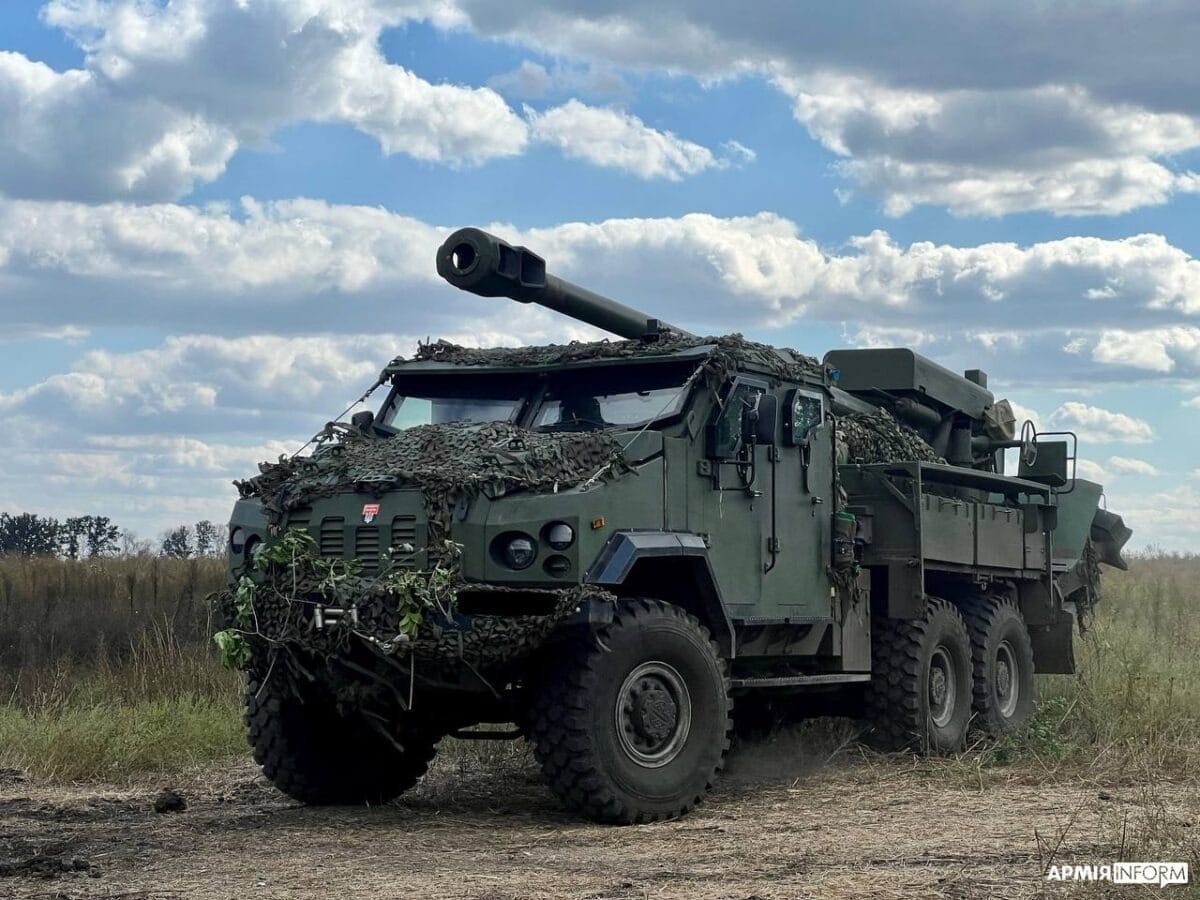
So is it all doom and gloom? No, fortunately there are also success stories. For instance, Ukraine has managed to ramp up production of its own 2S22 155mm howitzer. When Russia invaded in 2022, there was only one prototype. Ukraine is now producing more than 20 units per month. France has also managed to increase production of the comparable CAESAR howitzer from 2 to 12 units per month. Lockheed Martin has managed to increase production of HIMARS rocket artillery systems by 60 per cent. Another success story is the Canadian firm Roshel, which produces light armoured vehicles on commercial chassis. To date, more than 1,400 of these vehicles have been delivered to Ukraine. Although this type of light vehicle is not a fully-fledged alternative to heavily armoured systems, any form of protection is welcome in a landscape rife with drones and artillery.
Many European countries are also looking further afield: for example, Poland is procuring hundreds of Korean tanks and (missile) artillery due to the much shorter delivery times. Poland has already taken delivery of several dozen K2 tanks and K9 self-propelled howitzers and is also working on launching domestic production in Poland. However, although deals of this kind appear lucrative given the short lead times, they do mean production (and therefore dependence) on a country far away and usually a higher price. One final success story may come as a surprise – but production of JSFs now stands at more than 100 units per year: a very high figure for such an advanced product.
What are the possible solutions?
Invest in capacity – not just production. Scaling up must, above all, be possible when needed, but you do not want to maintain endless stocks of certain systems (even missiles have an ‘expiry date’). Ensure that production can keep pace with consumption, particularly when it comes to ammunition. Scaling up an existing production line that is running at a low capacity can be achieved many times faster than reactivating a production line, not least because complex systems rely heavily on suppliers.
New threats call for new responses. Given the high cost and low production volumes of surface-to-air missiles compared with the low cost and high production volumes of, for example, drones, cost-effective countermeasures are essential. Consider, for instance, anti-aircraft guns. Although these seemed obsolete a few years ago (and the Netherlands had therefore sold off all its systems), Ukraine is teaching us the value of these systems for affordable air defence.
Use commercial platforms as a basis. The use of commercial platforms makes production much more scalable. So do not build armoured vehicles on specialised chassis, but on the basis of truck chassis that are already in large-scale production.
An example of this is the MRAP programme. Roadside bombs created an urgent need for more armoured vehicles for the US armed forces in Afghanistan and Iraq. In collaboration with commercial companies, various types of armoured vehicles were therefore developed at a rapid pace, and many thousands were produced within a few years. These vehicles mostly used commercial components and were based on an existing design. Although many MRAP vehicles were not perfect, the surplus stock from Iraq and Afghanistan is now being used successfully in Ukraine, a battlefield for which they were never actually designed. Once again: imperfect protection is better than no protection at all!
Buy more of the same. European countries have always had a tendency to develop their own systems to meet national standards that fill a specific niche. The result? High development costs, high unit costs due to low demand, limited export potential and no scalable production line. So buy more of the same systems and look to where the demand lies internationally, rather than just nationally – even if this means that a system might not be ‘perfect’.
Ensure greater competition. The production of many essential systems is currently in the hands of just a small group of manufacturers who generally face no competition. This leads to high costs and makes it difficult to scale up production affordably.