


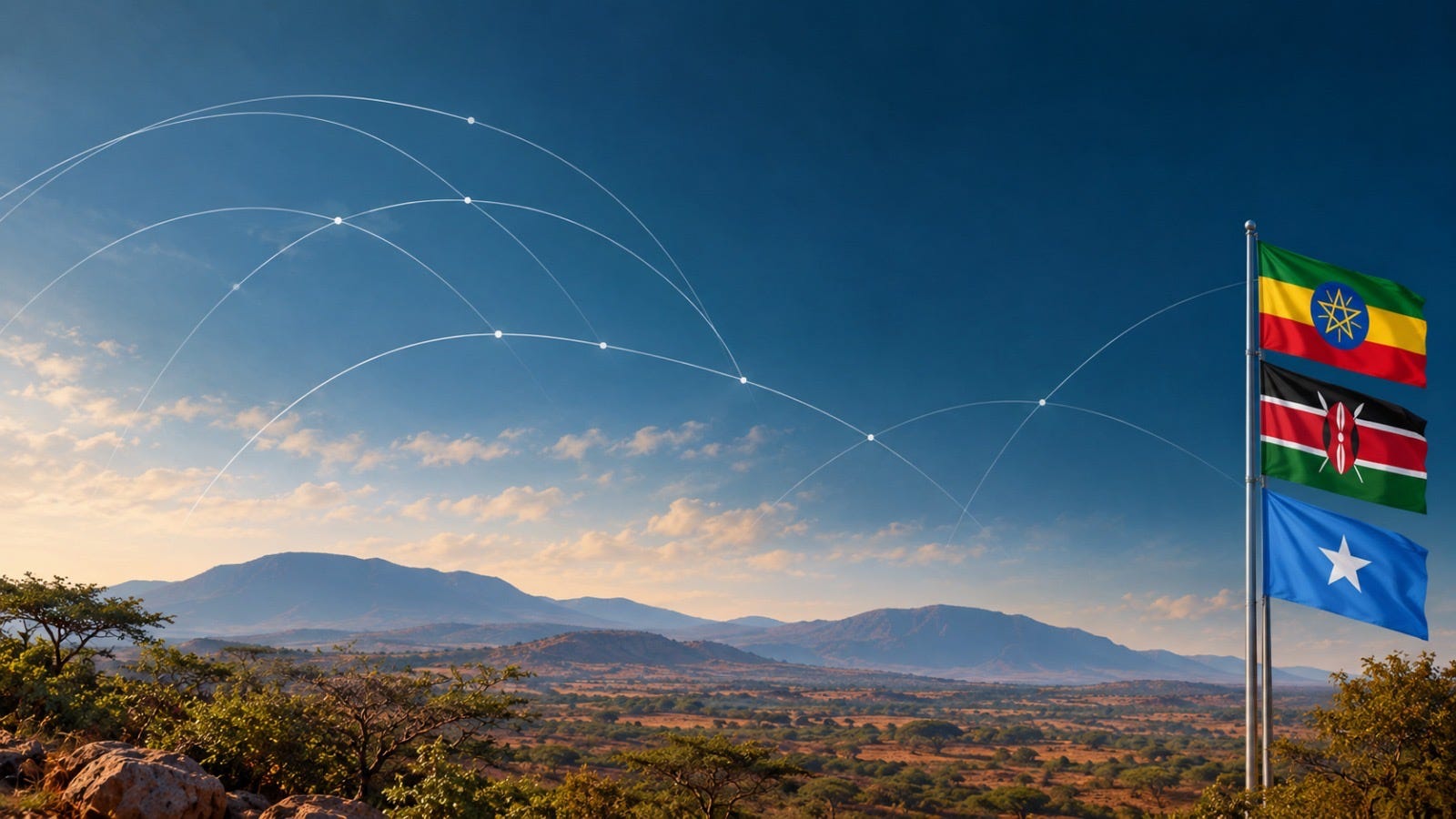
In Summary:
The recent increase in insecurity around Mandera, a Kenyan county bordering Somalia, is linked to renewed Al-Shabaab activity, yet this cannot be explained by “spillover” alone. The group has long used cross-border attacks as a strategy, not just an unintended consequence of military pressure in Somalia.
Climate stress, social-economic factors, communal tensions and cross-border movement are also important reasons behind the border region’s vulnerability to violence.
Regional tensions between Kenya, Somalia and Ethiopia make a coordinated response more difficult. At the same time, the governments remain focused on their own domestic political priorities.
In late July, five Kenyans working as security guards near the border in Mandera County in Northern Kenya were killed by an Al-Shabaab attack. The attack is not simply one that should be classified as an individual attack. Kenyan security data recorded 61 terror-related incidents across the border regions in Mandera, Wajir, Garissa and Lamu between September 2024 and August 2025. AAl-Shabaab is a Somalia-based militant extremist and al-Qaeda-affiliated group that aims to impose strict Islamic rule across the “greater Somalia” region and remains one of the region’s most resilient groups despite counteroffensives by the AU and Somalia.
Kenyan forces have been bilaterally supporting the fight against Al-Shabaab in Somalia since “at least 2011.” Thereafter, Kenya has joined several African Union missions to Somalia, most recently and still of effect today, the AUSSOM, which is aimed to stabilize the region and transfer full security responsibilities to the Somali forces by the end of 2029, and was authorized by the United Nations Security Council in December 2024 (Resolution 2767). The long-standing counter-insurgency operations have pushed Al-Shabaab militants towards and across the Kenyan border, which implies that spillovers are the reason behind the violence at the border regions.
The spillover explanation matters, indeed, but can the recent increase in border insecurity be reduced to spillover alone? Not entirely. The question remains: Why is the Mandera Triangle heating up again, and why is “spillover” theory only part of the explanation?
This is crucial. If policymakers see border insecurity only as a spillover-issue, they may miss to address the underlying factors which sustain and reinforce the existing violence, such as porous borders, socio-economic factors, climate stress, and weak regional cooperation.
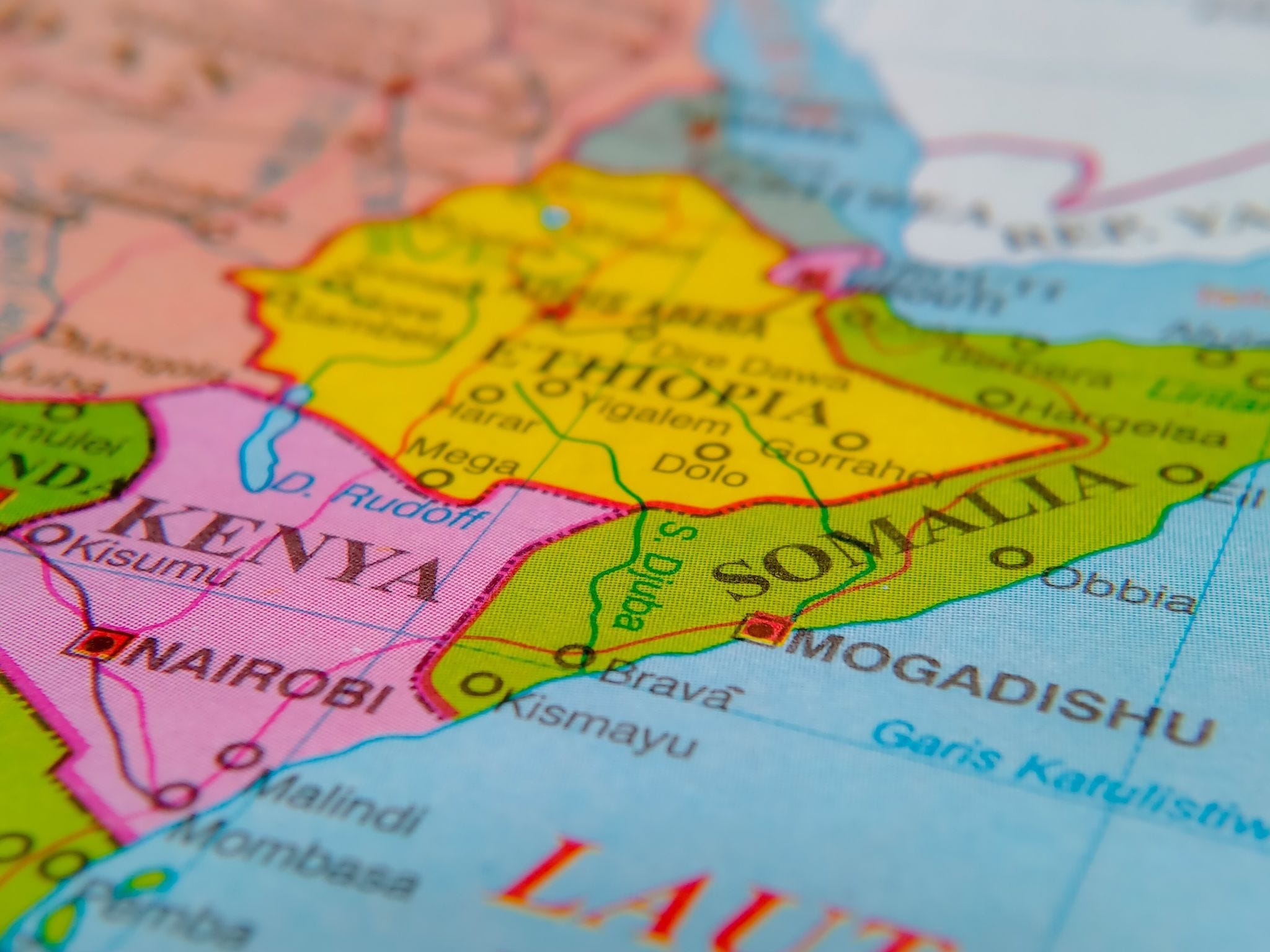
More than Cross-Border Spillover
Kenya has long been a target of Al-Shabaab attacks, tracing back to 2008. The group has strategically relied on such “cross-border attacks” to impose costs on Nairobi without having to control territory inside Kenya. Al-Shabaab’s activity increase in Kenya might therefore be better understood as being part of a broader pattern with specific strategic objectives rather than simply an unintended consequence of military pressure in Somalia.
This distinction is crucial. If attacks in Kenya are treated only as a spillover problem, the response may be insufficient, such as a sole focus on, for instance, on stopping people and weapons from crossing the border. The Kenyan government tried exactly that, closing its border to Somalia in Mandera County. This had severe economic consequences for the people living on the border region as trade became difficult and, as observed, failed to stop the border insecurity it was meant to address. Al-Shabaab already operates through networks that extend across the border.
Benedict Arwa, researcher and lecturer at the University of Nairobi and University of Zetech, identifies three major reasons why Al-Shabaab’s attacks have persisted over the years: “Porous borders, the marginalisation of northern Kenya, and social economic factors such as widespread poverty and unemployment, compounded by corrupt officials” have allowed the group to exploit existing vulnerabilities. Arwa further emphasizes that “Kenya’s borders with its neighbours are highly porous, and shared ethnic ties along the Kenya–Somalia border make it difficult to distinguish between nationalities.”
Fidel Amakye Owusu, Chief Executive Officer at DefSEC Analytics Africa and security risks consultant, emphasizes a further layer. Rivalry between Al-Qaeda-affiliated groups and Islamic State-linked factions are “one of the main drivers of the expansion and the lethality of extremist groups” across the continent. In Niger, he notes, when Islamic State-linked fighters attack, JNIM, an Al-Qaeda’s affiliate, strikes too, “to show that we are really in charge, we are the guys to go to when it comes to hitting state assets and hitting state targets.” The same competitive logic, he suggests, may partly explain the pace of Al-Shabaab’s attacks in Kenya.
Climate Stress and Local Vulnerabilities
Climate stress is adding to existing vulnerabilities in the wider borderlands. Drought, changing rainfall patterns and water shortages are putting additional pressure on livelihoods and local communities. These pressures can intensify existing tensions, especially where access to resources is already contested. At the same time, climate-related disruptions can increase displacement and weaken community resilience. As Arwa explains, prolonged drought can push pastoralist communities towards the same scarce water and grazing resources, increasing the risk of local clashes. “During prolonged drought seasons, often exacerbated by climate change, clans such as Garre, Degodia, and Murule migrate toward the river in search of pasture and water for their livestock, resulting in violent confrontations over territorial grazing rights, water pans, and boreholes.”
Climate conditions should not be understood as direct causes of violent extremism. However, through such, existing grievances and governance challenges may be reinforced and groups like Al-Shabaab can exploit these opportunities. Climate stress should be seen as one factor within a wider system of insecurity. Thus, the current Kenyan-Somalian-Ethiopian border situation is not only a question of militant spillover from Somalia, but also one of structural conditions that make the borderlands more vulnerable to insecurity.
Fragile Regional Cooperation
To secure the border region, the Kenyan government has heavily relied on border containment, which although reopened now, included closures and restrictions on movement. However, communities living in the tri-border region, especially in Mandera County, depend heavily on cross-border trade with Somalia and Ethiopia for essential goods. The closure of the Somalia border has consequently disrupted established economic networks. Moreover, at the same time, Arwa notes that informal crossings have continued and “cross-border movement significantly facilitates Al-Shabaab’s activities, as distinguishing militia members from civilians is difficult when local networks do not wear uniforms.” This highlights the difficulty of addressing security concerns in the region while restricting forms of cross-border movement that are also central to the everyday lives and livelihoods of local communities.
A third factor lies above the border itself. Relations between Ethiopia and Somalia have been affected by Ethiopia’s 2024 agreement with Somaliland, a region of Somalia that seeks independence, over access to the Red Sea. The Somali government strongly opposed the agreement, as it challenges its territorial sovereignty. Consequently, diplomatic tensions between the two countries increased. The Turkey-brokered Ankara Declaration later created a framework to reduce the tensions and to restore the cooperation between Ethiopia and Somalia. However, the underlying dispute over Ethiopia’s access to the red sea has not been solved.
This is not the first time relations between neighboring countries in the region have proven to be difficult. Kenya and Somalia, as well, have their own history of diplomatic disputes, such as mutual ambassador expulsions in 2019 and 2020-21 or disagreements regarding the ownership of oil and other resources. Recently, however, the ties between both states have improved considerably. Kenya reopened the Mandera border crossing in 2026 after a 15-year closure, and by mid-2026 officials on both sides described their relations as strong.
Cooperation between the three states therefore remains fragile and can shift quickly. Kenya, Ethiopia and Somalia each face their own security priorities, domestic political pressures and competing interests. These differences can make it difficult to sustain political attention and cooperation in a peripheral border region, even when bilateral relations are relatively strong at a given moment. Further, limited security cooperation also complicates the border situation. For instance, Ethiopian forces, as Owusu explains, “need protocols to enter Kenya, because there’s no coordination, there’s no fluidity in terms of operation.” This has major consequences, as by the time clearances are granted, “the militants would have dissolved into the local population.”
Conclusions Beyond the Spillover Narrative
While Al-Shabaab is exploiting the pressure and uncertainty surrounding Somalia’s military transition, climate stress and regional tensions can further increase vulnerabilities in the borderlands. This also creates a problem for policy, as a purely military response treats the border as a security problem to be controlled and a purely developmental response risks underestimating the immediate threat posed by Al-Shabaab.
The key question is not simply whether Al-Shabaab attacks will increase or decrease. It is whether Kenya, Somalia and Ethiopia can address the wider conditions that make the tri-border region vulnerable in the first place. Benedict Arwa’s answer is clear: the three countries need “a permanent joint border security management framework.” Socio-economic dimensions, importantly, need to be part of such a framework. Owuso foregrounds such underlying conditions that drive people toward extremist groups remain often underaddressed. He describes current measurements as being “like the carpenter who has a hammer, and finds that any problem will be solved by just using the hammer.”