


In Summary:
India has been developing its nuclear sector mainly without foreign assistance, as a part of its strategy and as a result of the restrictions that followed the nuclear tests in 1974 and 1998.
After the Nuclear Suppliers Group (NSG) waiver in 2008, India was able to cooperate with foreign countries on nuclear development, but it is still heavily reliant on fossil fuels.
Although the three-stage thorium programme is not yet fully developed, the first reactor of stage 2 has reached first criticality on 6 April 2026.
Introduction
India’s civil nuclear development was slow and largely domestic until 2008, when the Nuclear Suppliers Group (NSG) granted India a waiver allowing nuclear trade despite India not signing the Nuclear Non-ProliferationTreaty (NPT). Since then, India has signed civil nuclear cooperation agreements with several countries. While their nuclear development has been rapidly progressing the past few years, nuclear energy provides currently about 3% of India’s electricity. Under the Viksit Bharat vision India aims to reach 100GW nuclear capacity by 2047 and achieve net-zero emissions by 2070. As India is currently at around 8GW capacity, the additional uranium needed to reach this target is expected to be met largely through imports, as domestic uranium resources cannot cover it. India is now developing new technology, which aims at utilising their vast thorium resources in order to achieve nuclear independence in the long run.
India’s Dependence
Following the Nuclear Suppliers Group (NSG) waiver in September 2008, the scope for sourcing both reactors and fuel from foreign suppliers widened significantly for India, and international cooperation “picked up pace”, explained Omkar Dhanke, Research Analyst at the Centre of Climate Change and Energy Transition. Civil nuclear cooperation agreements have been signed with several countries, such as the US, Russia, France, UK, South Korea, and Canada, as well as Australia and Kazakhstan, but only Russia has delivered reactors: Kudankulam 1 and 2 are operating, with units 3-6 under construction. Kazakhstan, Canada and Australia are uranium suppliers, while the French (Jaitapur) and US (Kovvada) reactor projects remain planned. The UK’s 2015 agreement covers a broader energy and climate package rather than reactors or fuel.
As of 2025, imports have fulfilled around 70% of India’s uranium demand, making it highly dependent on imported uranium. With the upscaling of nuclear power capacity, India is expected to have a rise in their uranium demand.
“Nuclear energy provides clean and baseload power, essential to supplement and support the increasing share of renewables in the Indian Electricity Grid.”
Omkar Dhanke, Research Analyst at Chintan Research Foundation
Additionally, both Dhanke and a nuclear energy analyst (anonymous source) mentioned the importance of the 2025 SHANTI Act, which ended the State monopoly in the nuclear sector by allowing private investors from all around the world to participate in its civil use. Dhanke notes that foreign partners can now bring technology that could accelerate the growth of the sector towards the 100 GW target by 2047, while the analyst describes the Act as a compromise on India’s goal of self-reliance, as it is opening to technology imports.
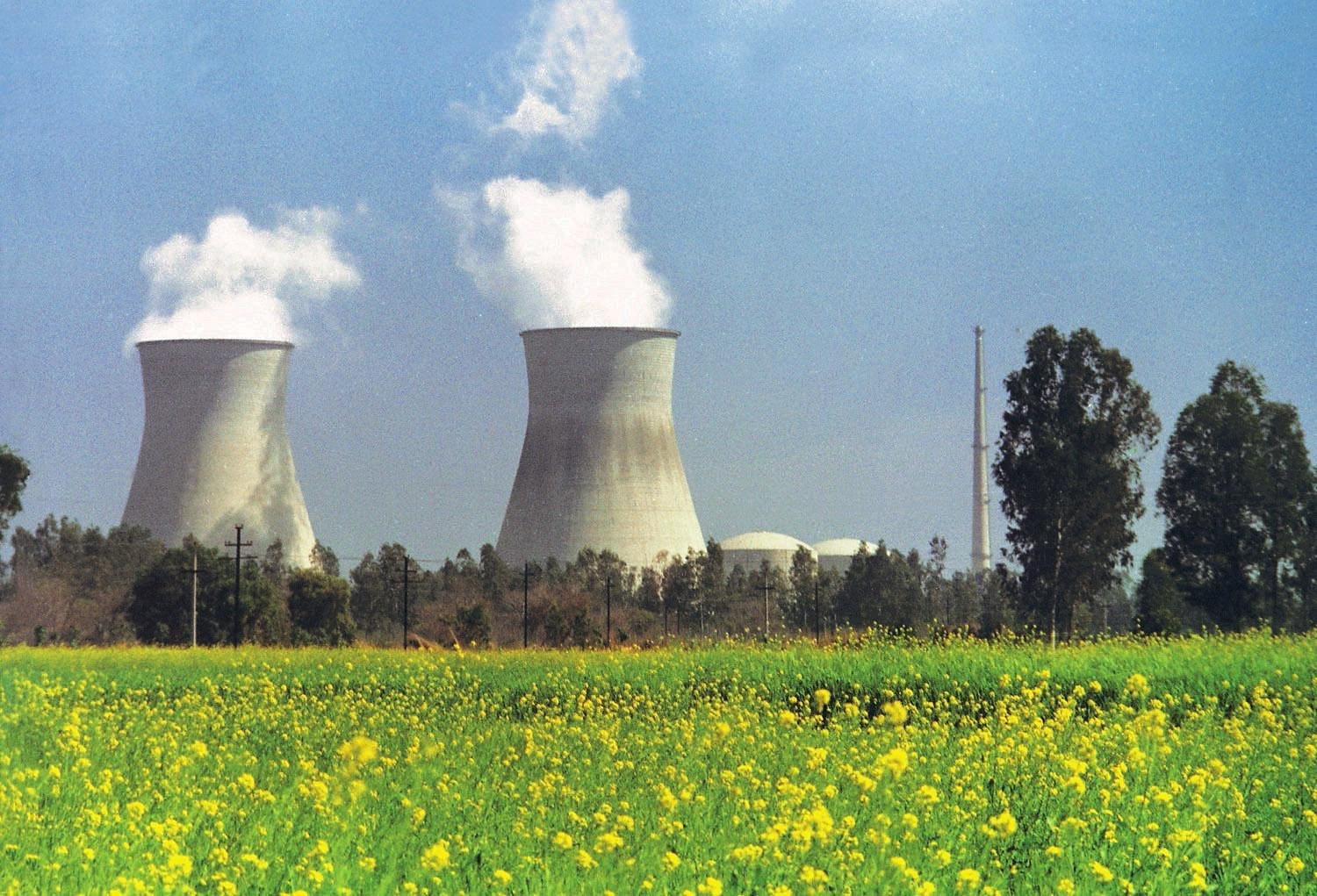
While India has made progress in their sustainable energy development, as the world’s third largest energy consumer, it is still heavily reliant on fossil fuels, and is the world’s third largest crude oil importer, with around half of that coming from OPEC. Sustained Gulf disruption could therefore drive higher import costs and inflation. Coal, however, already takes up around 46% of India’s energy supply (as of 2023) and provides around 75% of its electricity generation, whereas nuclear energy currently provides about 3%. As using fossil fuel for energy generation leads to significant environmental degradation, the government describes nuclear power as a crucial component of its transition to net zero by 2070.
“In India, the electricity tariff for industries is very high compared to the electricity tariff for households. So many of the industries which require electricity have chosen to have their own behind the meter power plants. (…) And industries, which require other forms of heat continue to rely on petroleum, fuel or coal. (…) For example, steel [industry] continues to use coking coal.”
Anonymous source (energy analyst from India) on the challenges of electrifying industries in India
Rajeev Lachmipersad, Geopolitical & Geo-economic analyst at The Hague Institute for Geopolitics (HIG), explained that India’s push for energy independence is also driven by the goal to reduce dependence on others for fuel and technology. By being less reliant, India can avoid being pressured or pulled into crises that are out of the country’s influence, such as the Gulf disruptions of 2026. This includes pressure from the United States, as there is a growing view in New Delhi that Washington “would prefer India not to grow into too large a power.” It is also unclear how far China could influence Russia’s decisions on deepening nuclear cooperation with India, as Russia is becoming increasingly dependent on China. For India, he says, this is “a further reason to develop its own nuclear and thorium capacity.”
India’s Nuclear & Thorium development
India has been developing its nuclear industry shortly after its independence, with a focus on the peaceful use of nuclear energy: the Atomic Energy Commission was set up in 1948 and the Department of Atomic Energy in 1954. In the 1960s, with both Canada and the US providing nuclear technology for civil use, the development accelerated. Canada helped build the CIRUS research reactor and supplied the design and main equipment for the first Rajasthan power reactor, while the US provided heavy water and built the two Tarapur reactors.
However, India conducted a nuclear test on May 18, 1974 in Pokhran (also known as Smiling Buddha), after which Canada cut off all nuclear cooperation with India and the US halted nuclear exports a few years later, including fuel for Tarapur, while others restricted nuclear exports to India. Reasons discussed for the test include the 1971 war with Pakistan (in which the US sided with Pakistan and threatened to bomb India with an US Carrier Strike Group), the pressure to demonstrate a nuclear capability after the introduction of the NPT (Non-Proliferation Treaty), which India refused to sign, and concern over China’s own nuclear tests in 1964.
“[India] faced severe restrictions in international cooperation, including the withdrawal of existing partners like the US and Canada, following the peaceful nuclear tests in 1974. Therefore, India had to turn inwards and build all the capabilities indigenously.”
Dhanke
Using previously imported and domestically developed technology, India continued to develop its nuclear technology and conducted a series of nuclear tests in 1998, despite the US efforts to minimize nuclear development with the extension of the NPT and the Comprehensive Test Ban Treaty (CTBT), that aims to ban all nuclear test explosions. India considered both treaties discriminatory, since it believes that the NPT supports nuclear monopoly for a select few who have been declared as nuclear-weapon states (NWS), while the CTBT, in India’s view, stopped others from developing nuclear weapons without disarmament by the NWS. In India’s view, both treaties therefore left the existing arsenals of the NWS intact while restricting everyone else. The Pokhran-II tests, after which India declared itself a nuclear weapon state, were followed by sanctions from countries such as the US and Japan, while Germany, Denmark, Sweden, and Australia suspended aid.
All three experts agreed that the hostile international market after the nuclear tests played an important role in India’s nuclear power programme, as it pushed India to develop its nuclear technology mainly without foreign assistance. This first lead to delays, but in the end strengthened India’s nuclear power development, and brought it closer to achieving nuclear independence.
“ This combination of external compulsion and India’s strong indigenous scientific expertise and capabilities has led to the complete indigenisation of homegrown nuclear technologies such as PHWR [Pressured Heavy Water Reactor] and PFBR [Prototype Fast Breeder Reactor].”
Dhanke
While India has around 300,000t of uranium reserves (roughly 3% of the world total), it possesses approximately 846,000t of thorium reserves - the largest of any single country in the world - positioning the country favourably for developing thorium-based nuclear technology. This was first recognised by Dr. Homi J. Bhabha (the father of India’s nuclear programme), who designed a three-stage nuclear development programme in the 1950s to meet India’s energy needs through thorium-based power production.:
In Stage 1, India uses PHWRs, based on Canadian CANDU reactor technology, fuelled by natural uranium to create plutonium.
In Stage 2, the plutonium is used in Fast Breeder Reactors (FBRs) to breed new fuel (uranium-233) from thorium.
In Stage 3, Advanced Heavy Water Reactors (AHWRs) are to burn thorium-based fuel and breed more U-233, with the aim of becoming self-sustaining.
The three stages are needed because thorium cannot sustain a chain reaction by itself: under India’s plan, plutonium from Stage 1 fuels the breeder reactors of Stage 2, which produce more plutonium than they use and convert thorium into fissile uranium-233, the fuel for Stage 3.
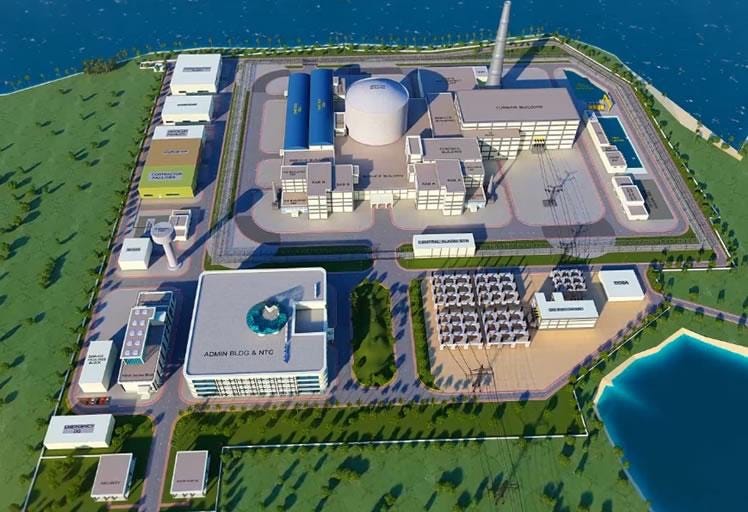
On April 6, 2026, a Prototype Fast Breeder Reactor (PFBR) in Kalpakkam achieved first criticality, the start of a self-sustaining chain reaction, bringing India officially to stage 2 of its three-stage programme. While there are designs on the AHWRS being tested and studied, according to a report in India’s nuclear power program, a large-scale generator can take decades to fully develop
India’s nuclear future
While showing that FBRs work technically brought India closer to the final stage, there are concerns over financing, given limited public funds for nuclear expansion, as well as security and public acceptance for commercial deployment. In addition, there have been previously reported delays in the development, and some argue that there are technical obstacles with the original design of Bhabha’s programme. Completing the second stage alone is reported to take significant time, given the technical challenges of commercialising the FBR, and the AHWR remains at the proposed-design stage, with only a lower-power critical facility built so far.
Amongst the concerns, others report that India has overcome several problems in developing its reactors, mainly without external help. India has built an already innovative nuclear establishment, and has made great progress in its three-stage programme. Prateek Tripathi from the Observer Research Foundation (ORF) argues that India should expand with a mix of reactors now and treat the closed fuel cycle as a long-term goal. Moreover, other reactor designs are being studied as alternatives to the AHWR, and Kaveri Ashok from the Center for Study of Science, Technology and Policy (CSTEP) suggests that PHWR-based routes could bring large-scale thorium use forward by at least two decades, if technical challenges are overcome.
“As a rising-major power, India needs more control over its own energy resources. Without it, the country risks becoming dependent on other great or rising-major powers, or being dragged along by conflicts elsewhere that it can hardly influence. Beyond the situation in the Middle East, Washington is also quietly increasing geopolitical pressure on India. Many in India now feel that besides China, the United States too does not want India to become too powerful in Asia, let alone globally.”
Lachmipersad
Conclusion
India’s civil nuclear programme developed largely on its own after the restrictions that followed the tests of 1974 and 1998, yet the country now imports around 70% of its uranium and still relies heavily on fossil fuels. Its thorium-based three-stage programme is meant to end that dependence and avoid being pressured by outside forces. The PFBR reaching criticality in April brought India officially into stage two. While the three-stage programme has the potential to give India nuclear independence through thorium, it will take decades and depends on India’s capability to overcome the challenges that come with its development, including its financing, the technical commercialisation of fast breeder reactors, the still unproven AHWR design, and public acceptance and security concerns.