


In Summary
Politicians are – quite rightly – concerned about the resilience of society.
This is mainly due to the deliberate disregard of threats in recent years.
Rather than scaremongering, political leaders must contribute to collective resilience.
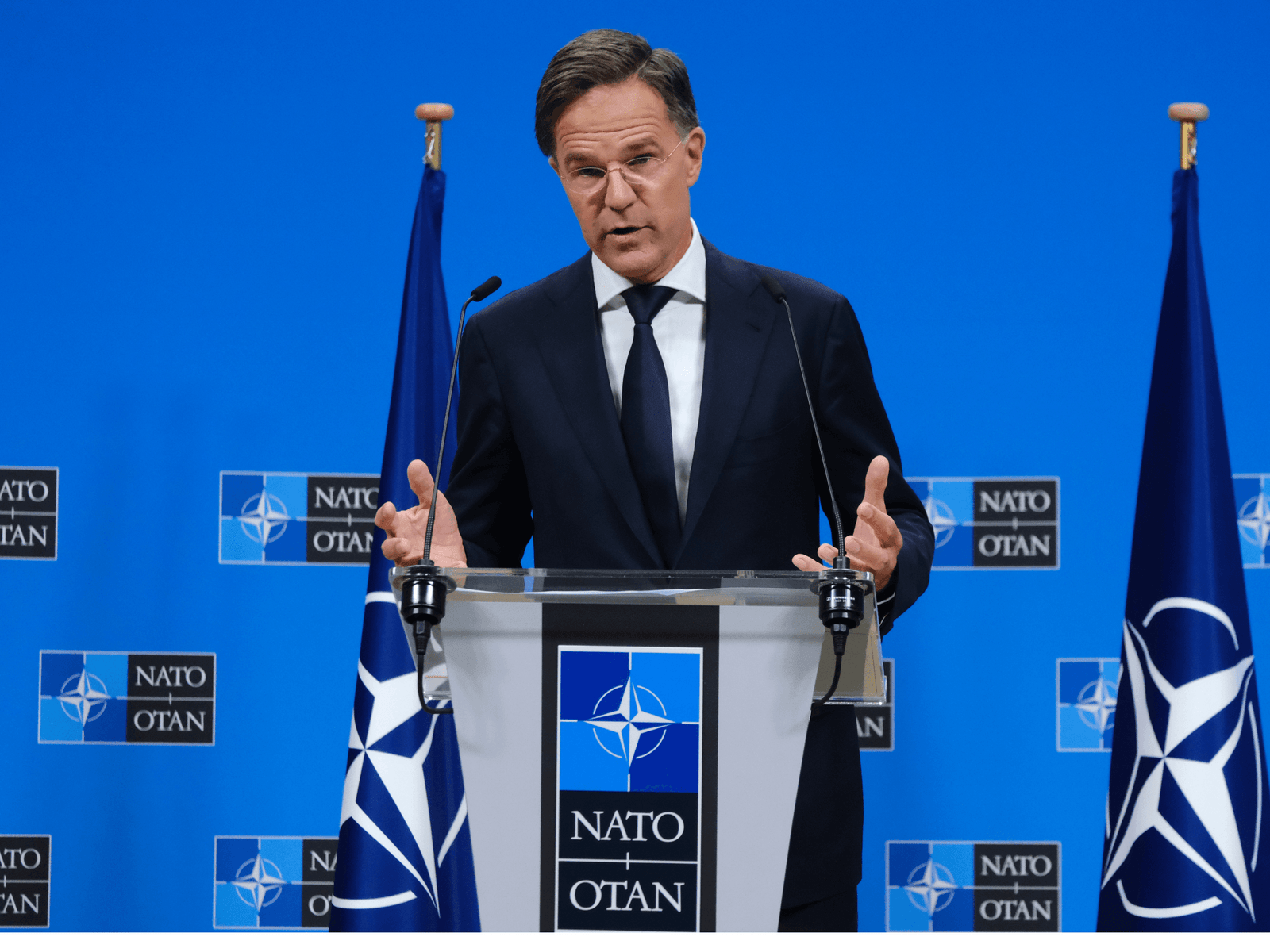
Defence Update | “It is time to switch to a wartime mindset”, stated NATO Secretary-General Rutte. Stock up on an emergency kit, advised Prime Minister Schoof. Shops selling these kinds of kits are now being inundated with customers. The need to have essential supplies at home is, incidentally, undeniable – quite the contrary, in fact. Yet it is striking that resilience is being reduced to having a few candles, a radio and a couple of litres of water – and that this has ‘suddenly’ become relevant now. How did we end up here?
The ‘war mentality’ in The Hague and Brussels is coming rather late.
When Russia invaded Georgia in 2008, and in 2014 annexed Crimea and invaded the Donbas under the guise of ‘liberation’, and murdered 193 Dutch citizens on board flight MH17, the ‘war mentality’ should already have ‘sunk in’, at least within the political circles of The Hague. But what happened between 2014 and 2022? The Netherlands (along with the rest of the EU) mainly cosied up to Russia for cheap gas. In 2018, the World Cup went ahead as planned in Russia, whilst in that same year Russian secret agents used chemical weapons in the United Kingdom in a failed assassination attempt on Sergei Skripal and his daughter.
Politically, economically and militarily, Europe was being cornered by Russia – yet investing in defence and a resilient society certainly did not happen. It is therefore striking that the very same leaders as back then are now warning citizens in alarmist tones that they are barely prepared for a major crisis. Less than a year before the large-scale invasion of Ukraine, there was still serious talk of further cuts to ammunition stocks – whilst Europe’s geopolitical adversaries were preparing for war.
It therefore feels strange that citizens are now being reminded of their individual responsibility.
It seems as though despondency is already prevailing and resilience is being reduced to the most basic level: being able to keep oneself alive for a few days. This is not a solid foundation for a resilient society at a time when national security is under serious threat – not only from the military threat posed by Russia, but also from the climate crisis. Alarmism, however well-founded, does not provide a solid basis for action, as Professor Beatrice de Graaf also argued in the Huizinga Lecture last December.
Of course, keeping an emergency stockpile in case of a crisis is an excellent idea, but this is only one small part of a resilient society. Politicians would do well to mobilise and motivate society to roll up their sleeves in the event of a crisis – at such times, people actually want to help one another, rather than waiting anxiously by the light of a tea light until the storm has passed.
How can we build collective resilience?
Of course, a robust defence system forms part of this – but, above all, point out to citizens what else they can do themselves: how, together, we can make a difference. For example, in a country where a large part lies below sea level, it is actually bizarre that almost nobody knows where the weak spots in the dykes are and where sandbags will be needed first. If there’s a threat of flooding, surely you’d want people to help carry sandbags, or help vulnerable groups such as the elderly to evacuate to higher ground?
So make sure people register with the Red Cross, or know where they can drop off sandbags. Give citizens a sense of agency: everyone must know how they can contribute to resolving a crisis, rather than merely surviving it. Foster hope, rather than fatalism – that is the kind of political leadership needed in challenging times. Otherwise, the battle is lost before it has even begun.
For policymakers:
First and foremost, acknowledge responsibility for neglecting society’s (military) resilience. Merely pointing out citizens’ individual responsibilities is not credible.
Move away from an alarmist tone: the situation is serious, but blind panic gets nobody anywhere.
Give citizens a role in crisis management, one that offers autonomy and a sense of purpose. Ensure that citizens know what they can do to help one another, rather than just themselves.
Invest in assessing, preparing for, planning and practising for various crisis scenarios, not only with professionals, but also – and crucially – with citizens.