

In Summary:
EU-funded peace projects in Northern Kenya, namely SEEK, SECCCI, and SPREAD, judge success by what gets built, such as peace committees set up or agreements translated, instead of by whether violence actually decreases.
None of the projects analysed show evidence that the EU has influenced armed groups, controlled weapons flows, or changed state security behaviour.
The EU is effective at convening stakeholders, translating agreements, and enabling trade, but this mainly produces coordination among elites rather than tangible security for communities still facing cattle raids, inter-communal violence, and road blockades.
Benedict Arwa is a Lecturer at Zetech University and University of Nairobi, a PhD candidate in International Studies at the University of Nairobi, and a CRCA Emerging Conflict Analysts Fellow. He specialises in international relations, conflict and peace studies, with a focus on international peacebuilding, conflict transformation, governance and the political economy of conflict in Africa.
The European Union (EU) has supported numerous projects in Northern Kenya addressing critical issues such as the relationship between water resources, grazing, and conflict, the establishment of local peace structures, and the development of cross-border systems to promote peace and prevent human suffering. This region has historically experienced intercommunal and resource-based conflicts, with climate change serving as a risk multiplier that exacerbates these challenges. Despite these interventions, sustainable peace remains elusive, as recurring cattle rustling, inter-communal violence, terror threats, and road blockades persist.
An analysis of three EU-supported projects in the region indicates that success has primarily been measured by tangible outputs, such as infrastructure or systems established, rather than by reductions in violence. This approach to evaluating programme effectiveness may be counterproductive, as it risks perpetuating a cycle in which significant resources are expended with limited impact on conflict prevention, management, or transformation. Therefore, it is recommended that future programmes prioritise sustainable peace as the primary objective and design interventions that address the underlying causes of conflict in the region.
The output-versus-outcome problem is evident in the majority of EU-financed programmes assessed in this analysis. For example, the Selam, Ekisil (SEEK) Project, financed by the European Union Emergency Trust Fund for Africa (EUTF) and implemented from January 2018 to January 2021, sought to prevent, mitigate, and peacefully resolve violent conflicts in the borderlands of Northwest Kenya (Turkana and Marsabit Counties) and Southwest Ethiopia (South Omo Zone) by supporting existing formal and traditional peace committees to effectively monitor, manage, and respond to local cross-border disputes. The project specifically measured the support and operationalisation of 10 cross-border peacebuilding structures to manage local cross-border relationships and conflict sub-systems along the Kenya-Ethiopia borderlands.
Similarly, the Support for Effective Cooperation and Coordination of Cross-Border Initiatives (SECCCI) Project, co-funded by the EU (which provided 96% of the funds), United Nations Development Programme (UNDP), and the United Nations Environment Programme (UNEP), aimed to address the underlying drivers of conflict, instability, irregular migration, displacement, and environmental degradation across the selected borderlands of Ethiopia, Kenya, and Somalia through improved cross-border coordination and cooperation. Its success was measured by, among other indicators, enhancing cross-border policy development, reviewing bilateral MoUs/agreements, and improving technical capacities for transboundary water management. This led to five bilateral MoUs/agreements (and one peace declaration) between Kenya, Ethiopia, and Somalia being formally reviewed, translated into local languages (Boran, Kiswahili, Burji, Nagaturkan, and Amharic), and broadcast via local FM radio stations. The project also reported training of 182 technical practitioners in transboundary water data collection, Integrated Water Resources Management (IWRM), and micro-catchment planning, surpassing the original target of 70 trained individuals by 260% under SECCCI’s transboundary water management component (led by UNEP).
These measurements illustrate how the programmes base evidence of their success primarily on what was built, not on whether violence declined. SECCCI’s own reform list acknowledges this by calling for a move away from “workshops held” counters.
However, this does not necessarily mean that EU-funded programmes are not contributing to substantial peace on the ground. For instance, The EastLeigh Voice reported in 2025 that an official of the Turkana County government, an area with prevalent conflicts, stated during a meeting with DanChurchAid (DCA) officials that the EU-funded SPREAD Project, designed to promote peace, resilience, and disaster risk reduction in border communities affected by insecurity and climate shocks, has helped ease cross-border tensions and strengthen relationships among Turkana, Pokot, Karamojong, and other neighbouring communities, with increased trading and sharing of grazing resources. Nevertheless, this statement could not be independently verified using primary sources at the time of writing. Furthermore, the statement may be undermined by the fact that in 2026, a new wave of insecurity along the Turkana-West Pokot border created tension despite the deployment of additional security personnel. This situation prompted the Danish Refugee Council (DRC), in collaboration with Caritas Lodwar, to convene a consultative meeting where the Turkana and West Pokot county governments reaffirmed their commitment to peace, cross-border cooperation, and resilience among pastoralist communities.
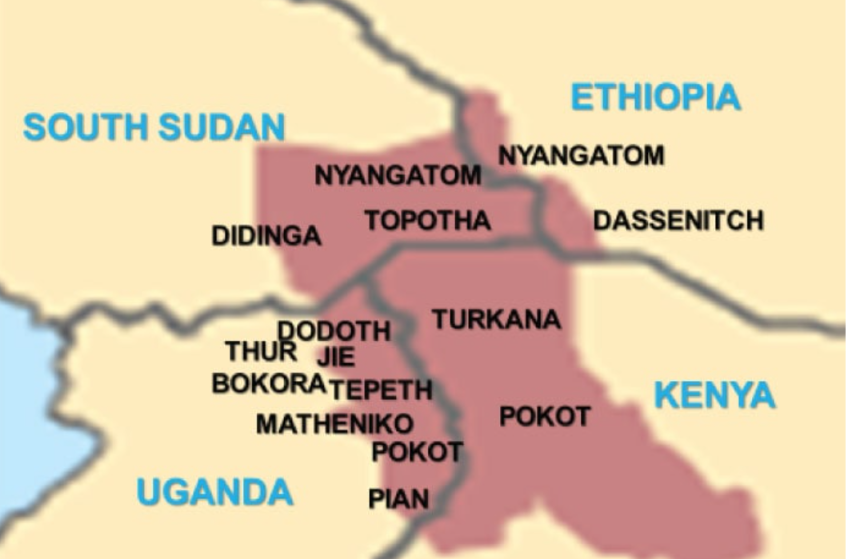
The challenge with this approach is that those reaffirming their commitment to peace were elites, not the actual parties involved in the conflicts. This leads to a second trend observed from the analysis of both EU-funded and non-EU funded projects in the region: the programmes appear to mainly produce coordination rather than security. The clear strengths of these programmes, especially those funded under the EUTF and the Building Opportunities for Resilience in the Horn of Africa (BORESHA) project implemented by a Danish Refugee Council-led consortium across Mandera County in Kenya, Dolo Ado in Ethiopia, and Gedo in Somalia, lie in convening, translating agreements into local languages, and facilitating trade. None of the analysed programmes provide evidence of the EU influencing armed groups, arms control, or state security behaviour, which are the primary drivers of lethal violence.
Based on the foregoing, this analysis assesses with moderate to high confidence that the EU is a useful, well-intentioned ‘peace plumber’ but is currently being tasked with a mandate it cannot deliver under its present model. Its most effective role is as a long-term convener and institution-builder that complements security efforts, rather than as a direct conflict-reduction actor. If success is framed as the latter, the EU may appear to be failing even when fulfilling its actual mandate. The confidence level of this assessment is based on evidence that was not consistent across all programmes assessed but was derived from analysis of figures reported by the programmes, although the underlying data was not directly reviewed. Additionally, only three projects co-funded with other organisations were analysed, which may not represent all projects implemented in the region that were solely financed by the EU. Therefore, this assessment is subject to change should evidence emerge of other EU-funded projects that specifically measured outcomes rather than outputs, or if incident and fatality data for EU-targeted sub-systems show sustained declines relative to comparable non-targeted areas, or if there is evidence that local peace committees resolved disputes during the 2025-26 drought without a security response, or that peace structures or MoUs continued to function after funding ended.
The analysis recommends that future programmes prioritise sustainable peace as the primary objective and design interventions that address the underlying causes and drivers of conflict in the region, rather than their effects.