


In Summary:
With the enforcement of the SHANTI Act, India allows private investors from all around the world to participate in its civil nuclear sector, ending State-monopoly
Given the long-standing history between France and India, and France’s advanced nuclear technology, the country is in a favourable position to capitalise on the opportunity
By strengthening its ties with India in the nuclear sector and upscaling their own nuclear sector, France becomes the driving European force in India’s nuclear future
Introduction
In December 2025, the Indian government has passed the Sustainable Harnessing and Advancement of Nuclear Energy for India (SHANTI) Act (in India, shanti also means peace), with the objective to advance India’s nuclear energy. The policy reform allows the participation of private and foreign investment in the civil nuclear sector of India, ending the government’s exclusive monopoly over civil nuclear power generation since its independence.
By opening its civil nuclear market to the world, India unlocked a new area of cooperation, giving France the opportunity to further strengthen ties with India and advance Europe’s stake in the Indian nuclear sector.
India’s nuclear energy strategy and the Role of the SHANTI Act
The Indian government is taking a variety of measures to “build a globally competitive, self-reliant and technologically advanced nuclear energy ecosystem” said Dr. Jitendra Singh, as presented in the Press Information Bureau (PIB) release. The expansion is expected to diversify India’s energy mix and provide reliable, low-carbon electricity for rising demand. As Rajeev Lachmipersad, Geopolitical & Geo-economic analyst at HIG mentioned during an interview “they are investing massively in wind and solar [energy], but they know, it’s still not enough. Even if you put in the entirety of your territory with the solar and wind energy, it’s not enough”.
In 2021, PM Modi announced India’s commitment to reach net-zero emissions by 2070. Supporting this goal, the government launched the Nuclear Energy Mission in 2025, targeting 100 GW of nuclear capacity by 2047, up from roughly 9 GW today. As part of this Mission, the government also set a target of operationalizing five indigenous small modular reactors (SMRs) by 2033, alongside other domestic efforts to raise state-led nuclear capacity to 54 GW by 2047.
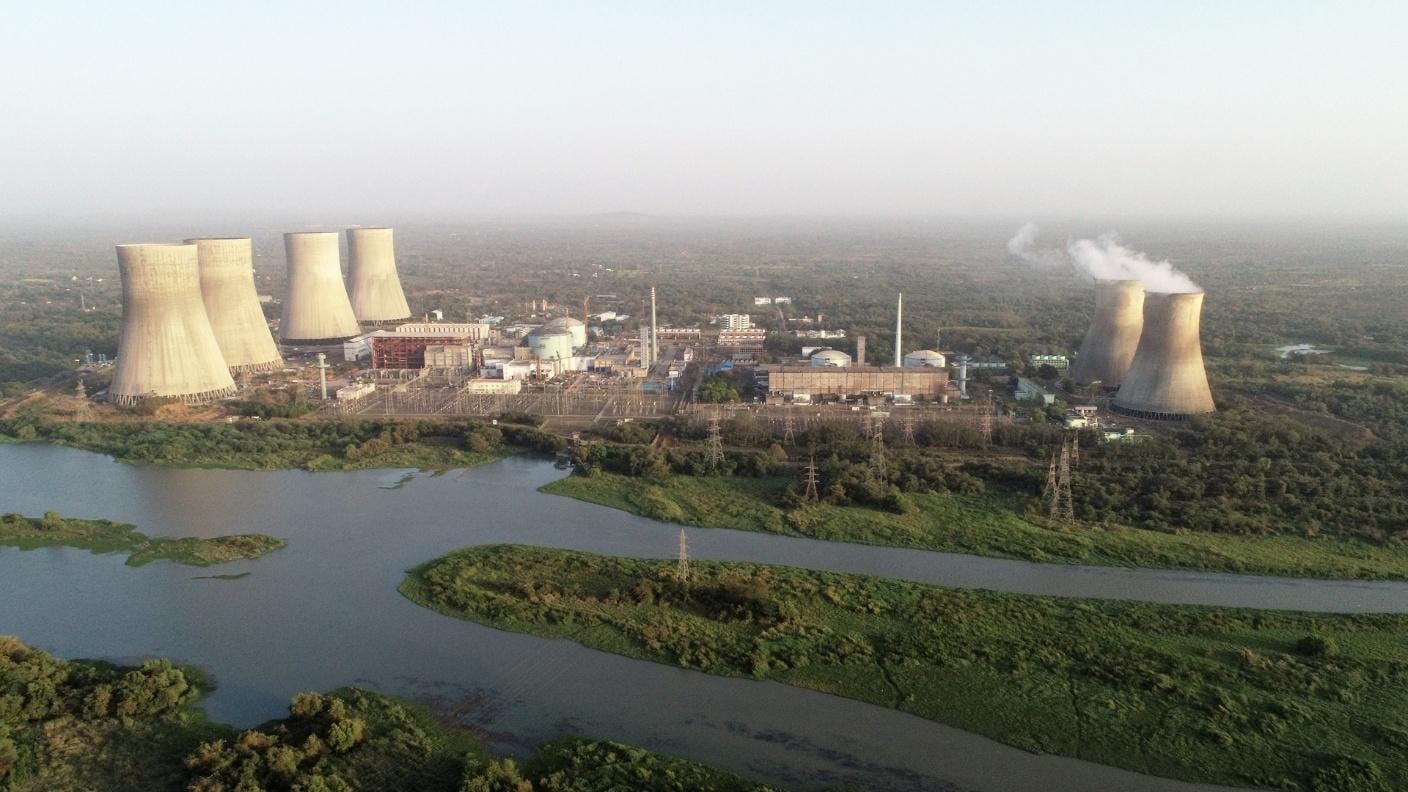
The remaining 46 GW is expected to come from other public sector enterprises, state governments, and private entities, now possible under the SHANTI Act, which ended the State’s sixty-year monopoly over the civil nuclear sector by allowing foreign investors to participate in India’s nuclear R&D, manufacturing, engineering and supply chains.
Some of that capacity is already taking shape: A few months after SHANTI came into effect, the US sent a delegation to meet with the Union Minister of State for Science and Technology to explore investment opportunities in SMRs and clean energy cooperation. Meanwhile, Australia finalized a long-stalled uranium supply arrangement with India, an agreement only possible once SHANTI’s regulatory reforms addressed Australia’s concerns over India’s nuclear framework.
“The market has a pie, a share of pie for everyone. And they have a share of pie for France, they have a share of pie for Westinghouse based in US, or the Koreans, Russians, or the indigenous industry as well.”
Kavya Wadhva, Nuclear Policy Advocate, Researcher, and Strategic Advisor
Why France?
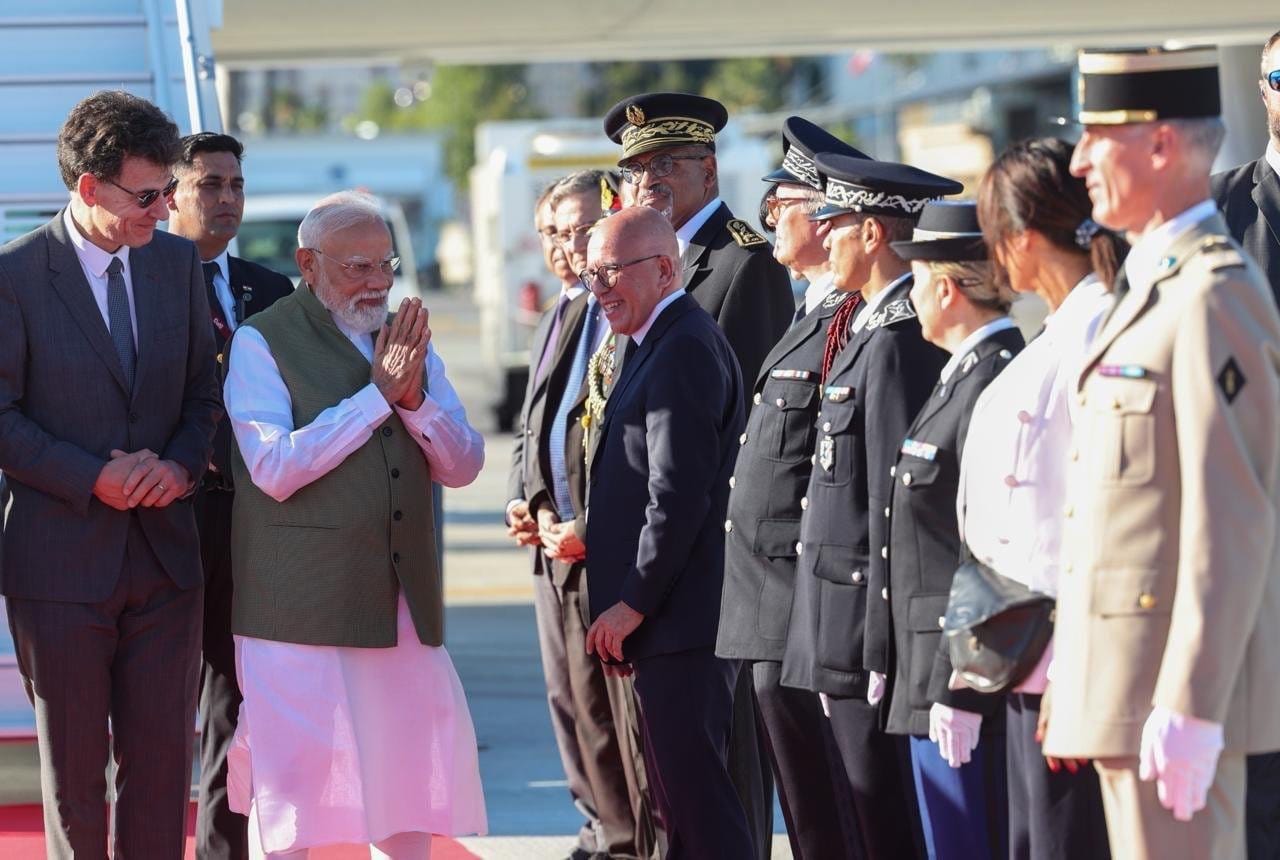
As one of India’s most trusted partners, France also held extensive discussions with Indian officials this June, during which Foreign Secretary Vikram Misri encouraged French nuclear companies to participate directly in the Indian nuclear sector under the SHANTI Act.
What makes their relationship so unique?
France established formal diplomatic relations with India soon after its 1947 independence and has supplied French military equipment since the 1950s, making defense the backbone of the alliance. Pursuing strategic autonomy from both the US and USSR, France engaged independently with the non-aligned India, remaining the only major Western power to sell India advanced military hardware during the Cold War. In the 1960s, the two states also initiated space cooperation.
“There’s another element […] in 1974, when there was a peaceful nuclear explosion in India, the Head of the Commissariat à l’Énergie Atomique [Nuclear Energy Commission of France], actually congratulated India despite the international criticism of India.”
Nicolas Blarel, Associate Professor of International Relations
France further deepened the trust by refusing to sanction India after its 1998 nuclear tests, unlike most Western countries. This shared history and strategic alignment led to the 1998 Strategic Partnership, covering defense, counter-terrorism, space, cyber security, digital technologies, and civil nuclear energy.
Furthermore, France’s involvement in India’s nuclear energy sector began long before the SHANTI Act. The two countries signed a civil nuclear cooperation agreement in 2008, shortly after India’s NSG waiver opened the door to foreign nuclear trade, and in 2009, France’s state-owned Areva signed an MoU with NPCIL for the Jaitapur Nuclear Power Plant project in Maharashtra. After Areva’s restructuring, EDF took over the reactor business and signed a revised MoU with NPCIL in 2016 expanding Jaitapur into what could become the world’s largest nuclear power plant by capacity. This was followed by an Industrial Way Forward Agreement in 2018. These already make France a primary foreign partner in India’s civil nuclear sector, giving it a head start that SHANTI’s opening can now build on.
Mr. Lachmipersad also emphasized the Special Global Strategic Partnership, under which nuclear cooperation deepened, with SMR cooperation and Jaitapur discussions progressing as SHANTI opens the sector to private investment.
“Maybe we’ll see finally a follow-up and a delivery of the [project], after a long delay of the reactors, which should be one of the biggest projects, I think, for nuclear, civil nuclear production”
Nicolas Blarel
Mr. Wadhva noted that the opportunity extends beyond reactor companies, as “not only the reactor companies, but private venture capitalists which are based in Europe can also venture and start investing into nuclear ecosystem and value chain proposition.” However, when asked about the opportunities opened for the rest of Europe, all three interviewed experts agreed that France is the country most likely to pursue cooperation in the nuclear sector from the region, and that India is most likely to partner with them, given their long-standing relationship.
With their diversification strategy, India has multiple partners in the nuclear sector, including their deep ties with Russia, and for instance Australia for uranium supplies, but Mr. Lachmipersad argues that France is in an advantageous position not only because of their strong ties built for decades, but also because France has advanced nuclear technology that India needs for their development and the relationship between the two Prime Ministers is also good on a personal level.
Despite the strong relationship, Mr. Blarel noted that potential obstacles could arise when it comes to investing and long-term projects in an international setting, given the polarized nature of (geo)politics.
What’s in it for France?
France’s partnership with India is strong in the areas of defense, energy, and nuclear. Other countries such as Germany or the Netherlands are leading trade relations with India, which is why Mr. Blarel noted the importance of France strengthening its nuclear ties.
Another benefit for France is the huge market that opens up to which they can sell their technology, by partnering up with India. “If you have India as a market, then you can scale up your French nuclear companies as well”, explained Mr. Lachmipersad. He also mentioned the importance of strengthening the relationship for future reliance, given India’s thorium program that aims to be used instead of uranium in the future.
“France is now helping India with technology when it comes to small modular reactors. But now if you are building that relationship and there’s geopolitical stress on both sides, I can imagine, not now, not in 5 years, but maybe in 20 years, India will do it the other way around. And you will have some thorium technology that they are willing to share with France (or other European nations). So that´s why I also think it’s very important for France to do this.”
Rajeev Lachmipersad
Conclusion
Although the SHANTI Act opens India’s nuclear sector to the world, France is in an advantageous place to capitalize on it. Decades of cooperation with India in defense, space, security, and nuclear energy has given France an advantage no other European nation has. With the potential to scale French nuclear companies into the Indian market, France is positioned as Europe’s driving force in India’s nuclear future.