


In summary:
Ethiopia’s fast-growing population and economy present it with the potential to become a regional superpower.
Simultaneously, Ethiopia is facing big obstacles: ethnic conflict continues, whilst the country is in dispute with its neighbours and Egypt.
In an already tense region, Ethiopia’s rise could have far-reaching consequences.
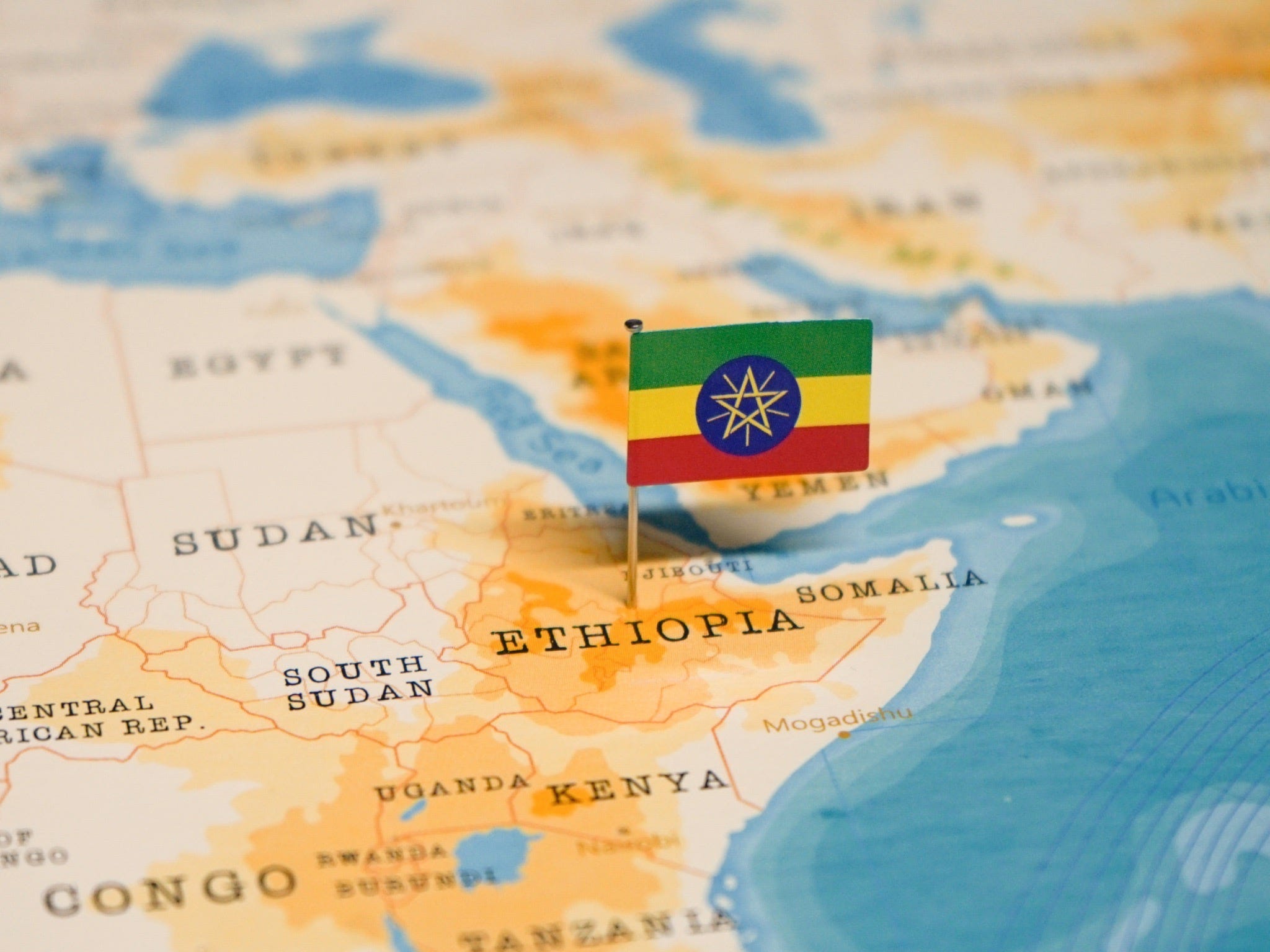
Ethiopia is Africa’s second-most populous country and has recorded high economic growth in the last two decades. Based on these facts alone, Ethiopia is being seen as a regional superpower in waiting by many. However, not all is well. The country is experiencing ethnic conflict. Because it is landlocked, it undertook actions to gain a port. These have caused tensions with Somalia, Djibouti and Eritrea. Ethiopia is also embroiled in diplomatic tensions with Egypt, which sees Ethiopia’s construction of the Grand Ethiopian Renaissance Dam (GERD) as a threat. Will Ethiopia indeed become a regional superpower, or will it be hindered by its domestic constraints?
A country divided?
With more than 80 ethnicities, Ethiopia is a highly diverse country. Though the second-largest in number, the Amhara have been the country’s most politically and economically influential. Other important groups are Oromo, Somali, and Tigrayan. To accommodate this diversity, Ethiopia is a constitutionally federal state, divided into twelve regions and two cities, with the regions based around ethnic groups. Yet this system is not without its flaws. Professor Jan Abbink, an anthropologist-historian from Leiden University, who has extensively studied Ethiopia, offers an assessment:
“There are already ethnic tensions within Ethiopia, as a result of the ethnic-federal system that has gotten out of hand and was implemented by the previous government. People have strongly internalised their ethnic identity as their political identity.”
Indeed, federal or regional forces have repeatedly clashed with local militias and insurgents in the last few years. The International Crisis Group reports that state troops are in conflict with regional insurgents in Oromia and Amhara. The 2022 Pretoria Agreement which ended hostilities between the federal government and the Tigray People’s Liberation Front (TPLF) is also showing signs of deterioration: in August, hundreds of Ethiopians fled across the Sudanese border after fighting again broke out between the TPLF and federal forces. Yet, the government’s efforts to reduce ethnic tensions have proven unsuccessful in the eyes of Professor Abbink:
“The new government by Abiy Ahmed has tried since 2018 to reduce nationalistic elements and focused its attention, albeit very cautiously, on formulating a more pan-Ethiopian political formula. So far, this has not yet led to a reduction in ethno-nationalistic sentiment”
“An existential threat” - Ethiopia’s quest for a port
Additionally, Ethiopia faces challenges beyond its domestic politics. After the independence of Eritrea, Ethiopia became the world’s most populous landlocked nation. Access to a port is therefore a key part of its foreign policy. Prime Minister Abiy Ahmed dubbed this situation an “existential matter” and stated that “a population of 150 million people can’t live in a geographic prison”. Michel Don Michaloliákos, geopolitical analyst at HIG, explains Ethiopia’s desire for access to seas as an economic necessity:
“Ethiopia’s strong desire for a port is not out of the ordinary. Access to the world’s seas is needed. To sustain economic growth, and as an industrialising country, exports are essential. At a certain moment, domestic demand will be insufficient. So you will want to export your goods. As a landlocked nation, you’re also dependent on access to imports. That access can be easily denied without your own port.”
Ethiopia currently pays Djibouti more than a billion dollars in fees to lease a port, representing a considerable stress on the nation’s 14 billion dollar budget. Subsequently, Ethiopia is looking for other options. This led to its Memorandum of Understanding with Somaliland. In return for future recognition of statehood, Somaliland would lease part of its coastline to Ethiopia. However, after strong diplomatic protests by Somalia and mediation by Türkiye, this agreement was essentially cancelled.
More tension: the Grand Ethiopian Renaissance (GERD) Dam and Egypt
Not only Ethiopia’s quest for a port has increased regional tensions. The construction and opening of GERD have increased tensions with Egypt and, to a lesser degree, Sudan. Within Ethiopia, this dam has been presented as a major national project. It is expected to double the country’s electricity production, subsequently boosting its industrialisation efforts and economic development. By exporting surplus energy, Ethiopia also aims to foster regional integration and subsequently grow its influence.
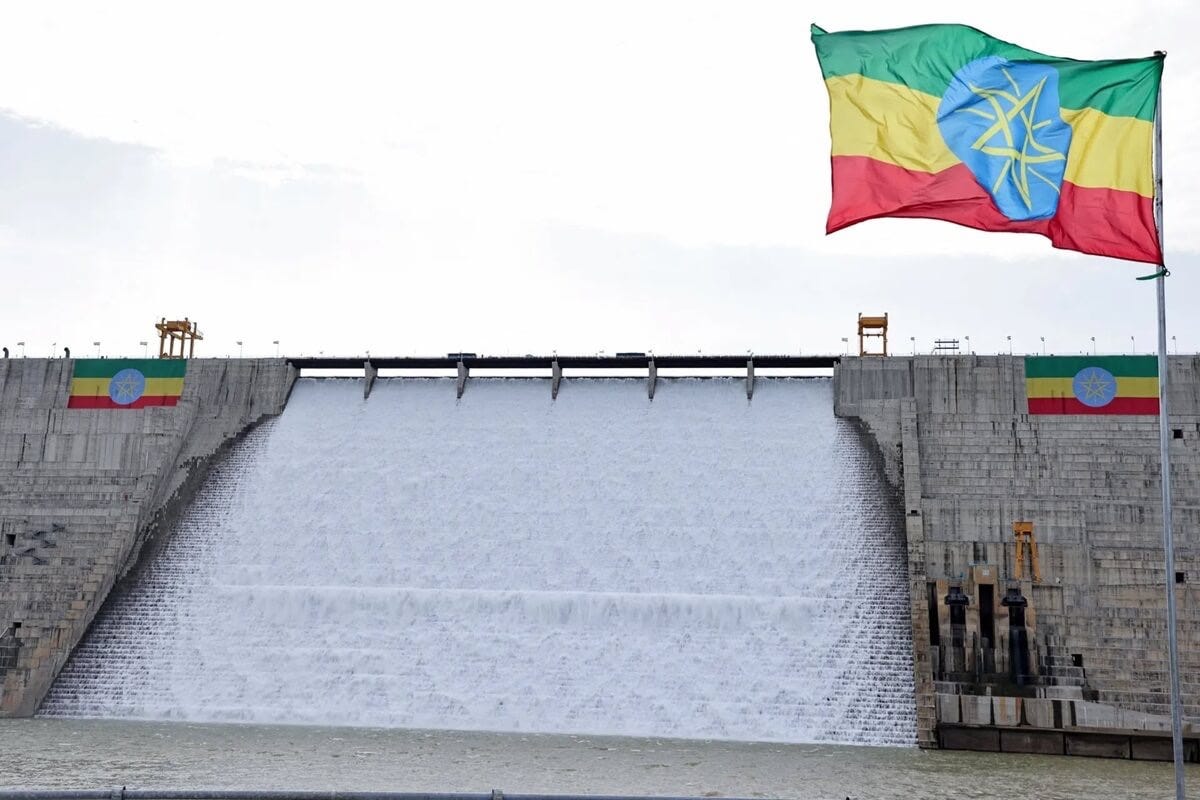
In Egypt, the story is not one of national growth and pride but rather one of national threat. Egypt is a downstream country where the Nile sustains approximately 104 million people. However, after 2030, the country is projected to fall below the water scarcity line. With this clear dependence on the Nile, it is not hard to see why Egyptians are worried about GERD. Badr Abdelatty, the Egyptian Minister for Foreign Affairs, described the situation as an “existential issue” and claimed that Egypt would not allow infringements on its Nile water share.
Last year, only a few months after the dam was formally opened, tensions already rose. Egypt experienced a surge of floodwater and blamed this on Ethiopia’s “reckless” management of GERD. These tensions are unlikely to cool down soon. Despite multiple discussions in the UN’s Security Council, there is no legally binding agreement on GERD’s water distribution, and Ethiopia’s recent decision to move forward with three new hydropower projects on the Blue Nile is only likely to worsen relations with Egypt and Sudan.
From domestic politics to regional developments
Ethiopia’s actions concerning GERD and its quest for a port have shaped the creation of an informal alliance, dubbed the Asmara alliance, between Djibouti, Eritrea, Somalia, and Egypt, who are all fearful of its actions. This is also what professor Abbink noted when discussing Ethiopia’s quest for a port: “Because of the rhetoric, and because of the somewhat too strongly pointed demand that they need free and immediate access to the sea - with the implication that they want to guarantee this through territorial means - you get a countermovement by Eritrea, Egypt, and the government of Somalia”
Michaloliákos sees this alliance as a result of Egypt’s limited room for maneuvering: “Egypt’s scope of actions is limited. You cannot attack the dam; it will endanger your own water supply. But they will pressure Ethiopia and mobilise other states in the region. The most important example here is the Asmara Alliance, clearly an anti-Ethiopia coalition.”
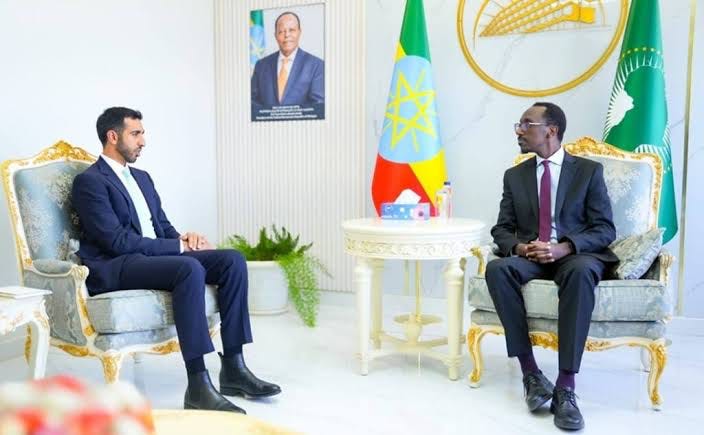
Yet despite Ethiopia’s increasing tensions with its direct neighbours and Egypt, it is not isolated. It has developed increasingly close ties to the United Arab Emirates. Against the backdrop of the UAE’s intensifying rivalry with Saudi Arabia, which in terms of foreign policy increasingly aligns itself with Egypt and Somalia, this is a sign that geopolitical blocs vying for influence in the Gulf and the Horn of Africa are taking shape.
In conclusion, Ethiopia’s prospects are mixed. Its economy and population keep growing, but it also faces many challenges, both domestically and internationally. Most worryingly, Ethiopia’s desire for access to a port and its dispute with Egypt are interlinked with broader geopolitical competition in the region. As these Ethiopian foreign policy objectives originate from a domestic demand for economic growth and stability, decisions and actions in Ethiopia itself have the potential to reverberate far through the region, for good or for worse. In a region already marked by conflict and tension, potentially aggressive actions or diplomatic missteps can have heavy consequences. This interconnectedness between Ethiopia’s domestic and foreign policy objectives and the situation in the Horn of Africa is what makes Ethiopia worth keeping an eye on.