


In Summary
The outcomes of COP30, including the unfulfilled ambitions regarding the concrete plan to phase out fossil fuels, might well appeal to Lula and his party behind the scenes.
In international forums, Lula presents Brazil as a champion of multilateralism, solidarity with the Global South and climate justice, but at the domestic level, the implementation of these principles is undermined by interests in extractivism, agribusiness and land conflicts.
Brazil is attempting to use the Amazon as a source of soft power, but has only achieved limited success in this regard at COP30.
Latin America Regional Update | Belém, Brazil, was this month the venue for the COP30 climate conference. The motto was a shift from fine words and agreements at previous conferences to action: implementation. Lula presents Brazil as a leader and a bridge between the Global South and the Global North, always pushing for stronger multilateralism.
Brazil portrays itself as a moral compass for achieving climate ambitions in a just and equitable manner. Big words, then. But can those big words really be turned into big deeds? And do Lula and the Workers’ Party actually want this? What are the internal dilemmas preventing Brazil from assuming such a geopolitical role, and what are the Brazilian domestic interests that could undermine these ambitions?
The choice of Belém as the venue symbolises Brazil’s domestic controversies, as became clear both before and during the COP. The city in the Amazon delta is an ambitiously chosen venue, as Lula himself noted in his opening speech: “We decided to take on the challenge of hosting the COP in an Amazonian state to prove that, when there is political will, when there is a desire, and when there is a commitment to the truth, we demonstrate that nothing is impossible for humanity.”
Apart from capacity issues which led to cruise ships being used as accommodation, the construction of a new motorway for the COP, and protests by the indigenous population during the event, Belém is a hub of illegal mining, land conflicts involving and violence against indigenous peoples, economic dependence on extractivism and deforestation, corruption and poverty. Petrobras recently began exploratory drilling for oil in the Amazon region, with the support of Lula’s Workers’ Party (PT).
COP30 demonstrated once again, in various ways, that the world order has shifted towards a multipolar reality and remains on a course of further transformation. The absence of the US is probably the most telling sign. At the same time, the Global South is increasingly presenting itself as the architect of change.
Brazil wants to play a leading role in this, but is itself facing considerable criticism, both internally and externally, over the extraction of fossil fuels. Moreover, Lula is widely known to be funding his social and economic ambitions through that extraction.
Perhaps the outcome is not so bad after all for Lula’s Brazil: concrete results in the form of more funding for climate adaptation and rainforests, but a ‘roadmap’ towards phasing out fossil fuels is not yet a done deal (although further negotiations are ongoing with proponents). Lula publicly pushed for a more ambitious outcome, but may well be secretly breathing a sigh of relief given his domestic socio-economic policies. A fund to tackle deforestation (TFFF) and more money for climate adaptation are issues that face less political opposition at home.
Not only is there not always domestic support for the ambitions regarding climate measures – specifically deforestation and the phasing out of fossil fuels – but Lula’s own extractivist-based economic and social system stands in contrast to his rhetoric. A few examples may illustrate this.
Deforestation
The agribusiness sector forms the economic backbone of Brazil and is the country’s most important export sector. Large-scale soya and meat production drive demand for land, and thus indirectly contribute to deforestation. The sector has strong networks in Congress and influences regional policy at federal level. For this reason, anti-deforestation policy is politically and economically risky for Lula.
The MST, ‘Movimento dos Trabalhadores Rurais Sem Terra’ (MST) – or the Landless Rural Workers’ Movement – one of the continent’s largest social movements, advocates for agroecological farming, land redistribution and food sovereignty. Through the movement, by its own account, some 450,000 families have occupied plots of land. This occurs both legally and illegally (sometimes violently). Their vision regarding agriculture aligns internationally with climate justice networks and progressive governments.
Internally, the movement acts as a counterforce to agribusiness, and Lula has traditionally maintained good relations with it. This is both an advantage and a problem, as it is easier to allocate ‘new’ land to this movement than land that is already occupied. For this reason, in the past, a great deal of natural land has been put to use – particularly in the equally ecologically rich and important ‘Cerrado region’, albeit outside the Amazon – by landless farmers, rather than the existing land being distributed more equitably.
Extractivism and indigenous rights
The extractive industries – oil, gas, gold and other minerals – remain the economic mainstay of many Amazonian states.
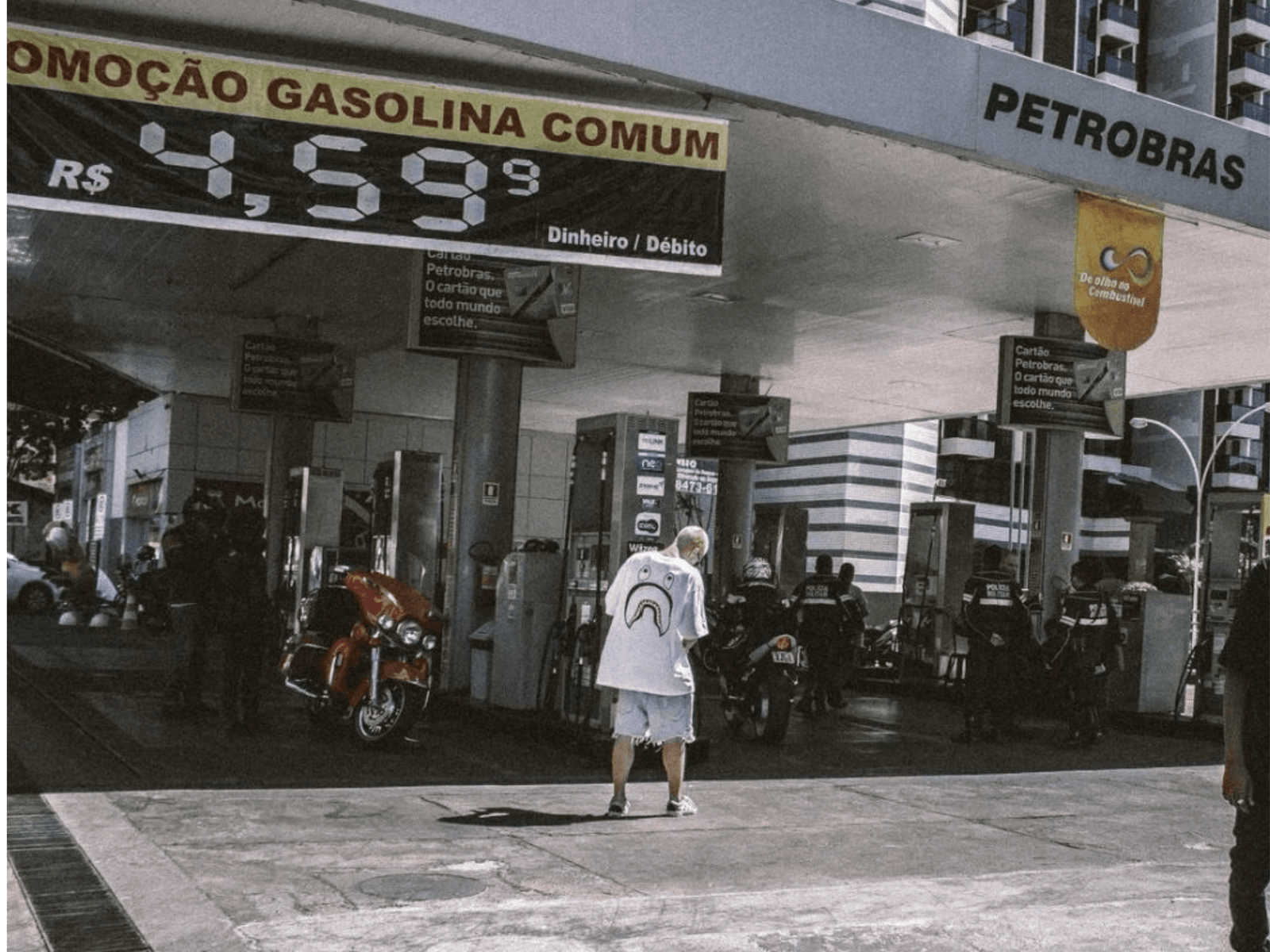
Petrobras’ recent exploratory drilling off the coast of Amapá and in the Amazon estuary illustrates just how deeply entrenched fossil fuel interests remain in Brazilian domestic politics. For Lula, this presents a strategic dilemma: the state-owned company is a major source of funding for social programmes, but it puts Brazil’s climate ambitions under direct pressure.
For indigenous peoples, extractivism also poses a direct threat. Many of the new exploration and concession areas overlap with indigenous territory, leading to conflicts, crime and violence. The extent to which Brazil is able to protect these communities legally, ecologically and physically determines not only national legitimacy but also international credibility.
Furthermore, the extractive economy also exposes how weak the state’s presence can be in the Amazon. The combination of illegal mining and fishing, armed groups and local elites with economic interests in deforestation creates a parallel order that is often stronger than the federal institutions. It is telling that journalistic work in this region – reporting on indigenous peoples, illegal activities and criminal networks – is extremely dangerous. It is precisely in this region that institutions are weak and corrupt.
There are therefore also capacity issues when it comes to translating ambitions into action. At the same time, there are also professional federal bodies (Ibama, ICMBio, Ministério Público) that have gained greater effectiveness in recent years. Brazil will need to invest further in such institutions to meet its climate ambitions and combat deforestation.
The Amazon Rainforest as Geopolitical Capital
By choosing the Amazon as the venue for the conference, Lula emphasised his message that the rainforest is of global importance and is also under pressure. Owing to its ecological value, the Amazon also serves as a diplomatic and geopolitical instrument. The COP is the perfect platform to shine a spotlight on this source of soft power. This also breathes new life into a long-standing debate: should the historically largest emitters and the actors who have benefited most from industrialisation compensate emerging nations? In other words, should other countries pay for Brazil’s protection of the Amazon? Lula’s aim is, of course, for countries to contribute, including through the proposed Tropical Forests Forever fund. Norway has so far invested the most money in the fund (three billion, subject to conditions and spread over ten years), followed by a few other European countries. Furthermore, Brazil and Indonesia in particular, as countries rich in rainforests, have invested their own funds.
Under Lula, however, Brazil is setting a good example by combining these investments with tangible results. According to the Brazilian National Institute for Space Research (INPE), deforestation in the Amazon fell sharply during both Lula’s first term (2003–2010) and his current term (since 2023), whilst it rose sharply during Bolsonaro’s term. Lula’s government has therefore demonstrated that it can put its money where its mouth is in this regard.
However, there is a catch when it comes to the deforestation figures. This is because, to some extent, the problem is shifting from the Amazon towards other ecosystems, particularly the ‘Cerrado’ (a savannah-like region). From a public image perspective, this makes sense, given that the world tends to focus much more on the Amazon as the ‘lungs of the earth’. Media coverage, NGO campaigns and diplomatic pressure regarding deforestation in the Cerrado are far less intense, meaning that monitoring and enforcement of regulations are given lower priority in this region. Deforestation remained high here during Lula’s first term, and is actually increasing during his current term. The so-called MATOPIBA (the four states: Maranhão, Tocantins, Piauí and Bahia) is the fastest-growing agricultural region in the world, and agribusiness is consequently expanding rapidly there. According to MapBiomas (2023), approximately 20 per cent of the Amazon region has been lost, whilst the figure for the Cerrado is around 55 per cent. This region is of great importance for water supply, biodiversity and carbon storage in the soil via vegetation, and covers an area of around 2 million km2 (by comparison, the Brazilian Amazon covers approximately 5.5 million km2).
Prospects for action by the Netherlands and the EU
The Netherlands also played a notable role at COP30. For instance, Colombia, together with the Netherlands, is to organise an international summit in the Colombian city of Santa Marta on phasing out fossil fuels. This initiative, too, is politically significant, given that the Schoof government was not known for its ambitions in this area. In organising the summit, the Netherlands will also need to gain a thorough understanding of the interests within Colombia – including those reflected in social undercurrents – in order to recognise ‘windows of opportunity’ and capitalise on them where they align with Dutch and European positions.
The EU–Mercosur agreement can serve as a tool for embedding sustainability standards, but must be deployed with finesse. The EU must become a strategic partner, but not a paternalistic one. Striking a balance between attempting to set standards and acting as an equal partner requires in-depth knowledge of the domestic interests at play in the Mercosur countries. Regional expertise is also needed to identify which climate and sustainability standards can be adopted by Mercosur, in both the short and long term.
The Netherlands and the EU can also focus on conserving the Cerrado rather than fixating solely on the Amazon. The ‘waterbed effect’ must be taken into account when discussing nature conservation and deforestation.
This article was translated, find the original here.