



In Summary
Roughly eighteen months after expelling French troops in the name of sovereignty, Chad has revived military cooperation with France. French forces have been back on Chadian soil since April 2026, yet in a smaller, training-and-intelligence role.
The reversal exposes the practical limits of Chad’s diversification toward Russia, Türkiye, and the UAE.
The rapprochement is a decision of the presidency, not evidence of a settled national consensus, and as the 2024 expulsion was justified as sovereignty, the reversal now exposes the government to a domestic credibility problem.
After 65 years, the Chadian President, Mahamat Idriss Déby, ordered the French military presence in its country to come to an end and expelled the French stationed troops in late 2024. The decision has been associated with the broader sovereignty and anti-French wave across the Sahel-region. By early 2026, however, both governments started to rebuild their military ties. The reversal tests whether sovereigntist rhetoric, used to justify anti-French policies, can survive practical security needs, and whether France is regaining a foothold in a region that expelled it. This raises the question:
To what extent does Chad’s rapprochement with France reflect renewed dependency rather than a genuine assertion of sovereignty?
Diversification attempted, Dependency Resumed?
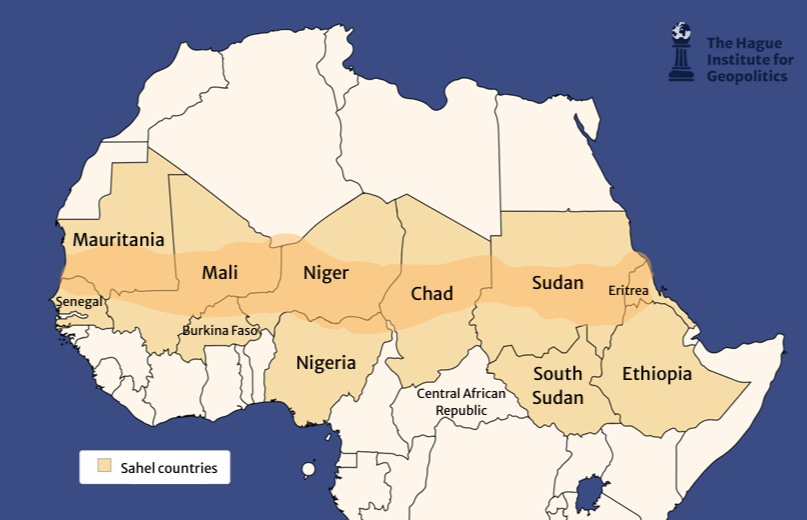
Chad itself is formally a multiparty presidential republic, but in practice it is run as an authoritarian regime. Little real opposition or institutional oversight exists. France had withdrawn its troops from Mali, Burkina Faso and Niger. The three Sahel states later established the Alliance of Sahel States and withdrew from ECOWAS. Chad also presented its break with France in similar terms, which reflects the broader anti-French and sovereigntist sentiment in the region. Dr. Mirjam de Bruijn, Professor of Contemporary History and Anthropology at Leiden University and HIG Analyst Sahel-Region/Africa, has followed this development closely and highlights that “the anti-French sentiment that started in Mali travelled to Chad and to all over Africa, and that is still the sentiment.”
The alternative partners Chad cooperated with after the expel in 2024, however, did fall short in practice. For instance, Russian mercenaries often struggled to subdue insurgencies; Turkish drones acquired from Turkish Aerospace Industries proved too costly to operate; and UAE backing became diplomatically fraught once tied to the UAE’s alleged support for Sudan’s Rapid Support Forces, which limited the scope of their relationship. Dr. Tobias Rüttershoff, head of the West Africa–Sahel security policy dialogue at the Konrad Adenauer Stiftung, points to these unmet expectations as a key factor behind Chad’s return to France. As he puts it, the partners Chad turned to “were not able to keep the promises that were made, especially when you look at Russia.”
However, France’s own interest in the renewed cooperation cannot be ignored. Due to its strategic geographical position, Chad has long functioned as an operating base for projecting influence across Central Africa and the Sahel. The re-established military relationship also suggests an attempt by France to maintain a strategic foothold while reducing the political visibility of its military presence. Chad is important to France primarily because of its strategic location between, for instance, the Sahel and Central Africa. Its location therefore allows France to monitor the Sahel and neighbouring countries and support military operations in the region.
Yet, the renewed cooperation is not simply a return of the 2024 arrangement. Although French troops returned to Chad in April 2026, their role is more limited and focuses mainly on training, intelligence-sharing and smaller-scale deployments. Rüttershoff describes this as a capability gap that Chad could gradually close over time. Chad “can carry out operations themselves, using their own soldiers, vehicles and technical means, but they might be reliant on information that can be delivered by the French.” This dependency, Rüttershoff argues, could decrease if Chad builds up its own capacities or finds another partner able to provide the same support. “But for the moment it is a certain dependency.”
One must be careful not to deny Chad its right to self-determination. Chad retains agency in this shift, as the decision to restore the military relationship was made by the Chadian government itself. The decision also comes as Chad faces mounting security threats, which underline the important context of the renewed relationship with France. Yet, as Prof. de Bruijn says, “(...) there is no way to define ‘Chad’s sovereignty’ as a single, unified thing (...) the voice of the president is certainly not the voice of the majority of Chadians. So the choice for France is the sovereignty of the president, but that doesn’t mean that it is Chad’s sovereignty.”
Chad’s rapprochement with France, then, might not simply be a swap of sovereignty for dependency, but a more complex presidential sovereign decision that does not necessarily represent the entire country, but, perhaps, rather indicates own presidential motives of self-protection.
The renewed cooperation may, however, create what Rüttershoff calls a “domestic credibility problem.” The decision to expel French troops in 2024 was justified in terms of national sovereignty, which could now expose the government to domestic criticism.
Domestic Perception Risk: Contesting Narratives
Indeed, a July 2026 study by the Timbuktu Institute, based on social media content from across the Sahel, shows that France’s return has been met with criticism. Even more directly, President Mahamat Idriss Déby is personally criticized and framed as a“traitor” or “puppet” of France. The Institute, however, warns that some claims circulating online lack evidence, including claims that France plans to reoccupy seven military bases in Chad and that large numbers of Chadian soldiers were killed following the arrival of French forces. However, the presence of disinformation does not mean that the broader suspicion surrounding renewed French influence can simply be dismissed. The Institute argues that the wider narrative can matter even when individual claims are inaccurate, as security incidents, diplomatic initiatives, official statements and unsubstantiated allegations may all become part of the same broader story.
Even unverified claims can reinforce existing perceptions of France’s return to the Sahel. The “reduced footprint” argument, often presented by French and Chadian officials as evidence of a genuinely new and more balanced cooperation, therefore remains contested. At the same time, Professor de Bruijn cautions against treating these social media narratives as representative of broader domestic opinion, which would provide an incomplete picture, arguing that “it is impossible to get the domestic opinion from social media alone, in which many of these discussions are initiated by Chadians in the diaspora. Ethnographic work on the ground is necessary to gain true insights into the domestic situation.”
Concluding Remarks
Perhaps, the reduced footprint changes the form of France-Chad dependency, yet it does not necessarily change its substance and the motivation behind this rapprochement. French strategic interest is just as important as Chadian necessity. Although Chad’s diversification attempts remained genuinely undelivered, it cannot simply be derived that France was the only, or even the best, option. Instead, it could also mean that France was the most readily available partner, with a long-standing history in Chad, at a moment when France itself was looking to re-enter a region that had pushed it out before.
For Chad, the return of French support also carries a domestic political cost, given that the 2024 expulsion was presented as an assertion of national sovereignty. To some, Chad may provide an early indication of how relations between France and the Sahel develop. However, whether other Sahel states will eventually pursue similar forms of cooperation with France remains uncertain, such conclusions should not be made, as de Bruijn emphasizes.