



In Summary
ASEAN is working to create its own AI governance approach instead of following rules created by other countries, but they are having difficulties figuring out how to properly enforce it. They have pursued this through the creation of the ASEAN Guide on AI Governance and Ethics.
ASEAN faces challenges because its countries have different levels of AI expertise, funding, resources, and readiness.
ASEAN’s future AI governance could either become more unified through shared standards or become fragmented as countries follow different foreign models.
In our previous article, we looked at how the US-led Pax Silica and China’s World Artificial Intelligence Cooperation Organization (WAICO) could shape ASEAN’s response to artificial intelligence. We looked at the external force pressing in on the bloc, but a harder question emerges as the layers of US-China influence in the region have been discussed. Can the region set its own terms in AI governance or are they bound to inherit everyone else’s? This article takes a closer look at that question and ASEAN’s internal power by looking at the present state of AI governance, the challenges, and its possibilities moving forward.
Current State of AI Governance
The most tangible presence of rules for better AI Governance in the region is the ASEAN Guide on AI Governance and Ethics, which was endorsed in February 2024 and expanded in 2025 for generative AI. When examining the guide, it may read less like a code of conduct and more as a handbook for member states. According to an analysis of the Guide by Kristina Fong, Lead Researcher for ASEAN Affairs at ISEAS, it was deliberately created this way. This absence of concrete legislation for the bloc is a key difficulty when attempting shared action from member states. Fong also found that regional strategies have leaned on risk-based approaches that are similar to that of those in the EU. Vietnam passed an AI Law in December 2025 that has a risk-classified approach like the EU’s that is applied to existing legislation. Singapore has also tried to do the same. It has recently set the goal to create AI Governance Frameworks in line with international ones. So far, ASEAN countries tend to fall back on current norms rather than establish their own. Dr. Liu Han Wei of Singapore Management University is more cautious about the possibility of a perfect replication of foreign models. “No ASEAN jurisdiction has simply reproduced the EU model...they recombine shared concepts according to their own priorities. Whether these regional and national approaches develop into wider norm-setting influence remains open…The evidence so far…remains too limited to support firm conclusions.”
The Biggest Challenges of AI Governance in ASEAN
While navigating the new and rapidly changing geopolitical landscape is an arduous task, it is made even more difficult in the ASEAN bloc due to a variety of reasons. To begin, there is an issue with ASEAN’s structure. ASEAN does not have the supranational power to impose regulations and is mainly characterized by consensus-building and non-interference. What happens in this system is that many policies and frameworks, including the AI Governance Guide, are relegated to voluntary initiatives rather than a set-in-stone guideline with norm-setting power. This has relegated the guidebook to a voluntary initiative lacking any beneficial norm-setting power. As Fong puts it, “As long as guidelines remain voluntary, there will be a gap in implementation.” This stalemate-inducing system is a key reason as to why the bloc faces difficulty in achieving full implementation of initiatives such as this.
Another problem is capacity. ASEAN may lack the technical staff to enforce rules Without a proper workforce that could help facilitate this, AI governance is a steep slope. In the interview, Fong mentions, “This may happen due to various reasons, including the capabilities to put the recommended best practices to work in respective organizations, especially for small and medium enterprises. Sometimes it is not down to intentions but rather capacities to do so.” This is even made more difficult by the fact that states are not all ready to contribute equally. Not everyone arrived equally prepared to the table, as they have different levels of compliance burden and readiness. Fong notes that “larger enterprises that may be better resourced could find it easier to implement these best practices if they wanted…I do see some premium for an organization for implementing good governance policies around AI deployment…it can bring reputational gains”
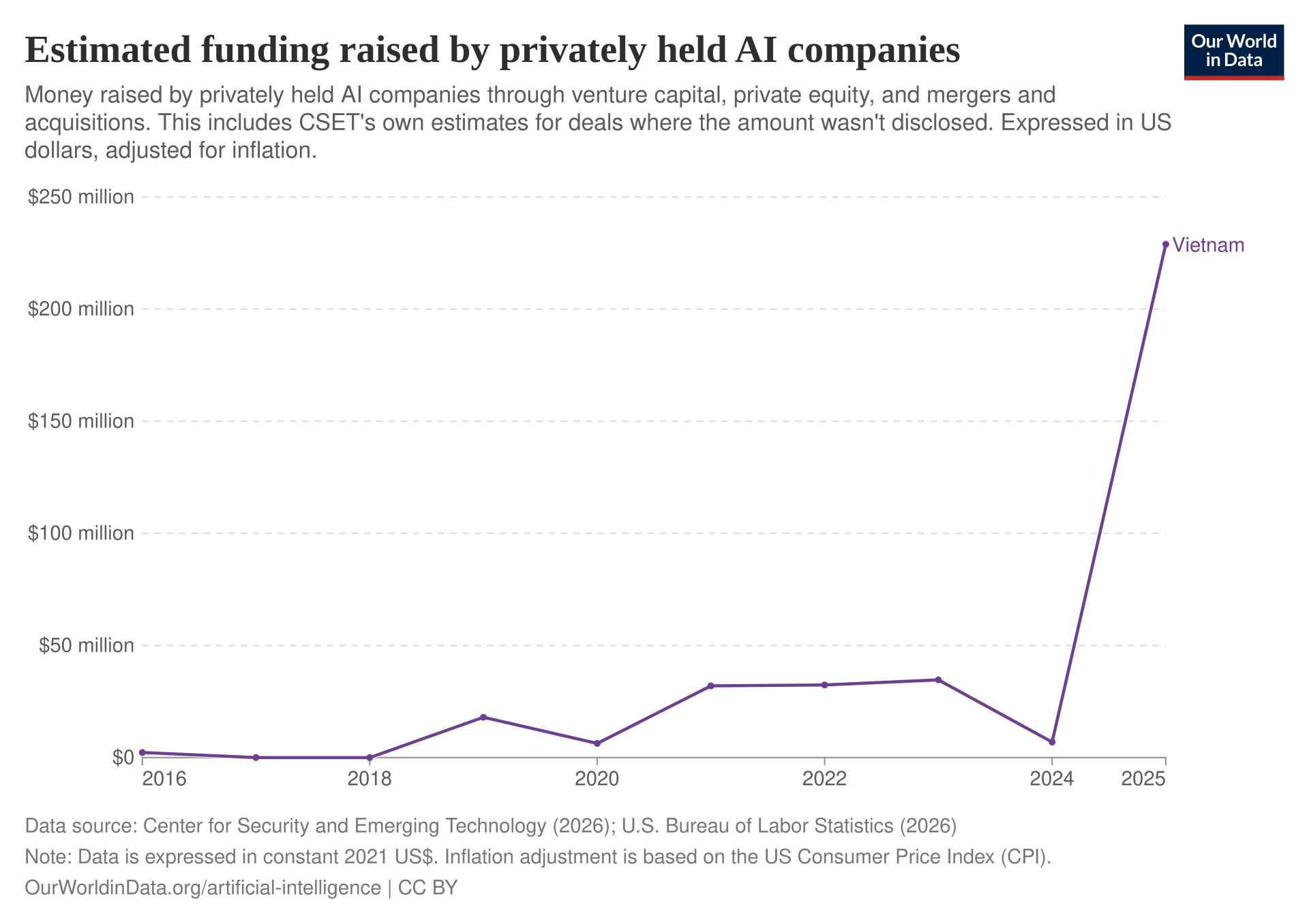
Though the bloc is making progress towards a consensus, as of 2026 there is still a lot of division in terms of nations’ individual capacity to participate. The OECD’s 2026 Digital Trade Review of ASEAN found that Brunei, Cambodia and Lao PDR have yet to adopt final national AI strategies and rely instead on broader digital economy frameworks. It also found that member states sit at different stages of AI readiness. Singapore is the outlier. By July 2026, Singapore-based “Native AI” companies had raised about US$9.3 billion in disclosed equity funding across 227 rounds. Their counterparts in Vietnam, Malaysia, Indonesia and Thailand raised under US$40 million combined. The voluntary structure, thin capacity, and uneven readiness compound one another, and together, they define the terrain the bloc must cross to reach shared AI governance.
Speculative Futures
There have been many possible futures that have often come up for how ASEAN AI Governance may unfold. Faiza Saleem of the Lowy Institute sets out three scenarios. These scenarios are consolidation, which is when soft principles mature into common norms; fragmentation, where members align with EU, US, or Chinese models; and hybridization, where ASEAN’s framework blends with outside approaches. There are signs of fragmentation. Only the Philippines and Singapore have signed the US-led Pax Silica declaration by its June 2026 summit (Asia Society Policy Institute), and China launched its World AI Cooperation Organization (WAICO) at WAIC in July 2026. It must be noted that evidence is still limited to really provide a proper diagnosis of this, and fragmentation is better read as the risk to beat than as a settled fact. However, two routes may offer a way past it.
The first is consolidation through shared practice. For Dr Karryl Kim Sagun Trajano of the S. Rajaratnam School of International Studies, “ASEAN needs to stop treating soft law as a permanent resting state…readiness should translate into leadership on binding standard… Second, normative authority is hollow without underlying capability, so the region needs to keep investing in the things that give it actual leverage..like SEA-LION.“ The SEA-LION that Dr. Trajano is referring to is a variant of open-source language models built by AI Singapore and trained on regional languages including Bahasa Indonesia, Thai and Vietnamese. It was designed to lessen reliance on Western models developed for English. This effort and others like it in Southeast Asia may offer a gateway for the region that can build and test its own tools and has more standing when it writes rules for them. The caveat is that SEA-LION is a Singapore-funded project, not an ASEAN-wide one, which returns the argument to uneven capacity.
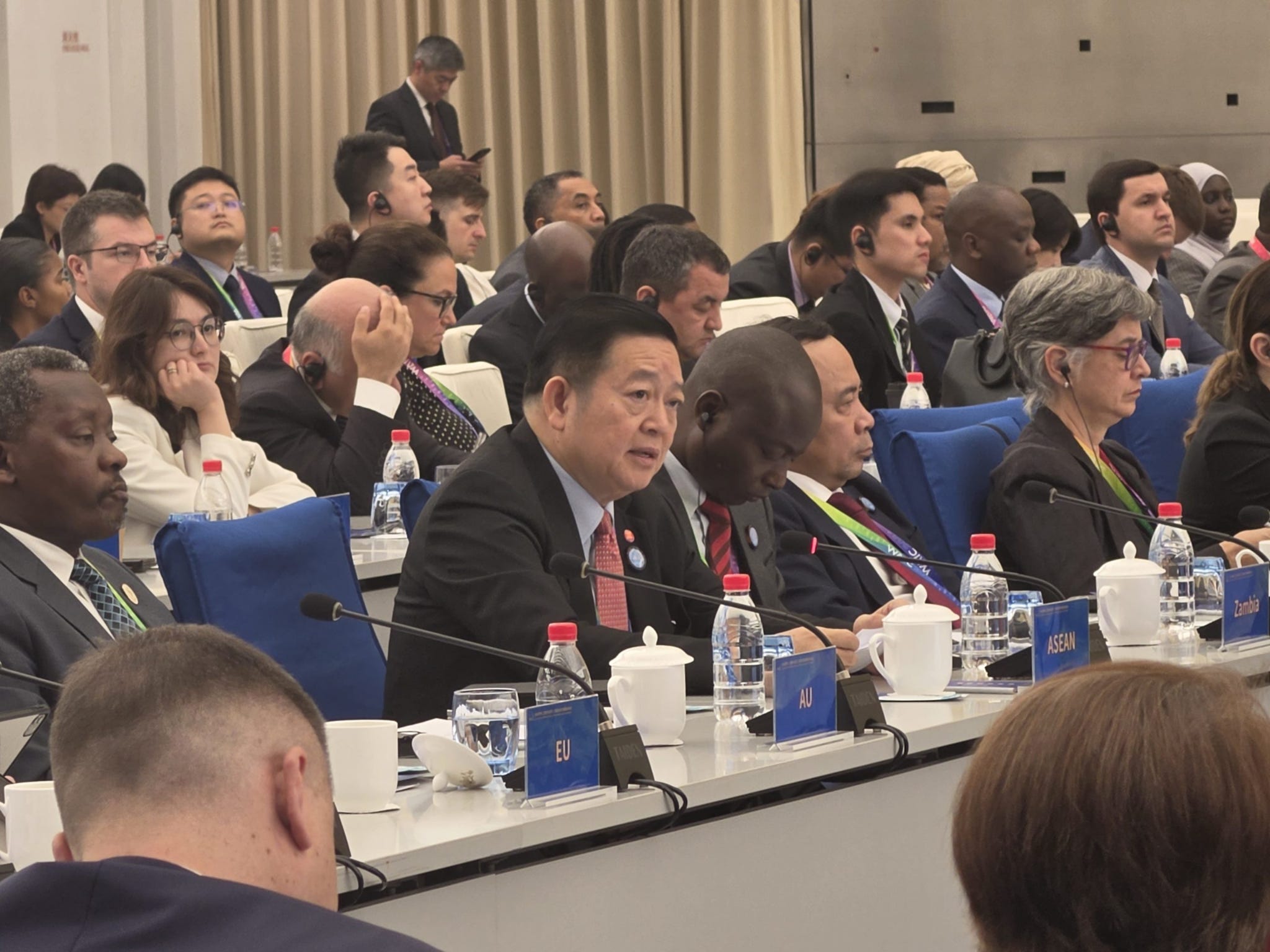
Additionally, recent diplomacy suggests the strategy of shifting from soft law is understood. At the High-Level Meeting on Global AI Governance in Shanghai held on 18 July 2026, ASEAN Secretary-General Dr Kao Kim Hourn presented the forthcoming ASEAN AI Governance Framework as the region’s contribution to shaping global AI governance.
The second route is binding governance through trade. Sameera Pillai of the Lowy Institute argues that tying AI rules to trade access may give partners a strong reason to comply. This may be seen with the Singapore-Australia Digital Economy Agreement which already treats AI as an area of formal cooperation. In regard to movement from the bloc itself, there is also ASEAN’s Digital Economy Framework Agreement (DEFA) being established. It is a treaty-level agreement expected to embed AI governance provisions. Negotiations concluded in May 2026, with signing expected in November.
When Dr Trajano was asked what would let ASEAN move beyond voluntary guidelines, she outlined three steps. “A few things have to line up. First, states have to build it into their domestic frameworks…Second, you need someone credible enough to operationalize it first and make it look workable…And third, and this is the uncomfortable one, you usually need a shock…Voluntary frameworks tend to stay voluntary until something forces the question.”
So can ASEAN set its own terms? On paper, yes. In practice, not quite yet. A voluntary framework that no member must follow with an uncertain capacity will struggle to bind eleven members with very different starting points. The two routes work best as stages of one path. Soft law gives the region a common language, and trade is the likeliest way to turn words into actions. As Dr Kristina Fong notes, “there is a growing consensus of the inherent need to have a coordinated approach to digital safeguards and a foundation for the responsible development and deployment of AI.” ASEAN has long struggled to turn its consensus-based approach into concrete authority over its members, but the disruption brought by AI may offer an opening. As Dr. Trajano suggests, a geopolitical shock could be precisely what strengthens its norm-setting power.
So what can we expect in the next coming months? In Shanghai, Dr Kao also said the bloc is developing an ASEAN Leaders’ Declaration on AI-Powered Medium Small and Micro Enterprises Growth, targeted for adoption at the 49th ASEAN Summit in November 2026. The Declaration aims to shape ASEAN’s shared digital future and draw on public-private partnerships. With this, the November Pax Silica meeting, and the ASEAN Digital Masterplan 2026-2030 ahead, the coming months may test whether ASEAN can shape the rules of a changing technological order.