


In Summary:
Common Prosperity is a gradual process to raise baseline wealth and achieve basic public needs while avoiding falling into the “welfare trap.”
The government is trying to raise household consumption and basic social security through consumer trade-in programs, maternity incentives and support for vulnerable groups, with limited structural changes.
Structural barriers remain embedded in the Chinese fiscal system and local cadre evaluation metrics between central and local governments.
Beijing’s prioritization of supply-side industrial capital allocation, which strengthened China’s economic power and tech self-reliance, has kept household consumption at historic lows, around 39% of GDP compared to the OECD average of 54%. This data prompts a deeper investigation into the causes for weak social safety nets and the structural mechanisms that compel Beijing to prioritize supply-side capital allocation. This state-led model not only aims at solidifying national security against external geopolitical instability, but it also relies on GDP-based evaluation metrics for local officials, indirect taxes on production, low-interest loans to industries and local governments’ responsibilities to carry out and pay for the central government’s policies, thus leaving little space for social security nets and household incentives.
China’s Ideological and Strategic Framework for Welfare
The relationship between economic growth, social equity, and ideological control can be better understood through the CCP’s key policy concept of Common Prosperity (共同富裕), which stands apart from the Western economic and political model, where capitalism is understood as leading to social polarization, populism and middle-class collapse. Common Prosperity is used then to show the Chinese distinct approach to economic development and social welfare, based on social stability and the Party’s long-term consolidation. The way to achieve Common Prosperity has some distinct cultural and political features, based on the idea that real growth and innovation must come from hard work, opposing both the low-return structural-overwork systemic issue of “involution” (内卷) and the “lying flat” (躺平) social movement response rooted in passive resistance against societal hyper-competition. According to Xi Jinping, a nation becomes strong through continuous struggle, where youth learns to “eat bitterness” (吃苦), a Chinese idiom referring to perseverance through difficulties. This ideological frame stands in contrast with the Western view on public welfare, highlighting once again the “Chinese” way of building a powerful and successful nation. Another key aspect highlighted by Ryan Featherston, a specialist in Chinese political economy at CSIS in Washington, D.C., is that “China’s response to US restrictive policy is to have a robust plan for domestic supply and self-reliance. The strategic dimension is that they feel they need this for national security reasons, regardless of its economic inefficiency.”
Xi Jinping has often warned against the Western “Welfarism,” where governments provide a wide social security net, emphasizing how the government’s overprotection raises “lazy people” (懒汉). As Dr. Jue Wang, University Lecturer in Chinese Economy at Leiden University, points out, “Xi Jinping in his speeches talked about providing better facilities, providing better conditions for welfare provision. Hence, the government does not restrain from providing more for people. It’s just that they are very alert to not fall under this complete welfarism, which is considered to discourage incentive for growth and for hard work.” Hence, China’s strategy to achieve Common Prosperity lies in development, innovation and supply-chains productivity, avoiding the “welfare trap” at all costs. The HIG China expert Casper Wits provided an interesting insight, explaining that, although it can be misleading and dangerous to compare Xi Jinping to Mao Zedong, “when Khrushchev came to power, he was very worried about lack of domestic spending, and that there needed to be more consumer goods. But Mao thought these concerns were completely bourgeois concerns, so he saw that as revisionist. In similar ways, I think Xi Jinping has a very old fashioned way of thinking about these things.”
The Government Struggle with Low Household Consumption
The insecurity of Chinese consumers has historical and cultural roots: from a history of wars and political turmoils, to the abolition of lifetime employment security known as “iron rice bowl,” which suddenly transferred onto households the burden of job insecurity and unstable income, to the recent real estate market crash. Despite the creation of national insurance and reserve funds to increase consumer confidence, the structural prioritization of enterprises over households still characterizes the biggest wall to tear down. Without any structural fiscal and social reform, household consumption is expected to slow down to around 3% annually, only contributing 1.5 percentage points to China’s GDP growth.
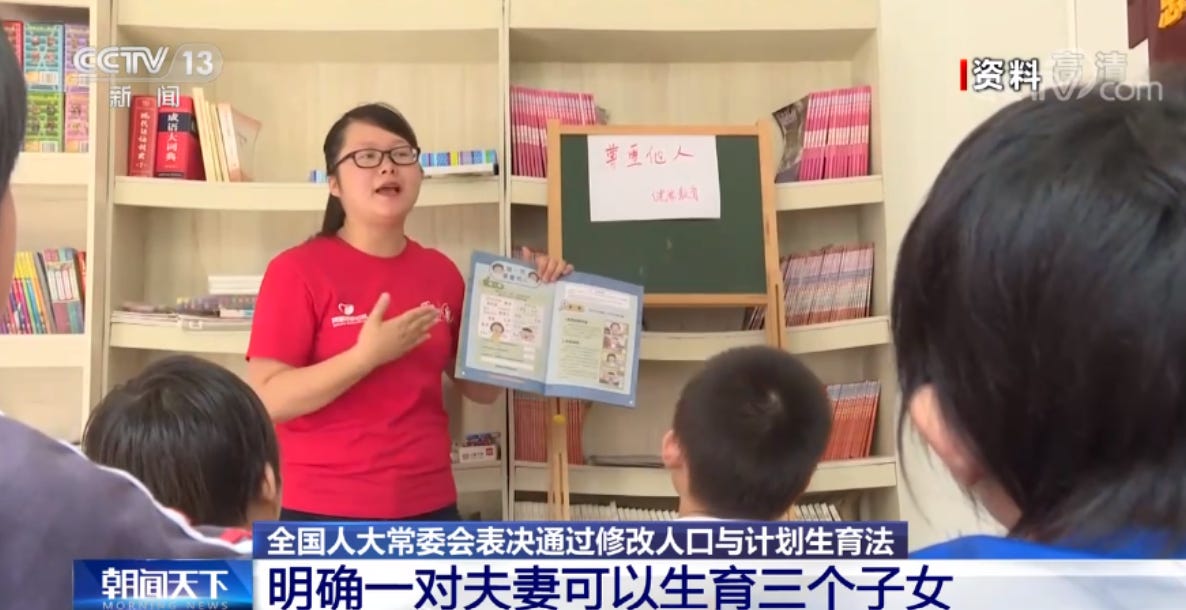
The Chinese government’s plan to boost consumption starts with tackling vulnerable groups such as migrant workers, students and small businesses, stressing the importance in guaranteeing basic educational and civic services for low-income families, as well as raising basic pensions and reducing the urban and rural divide. Some key goals are supporting less-developed areas through fiscal transfers, expanding the middle-income class, implementing tax regulations and crackdowns on fraud and evasion, equalizing basic public services by expanding investments in low-income family education in order to fight poverty and narrowing the rural-urban gap, and connecting growth with patriotic and socialist values. “One of the areas of social spending that is probably strongest is pro-natalist policies to try to encourage people to have more children. We’ve seen the central government step up and provide a direct subsidy for every child that you have. Another interesting example I saw was maternity leave. (...) But I think it’s definitely true that there are real fiscal impediments, and for some benefits it’s going to be very unequal between the richest and poorest localities in China.” Featherston explained.
Indeed, the aging population and the rural-urban divide, with government services prioritizing urban areas, make it even more difficult to implement a solid and well distributed national social coverage. As a consequence, people tend to save more to build resilience against sudden hardships. However, Featherston notes good signs in some of the changes in the tax structure, as well as the adoption of targeted mechanisms, such as trade-in programmes, to support consumption. “What really helps is giving the local government more revenue that’s coming from actual consumption. At the same time, the problem is of course that you don’t want to raise taxes too much because then there is the risk of people consuming less, but the incentives at least start to become better.”
The Structural Barriers of China Model
Another important structural problem when it comes to China’s provision of public services lies in the relationship between the central and local governments: while the former issues national policies and goals, it is the responsibility of local governments to fund 90% of social services, while at the same time receiving half of national tax revenues. As Dr. Wang Jue explained, “whereas Beijing gives a general guide, it’s local governments that need to design and implement specific policies to achieve the objectives set by Beijing. Regarding finance, the centre and the local need to share fiscal revenues, and often local governments are not left with sufficient resources to provide a full package of solutions. So they have to be creative, they have to be experimental.” Addressing the structural dimensions of the problem, Featherston pointed out that his interest lies in “the way the Chinese fiscal system is set up, as local governments just happen to get a lot of their money and resources from production. Value-added tax in China is largely collected at the source of production. So if you’re a local government, you get a lot of revenue from having things produced in your city and in your province, but you don’t get as much money from people actually consuming goods. Personal income taxes in China are relatively low compared to the rest of the world.”
Local governments already face a heavy debt burden due to the housing crisis and the decline in revenue from land leasing, thus significantly reducing their ability to implement the central government’s directives. Dr Wang Jue continued by pointing out that “for a long period of time, the local governments were selling land and using the proceeds to service the interests of their debt . It turned out a lot of resources flowed into real estate in a rather inefficient way, which led to a real estate bubble in many regions of China. This problem is closely related to the issue about the share of the resources between the centre and the local government.”
Moreover, local cadre evaluation reforms play a peculiar role in China’s heavy reliance on industry and production rather than consumption. While in the past the official’s performance was based on economic growth, after taking office, Xi Jinping has tried to address this issue by broadening the evaluation criteria, from social welfare to sustainable development. However, because of the wide range of targets compared to the limited finances, local governments have started to select specific projects to show they are effectively implementing Xi Jinping’s directives. These “spotlight projects” tend to be more performative than long-term deep transformations. Hence, the local cadre evaluation system continues to hinder the effective implementation of lasting goals, which are not always immediately visible.
Conclusion
The reasons for China’s weak social security nets have ideological and cultural roots. Although the government rejects the Western-style welfare, they recognize the nationwide issue of low consumption, and aim at raising and providing basic social services as well as incentives and subsidies for specific goods and sectors. However, the profound income divide within society, as well as China’s real estate market crash has negatively impacted consumer confidence. Lastly, the low share of national income going to households, the value-added tax charged at the source of production, the vague but ambitious targets from the central government and the performance-based local cadre evaluation metrics severely hinder structural reforms, leaving no room for a quick and easy solution.