


Defence Update | In recent years, the war in Ukraine has been dominated by the role played by artillery. In the early months, Ukraine was still entirely reliant on its stockpile of Soviet-era artillery (ammunition), but as this stockpile came under increasing pressure, the role of Western-supplied artillery grew. This led to renewed attention in the West on the (lack of) production of artillery ammunition, particularly in the 155 mm NATO standard calibre.
In addition to the supply of ammunition, Ukraine also received many different types of artillery pieces and began large-scale production of its own artillery in the NATO standard calibre (more on this in a later blog).
Although the media’s focus is (rightly) mainly on the supply of ammunition, the war also raises questions about the role of artillery in a modern conflict. This blog focuses on the role of howitzers, not mortars (artillery for shorter ranges) or rocket artillery (such as the well-known HIMARS systems).
What types of howitzers can be distinguished?
Firstly, there are ‘classic’ towed howitzers. These are usually towed by lorries as a sort of ‘trailer’ and then uncoupled, set up and prepared for action. This requires between 3 and 5 soldiers and takes 3 to 5 minutes – although this naturally depends on the level of training and the number of soldiers involved. The best-known example of this type of system is the M777, which was supplied to Ukraine by the US, amongst others. These systems have relatively little automation (loading is usually done by hand) but sometimes do feature advanced fire control (the system that helps with aiming artillery): for instance, the M777 ideally requires eight soldiers to deploy.
In addition, there are mechanised howitzers, both wheeled and tracked. For example, a howitzer can be mounted on an (armoured) lorry (such as the French CAESAR system, which is literally an acronym for ‘lorry equipped with an artillery system’), but also on a much heavier armoured vehicle, such as the RCH 155 module, which can be mounted on a Boxer armoured vehicle. These types of systems can be deployed quickly: CAESAR in around 45 seconds, and the RCH 155 in as little as 20 seconds. Many of these systems are (relatively) easy to mount on different types of vehicles – this simplifies logistics as a unique chassis is not required.
A tracked chassis can also be used, such as the PzH 2000 used by the Netherlands. These are often heavily armoured chassis which, thanks to their tracks, are better suited to difficult terrain. The disadvantage is that road transport usually requires a flatbed lorry. Deployment time is also often short – for example, 25 seconds for the PzH 2000.
Mechanised artillery relies on technology that allows it to be operated by a small crew. The RCH 155 has a fully automated loading system and advanced digital fire control, meaning the crew consists of just two people. The PzH 2000 requires a crew of five.
But how do you use this type of artillery in a modern conflict? A common tactic is to fire rapidly, followed by a swift movement to a new location. This is because advanced radar systems can quickly pinpoint the origin of incoming artillery fire, making stationary artillery vulnerable to ‘return fire’. By constantly remaining on the move, it is impossible for the enemy to calculate the gun’s location in time and return fire. A good demonstration of this can be seen in this video of a Swedish Archer mechanised and automated howitzer. Before the last projectile fired hits its target, the Archer is already on its way to its next firing position. By the time the enemy has pinpointed the source of the incoming fire and ordered its own artillery to return fire, the Archer is already a fair distance away.
However, in Ukraine we are now seeing the vulnerability of this technique. Due to the intensive use of drones (by both sides) along a static front line, movement rarely goes unnoticed. Appearing in the open means being spotted almost immediately by a drone, which then directs (missile) artillery or kamikaze drones (such as the notorious Lancet), as can be seen in this video. The ‘kill chain’ (from spotting to return fire) has therefore become much shorter than before. As a result, both firing and moving pose a risk.
Ukraine (and Russia too) are responding to this in various ways, but above all by providing better protection for artillery: if you know you are going to be spotted and there is no way to ‘escape’, the best option is to protect artillery with anti-drone nets or ‘cages’, or even entire bunkers. Even heavily armoured artillery is vulnerable to a well-aimed drone (such as cheap ‘first-person view’ drones), so these types of vehicles are also ‘entrenched’ or fitted with cages, meaning the vehicles are only briefly exposed when they fire. In addition, Ukraine continues to make extensive use of towed artillery. Due to their compact size, these are easy to conceal from drones. The fact that Ukraine is now also developing the domestically designed mechanised Bohdana howitzer as a towed artillery piece is telling in this regard.
For policymakers
Strike a balance between automation and concealment: modern systems such as the PzH 2000 (and even more so the RCH 155) require minimal crew, which is ideal in times of staff shortages. However, concealing such systems in a landscape teeming with drones is many times more difficult than, for example, an M777.
Any form of artillery is vulnerable to being spotted by drones. Therefore, invest in effective ‘decoys’ as well. Ukraine is even building fake M777 howitzers that simulate artillery fire.
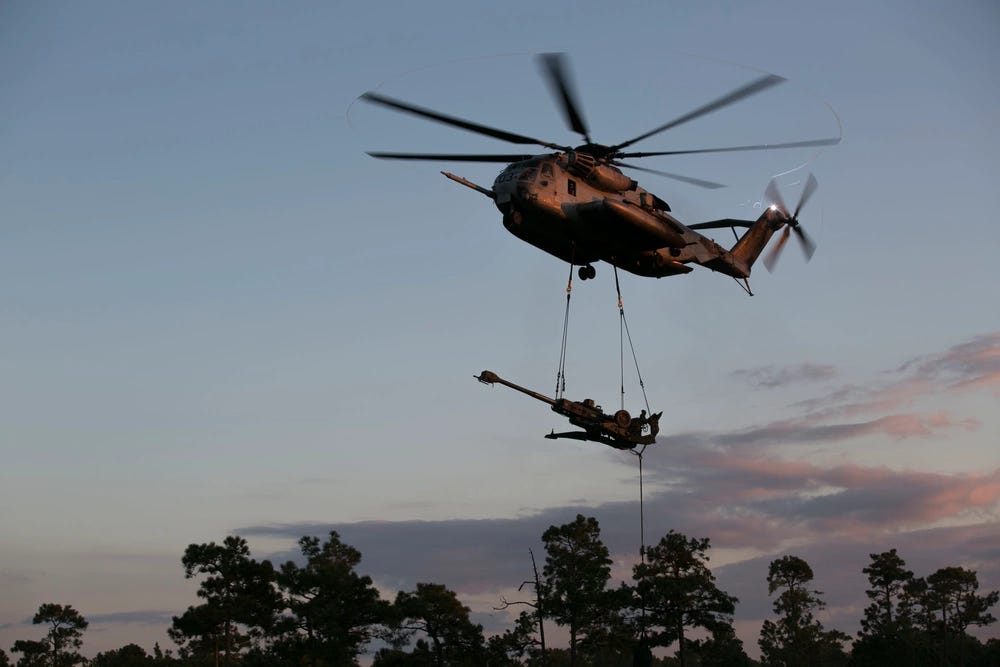
Consider expanding the Army’s artillery capabilities with lightweight artillery that is easy to conceal and deploy, for example by helicopter. This provides additional firepower for rapidly deployable troops who cannot wait for heavy mechanised artillery to arrive by train or flatbed lorry.
Invest in so-called very short-range air defence, particularly for high-value vehicles such as the PzH 2000s. Dutch CV-90 infantry fighting vehicles are currently being fitted with the ‘Iron Fist’ system, which also has capabilities against (kamikaze) drones. Systems of this kind should also be integrated onto mechanised howitzers. In addition, ensure sufficient ‘passive’ protection for artillery, such as easily deployable anti-drone nets and camouflage material.