

In Summary
At various international summits, Lula is positioning Brazil as a champion of a new multilateral world order.
Brazil’s geopolitical course clashes with US pressure, but creates opportunities for Europe.
International liberalism versus emerging realism: Lula finds himself increasingly isolated by his commitment to a liberal international order, centred on multilateralism and reformed international institutions.
Latin America Regional Update | These are busy months from a geopolitical perspective for Brazil’s President Lula. Last November 2024, the G20 summit was held at the Museum of Modern Art in Rio de Janeiro, where the BRICS summit was also organised this July. Last month, Lula attended the G7 summit in Canada, and the Climate Conference (COP30) is also scheduled to take place in Belém, Pará, in November. Meanwhile, the US is significantly stepping up the pressure on Brazil and Lula through the now familiar tactic of threatening import tariffs – this time at 50 per cent – via social media. Lula faces a complex balancing act.
As early as 2004, at the UN Conference on Trade and Development in São Paulo, Lula stated: “Globalisation is not synonymous with development; it is no substitute for development, but it can be used as a tool for development.” Lula argued at the time that greater access to free markets could help the Global South in its development and in the fight against poverty and deprivation, such as hunger. At the G20 summit last November 2024, Lula’s message was that “neoliberal globalisation has failed.”
In Lula’s view, the form of globalisation that has developed over the twenty years between the two speeches has become an instrument of imperialism and of greater inequality between rich and developing countries. Lula proposes a form of globalisation that combats inequalities rather than reinforcing them. Furthermore, in the same G20 speech, Lula stated that “the answer to the crisis of multilateralism is more multilateralism.” This narrative sends a clear signal against isolationism and stands in stark contrast to the current threat posed by import tariffs. Lula’s multilateralism would primarily take the form of greater cooperation amongst the Global South, reforming the UN Security Council and its permanent seats to ensure a ‘fairer’ distribution and representation, as well as creating an alternative (read: less neoliberal) financial architecture. Furthermore, Lula consistently advocates for greater attention to be paid to global poverty, hunger, healthcare, climate change and more inclusive global digitalisation. These themes recur consistently in Lula’s speeches at international forums.
An interesting aspect of Lula’s narrative is that he explicitly views economic and political inequality as the root cause of political instability worldwide: “It is no surprise that inequality fuels hatred, extremism and violence – nor that democracy is under pressure” (G20 summit, Rio de Janeiro, 18 November 2024). Although Lula does not deny that certain choices – such as prioritising investment in defence over development aid – are political in nature, he regards this as a direct consequence of economic disparities at both the domestic and international levels. In other words, instability and conflict are the result of an imperialist form of globalisation and the associated neoliberal agendas at both international and national levels, as opposed to a level playing field and equal opportunities for collaboration.
It can be inferred from this that Lula’s perspective on international development is primarily liberal – whereby insufficient cooperation and inadequate representation within international organisations lead to winners (the Global North) and losers (the Global South) – at a time when realism as a political perspective is gaining significantly in popularity and prestige. In the latter view, the current instability is rather a consequence of emerging economies threatening US hegemony, which would inevitably lead to a power struggle in which states play the leading role and international organisations are merely tools to serve the powerful states. Lula appears to be increasingly isolated in the liberal perspective.
The impending import tariffs and Lula’s response to them can also be easily viewed through these two lenses. Whilst the US appears to be using the tariffs as a means of exacerbating divisions within the BRICS – and thus seems to be employing a simple ‘divide and rule’ strategy – Lula sees this as a reason to further strengthen cooperation with other partners, such as the BRICS countries.
Although the BRICS have never before conducted as much trade as they do today – and not merely out of necessity – divisions within the BRICS are certainly evident. For instance, Brazil’s narrative – particularly with a view to COP30 – regarding climate issues and the energy transition is fundamentally different from that of members who are still reaping the full benefits of fossil fuel consumption. Brazil, South Africa, India and Indonesia are collectively pushing much more strongly for ‘South-South’ co-operation and globalisation, aiming for greater equality alongside cooperation with the Global North (think, for example, of India in the QUAD and a Mercosur–EU trade agreement), whilst members such as China and Russia view the BRICS more as a platform to challenge US hegemony.
This division is also evident in the military sphere, where Lula said at the BRICS summit this month: “It is always easier to invest in war than in peace, but we must do the opposite.”
In Lula’s case, the rhetoric surrounding reforms regarding financial dependence on the dollar and institutions such as the IMF and the World Bank is also more cautious than that of, for example, China. Speaking (online) at the 2024 BRICS summit in Kazan, Russia, Lula stated: “It is not a question of replacing our currency, but we must ensure that the multipolar order to which we aspire is reflected in the international financial system.”
It is not only on the international stage that import tariffs are intended to put pressure on Brazil; domestic polarisation is also being fuelled to steer Brazil in a geopolitical direction – which Lula will view as dependence on the US. This is largely due to the reasoning behind the import tariffs, which are based, amongst other things, on the idea that the prosecution of former President Jair Bolsonaro – in connection with the storming of the Brazilian Congress following his election defeat – is politically motivated. So far, the effect seems to have been largely counterproductive, as Lula’s popularity is rising among Bolsonaro’s supporters, who agree that interference with Brazil’s judicial system undermines the state’s sovereignty.
At the same time, anyone following Brazilian (social) media can see that the ‘Petistas’ (supporters of the Workers’ Party) and ‘Bolsonaristas’ (supporters of Bolsonaro) are once again pointing accusing fingers at one another in full force. It is clear that Lula’s comments regarding Trump are becoming more negative and hostile, although often still delivered with diplomatic caution. For instance, Lula stated that he would visit the G7 in Canada ‘before the US annexes Canada’, and in response to the interference surrounding Bolsonaro’s trial, Lula said in an interview with CNN that Trump had not been ‘elected to be emperor of the world’.
For the time being, this has mainly resulted in popularity amongst the Brazilian population and, in Bolsonaro’s case, an electronic tag and a ban on social media. The more strategic response from Lula’s government, as confirmed to BBC News Brasil, includes, amongst other things, forging new and more intensive multilateral partnerships (this again presents a huge opportunity to push through the EU-Mercosur agreement, which is ready for approval by the EU member states: see also EU-Mercosur agreement), capitalising on opposition from Bolsonaristas and the broader Brazilian public, which is turning against Trump; holding talks with the WTO; and, as a last resort, invoking Brazil’s ‘law on economic reciprocity’ passed in April this year. This too demonstrates that Lula is (desperately) clinging to multilateral solutions and thus to his broader geopolitical strategy.
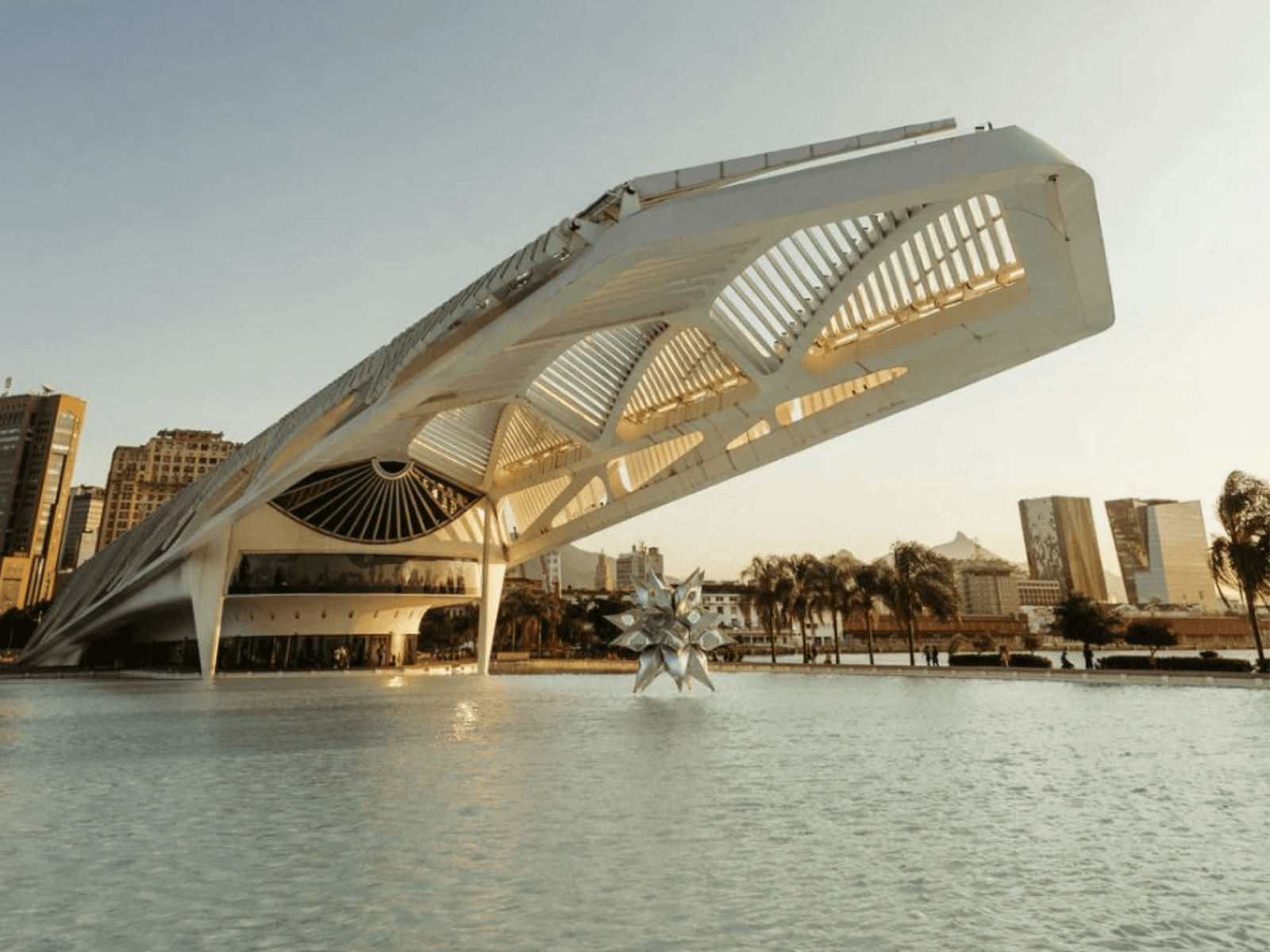
No offence to the Museum of Modern Art in Rio de Janeiro or Belém do Pará, but the Museu do Amanhã (Museum of Tomorrow, see image), situated some three kilometres from the art museum, would have been a better choice in terms of its message. For, as stated on its website, that museum is: “A museum to explore the present and imagine the future.
Guided by the values of sustainability and coexistence, the ‘Museum of Tomorrow’ inspires new perspectives on the world we wish to build.” Highly recommended for anyone visiting Rio de Janeiro, but above all for those who will shape and govern the future. It would also cause less controversy surrounding COP30 regarding a motorway through the Amazon rainforest and cruise ships being used to accommodate people due to a lack of hotels.
Areas for action for the Netherlands and the EU
The EU has a strategic opportunity here to intensify cooperation with a country committed to multilateralism and democratic institutions. By ratifying the EU–Mercosur agreement, Brussels and Brasília can work together on fair trade, sustainable development and the energy transition.
Although divided, BRICS offers an opportunity for informal dialogue with countries such as China and India. Brazil can act as a bridge-builder and ally in safeguarding an open, rules-based international order. Furthermore, we must move away from ‘Cold War rhetoric’ and should not shy away from cooperation with BRICS members such as Brazil, Indonesia, India, etc., simply because they are part of BRICS. Avoid framing Lula as the antithesis of the US or China. His strategy is nuanced and focused on cooperation and reform – a position with which the EU naturally aligns.
Brazil is positioning itself as a climate leader in the run-up to COP30, but is grappling with internal conflicts (such as the planned motorway through the Amazon rainforest). This presents an opportunity and a moment of momentum to recognise Brazil (and, more broadly, the Global South) as mature partners and to involve them in climate agreements. Brazil’s ambitions must be taken seriously, and the Netherlands and the EU – as well as climate actors such as NGOs – must take care not to adopt a paternalistic stance and thereby squander their diplomatic capital.