


In Summary:
As Americans head to the polls, many questions linger in the air, from polling accuracy to the fate of Congress. A Democratic victory could constrain Trump and rein him in, but would not take away his executive powers. How much changes depends on which chambers Democrats win and by what margins.
The consequences extend well beyond the U.S.: Congress could reassert checks on presidential power, launch investigations and influence foreign policy.
The results will test MAGA’s future ahead of 2028, but rejecting Trump would not automatically mean voters embrace the Democrats’ agenda. On the other hand, the Democratic Party will have to reckon with the direction its voters want it to go.
For political nerds and geopolitics enthusiasts, election day feels a little like Christmas Eve did when we were kids. The leading up to Election Day is characterized by anticipation, speculation, and the temptation to stay awake until the results are called. When it comes to American elections, though, the excitement has become harder to separate from a growing sense of doom.
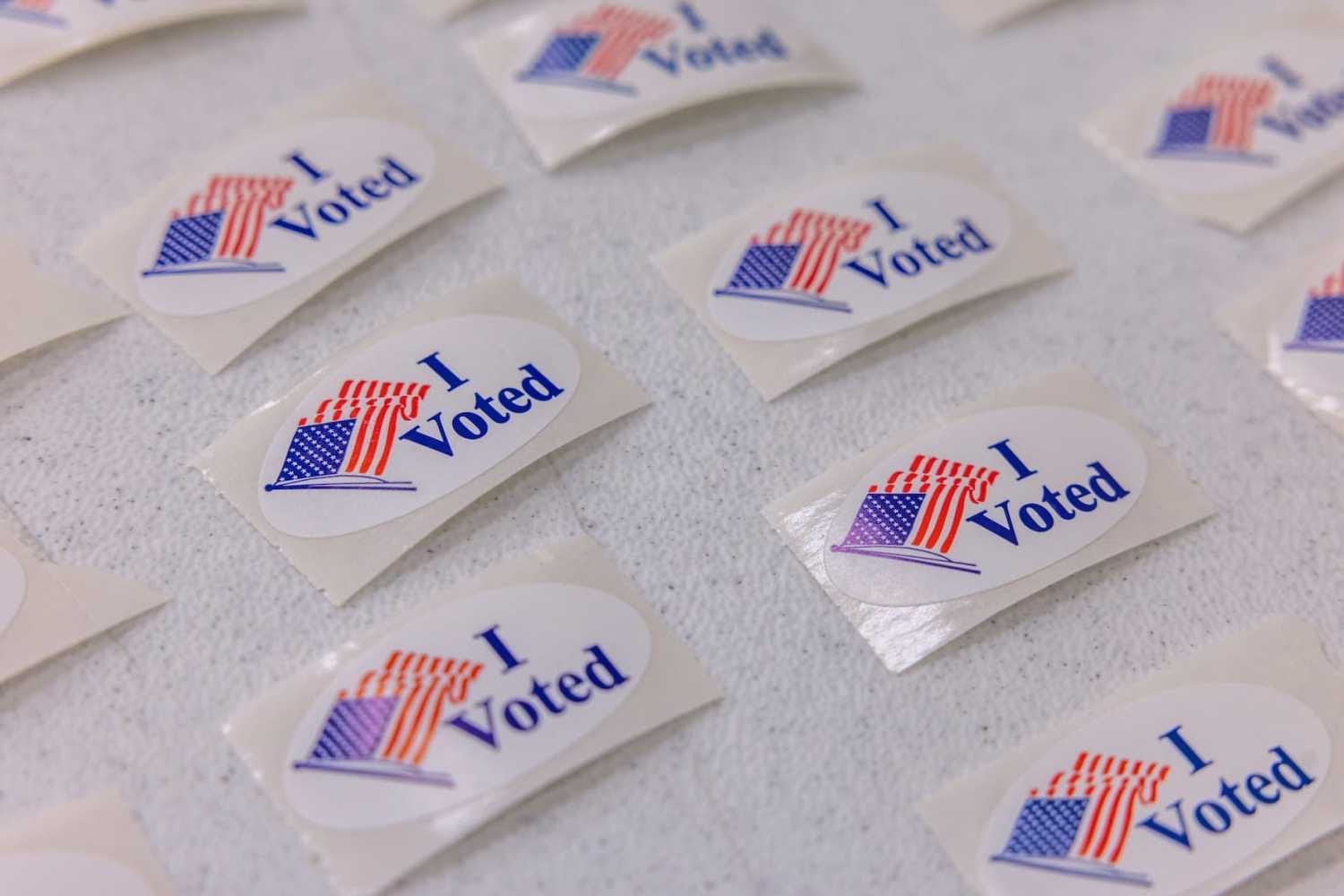
Much has been said about the 2026 midterms, and with good reason. There is a lot at stake: whether presidential power will be held to account, how well American democratic institutions can uphold checks and balances, and whether allies can continue to count on Washington for help. And so the question arises: what could these elections actually change? The answer depends on who wins and by how much. As Americans head to the polls today, political forecasts point towards a Democratic takeover of the House, while victory in the Senate remains less certain.
If Democrats win back both chambers, they could considerably obstruct and limit Trump’s agenda, but the president would retain his executive power. If instead Republicans hold on to the Senate, they could keep supporting his agenda, even with a Democratic House. The results will also shape the run-up to 2028. Both parties will, hopefully, draw lessons about which candidates can win, which issues galvanize voters, and what ideological direction to take.
America’s friends and foes will be watching too. The composition of the next Congress will affect more than domestic policy; it will influence the country’s foreign policy direction and the durability and stability of its alliances. For countries whose security depends on American commitments, the outcome will have consequences well beyond the color palette of American states and counties.
To trust or not to trust the polls, that is the question
Before considering what a Democratic victory might mean, it is worth asking how confident we should be that one is coming. The skepticism surrounding American polling is not unfounded. We all remember how, in 2016, important battleground-state polls underestimated Trump’s support, even though national polling performed reasonably well. In 2020, the error was broader: both national and state surveys tended to overestimate support for Joe Biden. In 2024, polls correctly predicted a close presidential election and improved the forecast margins compared to the previous two cycles, although they still underestimated Republican support relative to Democrats. These distinctions matter when deciding how much we should trust today’s numbers. AAPOR offers a useful account of what went wrong in the past and what has and should be improved).
When it comes to polling, one of the biggest difficulties is getting a broad enough sample of people to answer. Pollsters aim to include different demographic groups, but reaching enough voters of a certain age, ethnicity, education level or background does not necessarily mean reaching a politically representative selection of voters. In addition, if past experience is any guide, we should also consider how distrust of institutions extends to wariness of pollsters, whom some voters may associate with the wider political establishment. If those voters are less likely to answer truthfully, or answer altogether, their preferences may be substantially underrepresented even in a survey that appears demographically balanced. Nevertheless, previous polling mistakes do not imply we should dismiss the double-digit leads Democratic candidates hold in some races. Previous polling errors are a reason for caution, not a constant that should be applied to every election cycle. A blue wave is therefore a plausible outcome. Whether it becomes a “blue tsunami” is another story and will depend on several factors.
Past is prologue?
History gives Democrats another reason for optimism. If presidential elections are the honeymoon, midterms are usually when the bills arrive. The party in the White House has had two years to govern, disappoint expectations, and give voters something to hold against it. And voters almost always do: in the last 100 years, only three midterm elections have seen the president’s party gain House seats, under Franklin D. Roosevelt in 1934, Bill Clinton in 1998, and George W. Bush in 2002.
George W. Bush’s presidency is an interesting case and it offers an example of how quickly political fortunes can turn. In 2002, his party won the midterms, but, in 2006, with the Iraq war weighing heavily on his presidency, the same electorate turned on him and delivered what Bush himself called “a thumping.”
60 years earlier, Harry Truman received his own reckoning, losing both the House and the Senate in 1946. Trump’s approval ratings are at a historical low. The Bulwark’s Sarah Longwell calls it the “Bush line”: the 32% approval rating she uses as a benchmark for Bush’s standing when he left office (not his rating at the 2006 midterms). Her argument is that a deeply unpopular president leaves his party and successor carrying the baggage too.
The iron rule of American politics, that the president’s party usually takes a beating in the midterms, comes with small print. Losing or gaining seats, does not necessarily mean taking back Congress, and this is by constitutional design: every House seat is up for reelection every two years, while senators serve six-year terms, with roughly one-third facing voters each midterm cycle. Therefore, even an unpopular president could find shelter in a favorable Senate map. Americans seem deeply dissatisfied with Trump at the moment. In the Reuters/Ipsos poll completed on November 2, only 32% approved of his performance. That puts him right on Longwell’s “Bush line” going into the midterms.
What exactly feeds that dissatisfaction? “It’s the economy, stupid,” the phrase associated with Bill Clinton’s 1992 campaign, remains difficult to escape. The administration can publicly celebrate positive economic indicators, but voters still have to face reality and pay for groceries, rent, and gas. That frustration is usually enough to cost the governing party votes. Whether it amounts to full-fledged support for the opposition is another question. Democrats may find themselves benefiting from voters’ desire to punish Trump without having gained loyal voters that will reward them in 2028. Winning the argument against the president is different from winning consent on a party’s program.
The House, the Senate, and the possible outcomes
If Democrats win the House but Republicans keep the Senate, Trump would face a divided Congress. Democrats could launch investigations, exercise oversight, block legislation and force negotiations over spending but they could not pass laws, and Republicans in the Senate could continue confirming his nominees for government positions and federal courts. To put it in simple terms, Democrats would gain a brake on his agenda, without taking the steering wheel. However, if Democrats win both chambers, that brake becomes considerably stronger. They could coordinate investigations across Congress, block nominations, and send their own legislation to the president. Yet Trump would retain his executive powers and could veto their bills. Overriding him would require two-thirds of both chambers, a higher bar than winning a simple majority. Losing both chambers could leave Trump increasingly a lame-duck president in the final two years of his second term, with less room to advance his political agenda.
If the polls are broadly right, Democrats have good reason to expect to flip the House and possibly the Senate too. In its October 30 assessment, Cook Political Report projected Democratic gains in the House amounting to a total of 227 to 240 seats, well above the 218 needed for a majority. While the House looks promising, the Senate is a harder bet. The final New York Times/Siena polls, released on November 1, put James Talarico ahead of Ken Paxton (50-43) in Texas and Adam Hamilton ahead of Roger Marshall (49-44) in Kansas. Taking back the Senate also means defending what Democrats already hold. In Michigan, Abdul El-Sayed’s 53–42 lead over Mike Rogers would help keep a Democratic seat in their column, rather than add another.
What would change at home?
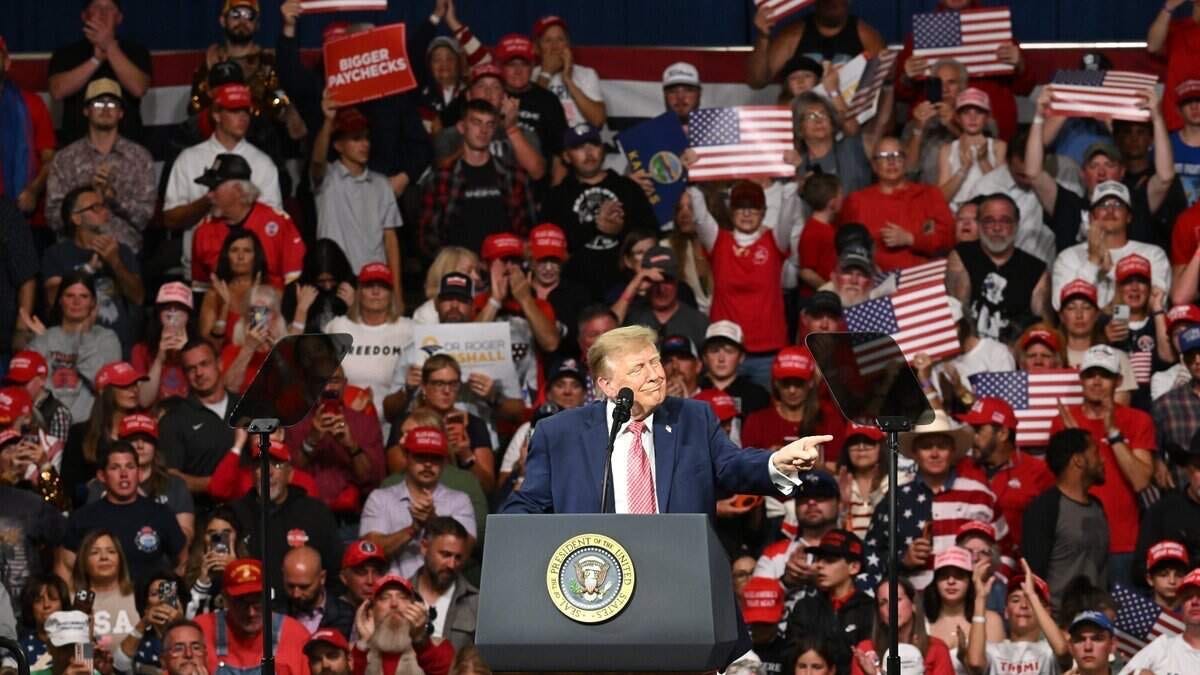
A Democratic House would immediately change the administration’s relationship with Congress. Democrats would control committees and could use hearings, investigations and subpoenas to scrutinize or halt executive decisions. U.S. constitutional expert Kenneth Manusama sees a Democratic victory as an opportunity to put existing constitutional safeguards back to work “if the Dems take Congress, the normal, constitutional checks and balances may be used again.” Furthermore, Manusama points to investigations, hearings and potentially impeachments, as well as greater difficulty for the administration in securing appointments if Democrats also control the Senate. That could become particularly consequential should a Supreme Court vacancy arise.
Spending would become another important point of negotiation. A president who needs congressional approval for funding must deal with the legislators who can withhold it. That gives an opposition majority influence. For Manusama, the effectiveness of these instruments ultimately “boils down to political pressure, and whether Trump will tone it down, rein in himself and his administration.” Oversight also has practical limits: the first round of Congressional oversight during Trump 1.0 teaches us that requesting documents does not guarantee receiving them quickly. Similarly, disputes over testimony and executive privilege can consume time, and an investigation’s political impact depends partly on what it establishes and whether the public pays attention. Nonetheless, control of both chambers would give Democrats a broader set of instruments. Alongside House investigations, a Democratic Senate could conduct its own scrutiny and exercise its role in nominations requiring confirmation. Trump would still retain the presidency and his veto. Overriding a veto is no small feat: it requires two-thirds in each chamber.
The same distinction applies to impeachment. The House can impeach an official ( the first in line would be Secretary of Defense, Pete Hegseth), but removal requires conviction in the Senate by two-thirds of members present. The Senate explains these requirements in its accounts of voting and impeachment.
Manusama identifies corruption allegations, tariffs and efforts to reverse healthcare and tax cuts among the possible subjects of congressional action.
History nevertheless shows that congressional investigations can have consequences beyond the immediate confrontation. The Church Committee, established in 1975, investigated intelligence abuses. Permanent Senate intelligence oversight followed in 1976, and the Foreign Intelligence Surveillance Act established a judicial framework for specified surveillance in 1978.
There is also the question of whether a Democratic victory could be obstructed before the new Congress takes office in January. Manusama rejects the suggestion that the administration could simply prevent the incoming Congress from being sworn in. As he explains, “Moreover, the term of this Congress ends regardless […] It’s the new members-elect who constitute the new House, and elect a Speaker.” In his assessment, potential disputes would centre on the certification of individual results in the states rather than a general attempt at stopping the new Congress from taking office. Disputed elections and qualifications would still have to be addressed through the relevant constitutional and legal processes. Asked about the risk of violence or coordinated attempts to disrupt the outcome, Manusama is comparatively reassuring. “I don’t see anything systematic, coordinated or coherent attacks happening. Incidents, perhaps, but nothing too serious.” He does not expect a repeat of January 6 or disruption on the scale of the period between the 2020 election and the attack on the Capitol. That is his assessment ahead of the vote, rather than a guarantee about what follows.
What would change abroad?
For America’s allies, the most relevant issues are the war in Iran, assistance to Ukraine, and whether Washington remains a reliable NATO member. Congress cannot take over presidential diplomacy but its powers over what gets funded, over legislation, and oversight allow it to influence what the administration can do.
Iran is the clearest test. Last February, President Trump launched the war without congressional authorization. The dispute goes beyond whether the war was a good idea: who exactly gets to take the country into a conflict, and on whose authority can it continue? The War Powers Resolution generally requires unauthorized hostilities to end within 60 days of the required report to Congress, subject to specified exceptions and a limited withdrawal extension. Manusama identifies Iran as one of the first battles Democrats will fight. It is importantly to underscore how winning Congress would not automatically end the conflict. Congressional restrictions could- and would- still face a presidential veto.
For Ukraine, the biggest questions are whether the U.S. can still be counted on as an ally against Russia and whether American assistance arrives in time and in sufficient quantities. Previously approved aid has continued to flow, but significant new aid authorizations have not followed under Trump. Meanwhile, additional American weapons supplied through the PURL mechanism are funded by NATO allies, not the U.S. A Democratic Congress would show more commitment to Kyiv’s fight for freedom and would seek additional funding as well as press the administration to finally deliver the assistance already approved. Concern over Ukraine crosses party lines: in October, Democratic Senator Jeanne Shaheen and Republican Senator Thom Tillis jointly urged the release of frozen funds for Ukrainian law enforcement and civilian protection.
Lastly, there is the now thorny issue of NATO. U.S. law already prohibits the president from withdrawing from the Alliance without the consent of two-thirds of senators present or an act of Congress, and forbids unauthorized withdrawal. Technically keeping America inside NATO and practically keeping allies confident in its support are two different things. The treaty leaves each member discretion over the action it considers necessary in response to an attack. And so, Congress can help protect the commitment but it cannot fabricate trust in the president or restore trust in America.
Thus, depending on the outcome of these midterms, Congress could potentially bring greater scrutiny of the Iran war, a stronger push for assistance to Ukraine and more congressional resistance to weakening American alliances.
The road to 2028: is MAGA still a winning formula?
As tradition goes, on November 4 both parties will begin their election post-mortem, probably before all the votes have been counted. Everyone will have a lesson to draw, someone to blame, and an argument about what the results might indicate for 2028. But one question deserves particular attention: did Americans vote for MAGA in 2024, or did many simply want to show the Democrats the door?
Latino voters are an important part of the equation. Trump’s gains in 2024 suggested that Republicans were broadening their base. Yet, just two years later, that support looks considerably less solid. An October Pew survey found growing economic dissatisfaction (again, “it’s the economy, stupid”) and concern about the administration’s choice and tactics on immigration enforcement. A majority of Latino registered voters described their congressional vote in this midterms as a vote against Trump. However, calling 2024 a fluke would be premature. Latino voters - just like black voters - are not a monolith, and who turns out matters as much as who changes their mind. To put it simply, voting for someone who promises to make life more affordable and to “drain the swamp” does not necessarily mean buying into their entire ideology.
That leaves the GOP with an uncomfortable but inescapable question for 2028: how much of Trump’s appeal can survive his record in office? Whoever hopes to be his successor will need his supporters to secure the nomination. Being loyal to Trump, is proving more damaging than ever, as proven by the many GOP candidates who publicly distances themselves from him this cycle.
At the same time, a defeat would not necessarily bring Republicans closer to the centre. If members in competitive seats lose while loyalists in safe seats survive, the party could end up smaller and more firmly MAGA. Those arguing for a change of direction might want to consider leaving the party altogether. Heather Cox Richardson’s historical comparison is useful here. In her interview with Scott Galloway, the historian looks back to the political upheaval of the 1850s. The Whig Party, once one of America’s two major parties, broke apart over divisions surrounding slavery. Specifically, opposition to the Kansas–Nebraska Act of 1854 helped put a nail in the coffin of the Whig Party and brought the new Republican Party into existence. The circumstances are obviously different, but history is often a reminder that in politics “pants rhei”, everything flows.
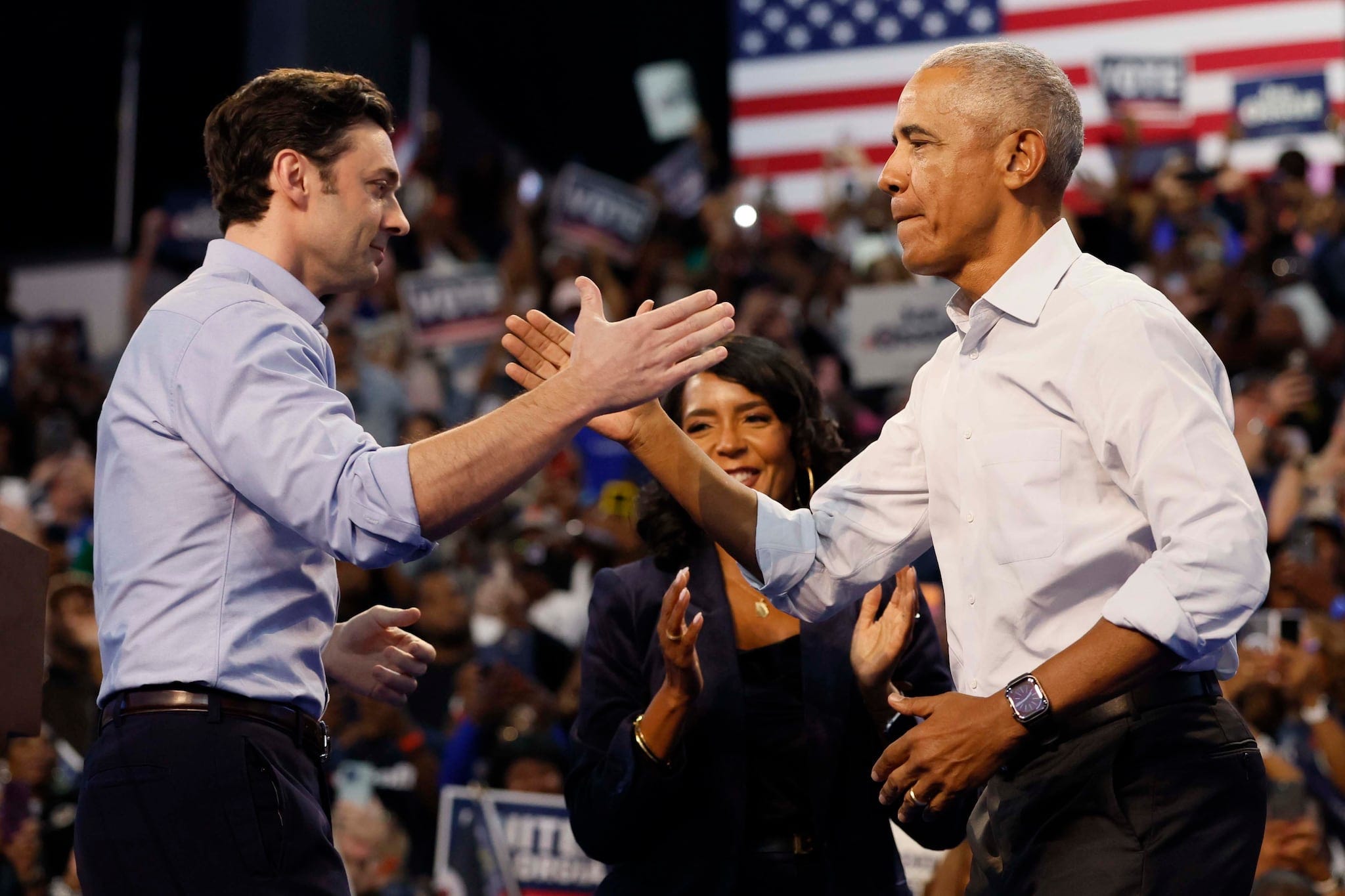
On the other side, Democrats should resist the temptation to congratulate themselves too quickly. A vote against Trump is not automatically for the Democrats. Some voters may simply want to protest the choices of this administration. Democrats would have to show what they can do about the problems created by Trump and the ones that helped him win in the first place. They will have no choice but deliver their promises or they risk finding themselves on the receiving end of the same frustration.
These elections might be a good testing ground for what political formula works best ahead of the 2028 presidential elections. But two years are a long way to go, and in American politics surprises are as common as sugar in their menus.
Very informative, thank you!
A very accurate observation.
And it seems the Democrats understand this too.
But the problem is that understanding your mistakes and actually starting to fix them are two different things. There is a real risk of settling scores instead.
At the same time, Republicans may also come to the conclusion that their future comeback depends on moving away from MAGA.
So the main hope today is the consolidation of society against Trumpism.
Right now.